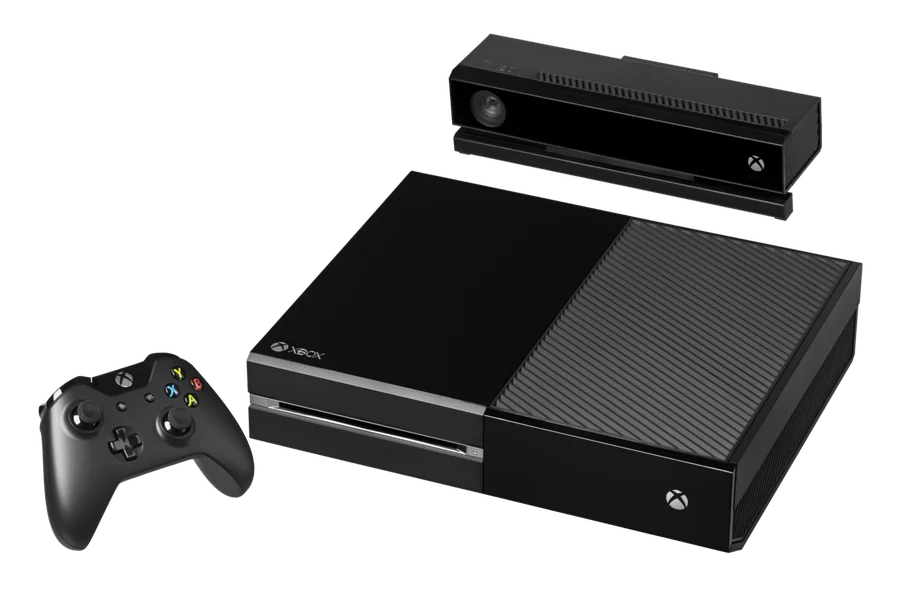
 Microsoft · 2013
Game consoles
Xbox One
History & context
When Microsoft unveiled the Xbox One in May 2013, a confident answer to the successful Xbox 360 was expected. Instead came one of the most unfortunate reveals in the history of the gaming industry. The company chose to present the console as a universal "all-in-one" living-room entertainment hub — emphasizing television, movies, and voice control via Kinect — while games briefly seemed like an afterthought. Rival Sony reacted cleverly: the PlayStation 4 offered a simpler, cheaper, and more player-friendly solution, kicking off one of the most decisive generational victories in console history.
Still, the Xbox One ultimately wasn't a flop — it merely lost the battle for first place. Microsoft managed a sharp course correction after a disastrous start, listened to the community, and gradually built the console into a platform that still defines today's Xbox Game Pass and the philosophy of services layered over hardware.
A controversial start (DRM, Kinect)
Xbox One inflicted the biggest blow on itself, even before launch. Microsoft planned an always-online DRM system — the console was to connect to the internet at least once every 24 hours to verify licenses, and games could only be installed and resold under restrictions resembling digital distribution. On top of that came the requirement to have the Kinect sensor connected and switched on (it was included with every unit), which watched the living room via camera and microphone — sparking a wave of privacy concerns. A price of 499 dollars, a hundred dollars higher than the PS4, only underscored the whole package.
The reaction from players and journalists was so strong that Microsoft capitulated within a few weeks: in June 2013 it announced the cancellation of the always-online requirement, the removal of restrictions on sharing and reselling games, and made the Kinect detachable. The reputational damage, however, had already been done, and the Xbox One entered the generation with a lost head start it never fully made up.
Technology: graphics and sound
Microsoft built the Xbox One around its own AMD APU with an x86-64 architecture, containing eight Jaguar cores and a graphics core from the Radeon (GCN) family. It was the same philosophy as the PlayStation 4 — a unified, PC-like architecture that finally made it easier for developers to port games between platforms and to computers.
The difference lay in memory: while the PS4 bet on faster 8 GB of GDDR5 shared between CPU and GPU, the Xbox One used 8 GB of slower DDR3 supplemented by 32 MB of fast ESRAM cache meant to compensate for the bandwidth shortfall. In practice, this meant the Xbox One had, proportionally, lower net graphics performance than the competition, and many multiplatform games ran on the PS4 at a higher resolution or higher frame rate — a gap that journalists and players tracked title after title throughout the entire generation.
Xbox Live, backward compatibility, and Game Pass
Where the Xbox One lost on paper specs, it made up for it in services. Xbox Live remained the generation's most advanced online infrastructure, but the real turnaround came with backward compatibility — Microsoft gradually enabled playback of hundreds of games from the Xbox 360 and even the original Xbox, making the Xbox One the only console able to play titles from three generations back. It was a technically demanding hardware-level emulation project that earned praise even from players who otherwise remained skeptical of Microsoft.
An even bigger impact came in 2017 with the launch of Xbox Game Pass — a subscription that, for a monthly fee, unlocked a growing library of downloadable games, including Microsoft's new releases on day one. This model, later expanded to PC and cloud, became the core of the company's entire strategy and is still regarded today as one of the most significant moves in modern console history.
Models and revisions (S, One X)
The base Xbox One from November 2013 got a successor in 2016, the Xbox One S — smaller, quieter, without an external power brick, supporting 4K video and HDR for movies and streaming, even though it still rendered games at a lower resolution.
The true technical peak of the generation was the Xbox One X of 2017, which Microsoft marketed as "the most powerful console in the world." It brought a significantly stronger GPU, 12 GB of GDDR5 memory, and the ability to render a number of games in genuine 4K resolution, for the first time in the generation surpassing the PlayStation 4 Pro in raw hardware terms. It was a smaller but enthusiast-cherished machine that showed Microsoft had learned from the mistakes of 2013.
Significance and legacy
The Xbox One ultimately sold roughly 50 million units — noticeably fewer than the PlayStation 4's more than 117 million — and in console history remains a reminder of how costly a poorly handled product reveal can be. At the same time, it's also an example of a turnaround: a company that in 2013 nearly lost the trust of its own community laid, in the years that followed, the foundations for what Xbox is today — a platform built on subscriptions, backward compatibility, and cross-device availability rather than the raw power of a single piece of hardware. The Game Pass and cross-generation gaming philosophy that the Xbox One generation kicked off leads directly to today's Xbox Series X/S and defines how Microsoft positions itself in the console market to this day.
Games on this platform (204)














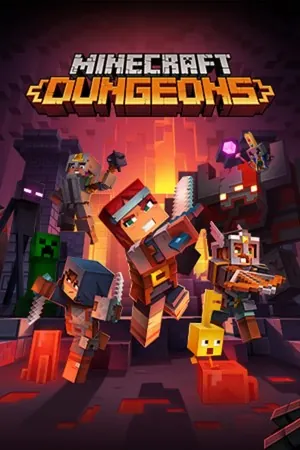
Minecraft Dungeons
Minecraft's blocky aesthetic transplanted into a top-down action dungeon crawler.



















Rage 2
Post-apocalyptic open-world shooter with superhuman nanite abilities and a quest for revenge.
















Firewatch
An intimate adventure about a forest lookout whose only companion is a voice on the radio.











Alan Wake Remastered
Stejný remaster jako na Xboxu Series X/S, ale na starším hardwaru s kompromisy.







No game in this genre.