Middle-earth: Shadow of Mordor
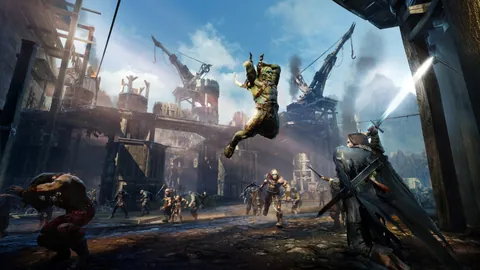
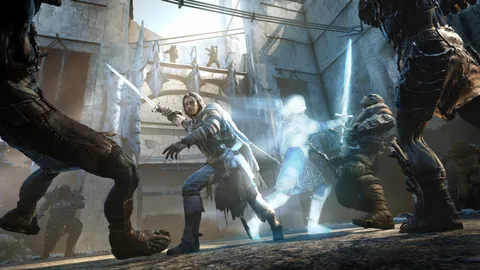
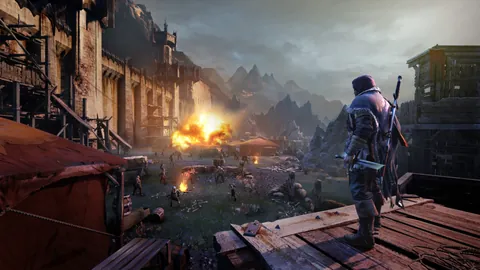
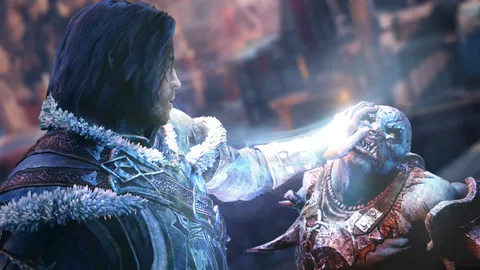
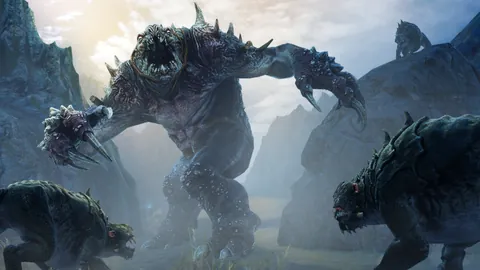
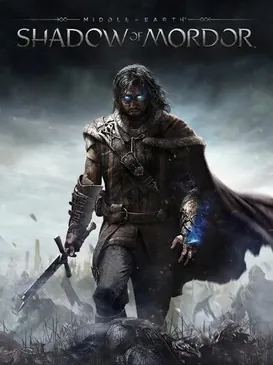
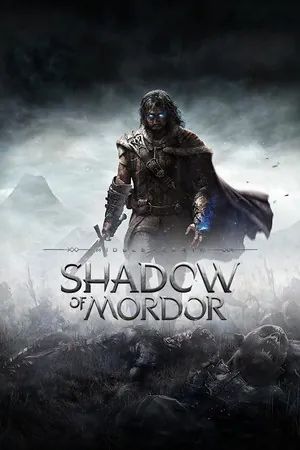
Middle-earth: Shadow of Mordor was one of the first titles to show what the new console generation, including Xbox One, could actually do extra. The player controls the ranger Talion, whose family falls at the hands of Sauron's servants and who, instead of dying, awakens bound to the spirit of an elven smith. That pair shares one body and one vengeance and sets out into Mordor to unravel the orc army from within. The narrative borrows names and motifs from Tolkien's world but takes its own, harsher path and doesn't try to be a reverent adaptation.
The real star is the Nemesis system. Every orc captain has a name, a rank, strengths and weaknesses, and their own memory. When they kill the player, they get promoted, gain scars, and mock him at their next encounter. When they survive fire, they start to fear it. Talion can kill the captains or use the wraith's abilities to dominate them, pit them against each other in an arena, and gradually build his own puppet army. Combat draws on the freeflow school of the Arkham games, supplemented with slow-motion archery and stealthy movement across rooftops and ruins. Gradually unlocked abilities turn the vulnerable ranger into the terror of the entire region, capable of turning an entire garrison against its commander during a single fortress assault.
Technically, this was a smoothly running game with large open areas, crowds of enemies on screen, and solid draw distance; visually it sticks to Mordor's grey-brown palette, which some criticized as monotonous. The music leans on drums and low strings, and when dozens of orcs pile onto the player, it works exactly as it should. Reception was strongly positive, and the Nemesis system collected innovation awards; its influence can be seen in many later games that attempted similarly personalized enemies. Today, Shadow of Mordor remains an example of how a single well-conceived system can overshadow a conventional story and the repetitive clearing of forward camps.
Game 64 of 204 for Xbox One