Little Nightmares
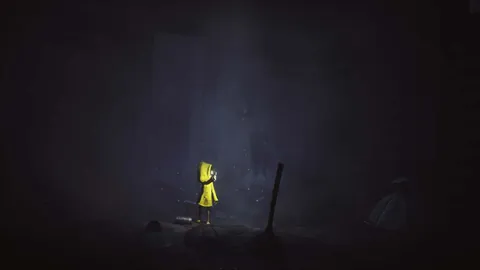
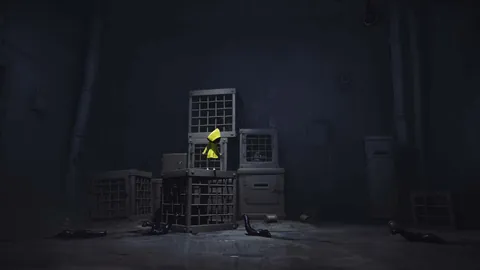
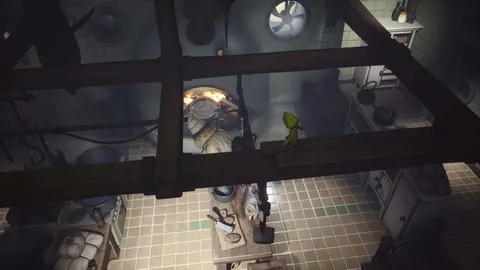
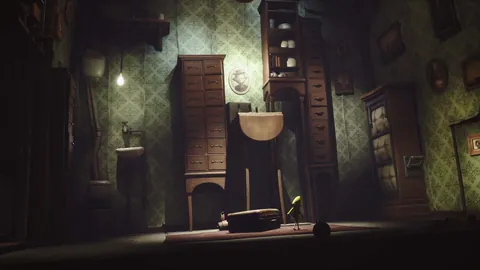
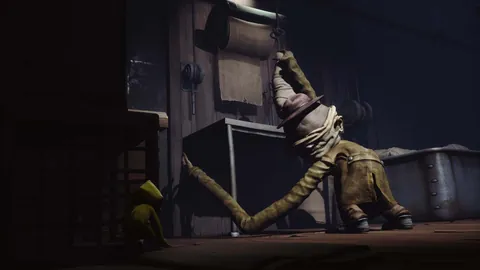
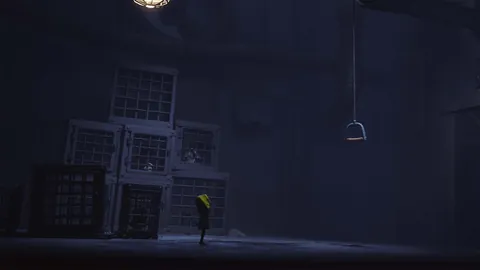
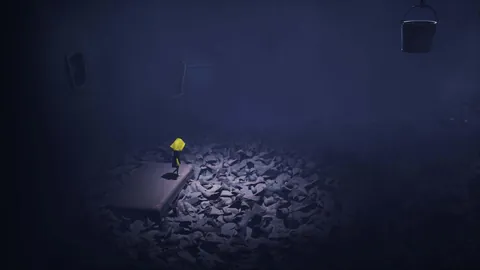
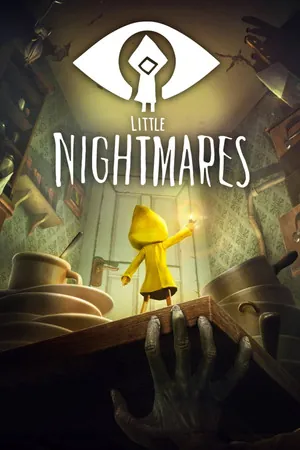
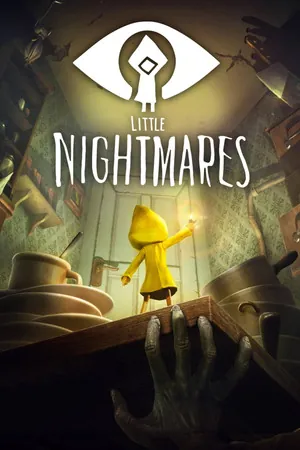
Little Nightmares brought a one-hour nightmare rendered as a platformer to Xbox One in 2017. You play as a girl in a yellow raincoat named Six, trapped aboard a giant vessel called The Maw, and all you have is a lighter, the ability to run, grab onto ledges, and hide. Progress relies on a mix of careful sneaking and physics puzzles — dragging chairs to reach a door handle, opening drawers as makeshift steps, or distracting an enemy with a thrown object. Enemies are monstrously distorted figures with long arms or blind eyes, and you have no defense against them, only hiding and speed.
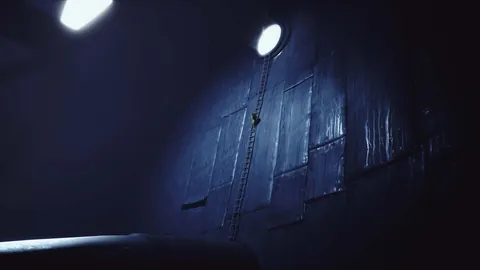
The game's strength lies in scale. The camera sits at a distance and the scene has strong depth, so you constantly feel how tiny you are compared to the furniture, kitchen counters, and the ship's other inhabitants. The environment resembles a puppet theater: soft light, dust hanging in the air, slightly blurred backgrounds, and materials that feel genuinely tangible. On Xbox One the game holds a steady frame rate, and the dark palette suits it well. Sound is just as important as visuals — creaking wood, footsteps overhead, smacking lips, and heavy breathing do more work than any music, which only kicks in at key moments and hits all the harder for it.
Reviews highlighted the atmosphere, the art direction, and how the game generates fear without cheap jump scares; criticism was mainly aimed at occasionally imprecise jumping caused by the scene's three-dimensional depth. Little Nightmares became the foundation of an entire franchise, expanded by additional chapters and a sequel, and made it clear that a horror platformer can work even without combat. Today it still holds up very well, offering a focused, roughly four-hour experience that doesn't overstay its welcome. On Xbox One it ranks among the best-looking indie games of its generation and is ideal for a single evening after which an unpleasant feeling lingers for a while.
Game 99 of 204 for Xbox One