 Commodore · 1985
Computers
Commodore Amiga
History & context
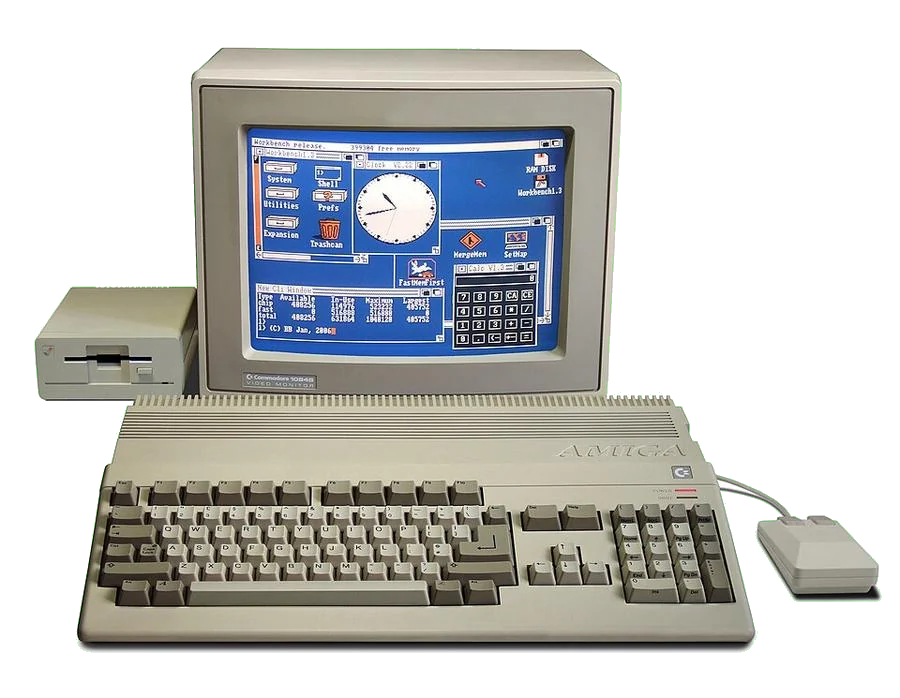
When Commodore unveiled the Amiga in 1985, it felt like a machine from another planet. At a time when the IBM PC was filling a green screen with characters and home eight-bits were scrapping over a handful of colours, the Amiga offered a full palette, smooth scrolling, multi-channel sampled sound and — something almost unheard of for its era — a genuine preemptive multitasking operating system. This was no accident. Behind the design stood the team around Jay Miner, the father of Atari's graphics chips, and at the heart of the computer sat a trio of specialised coprocessors that took work off the Motorola 68000 processor and turned the Amiga into a multimedia marvel. No wonder that a large part of the television graphics, music and video of the late 1980s and 1990s was created on it.
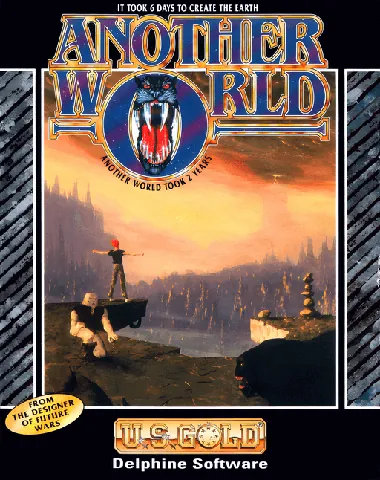
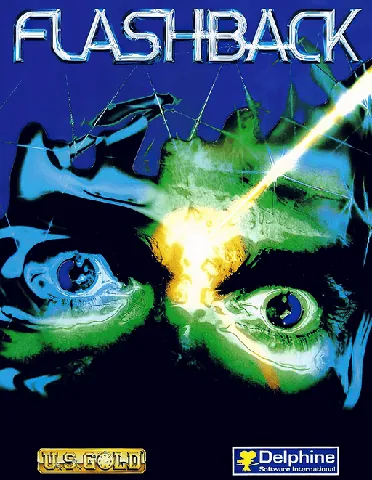
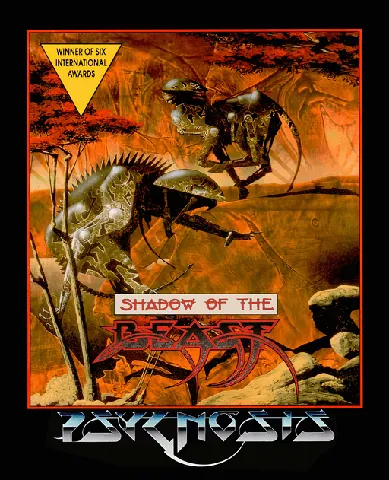
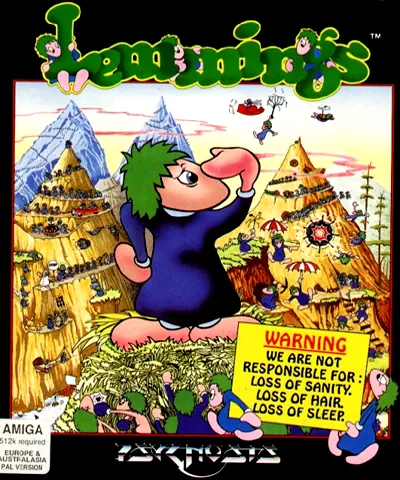
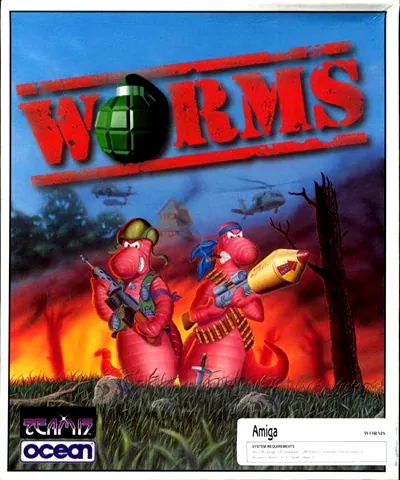
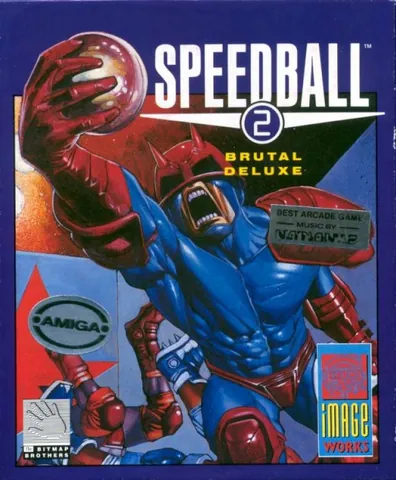
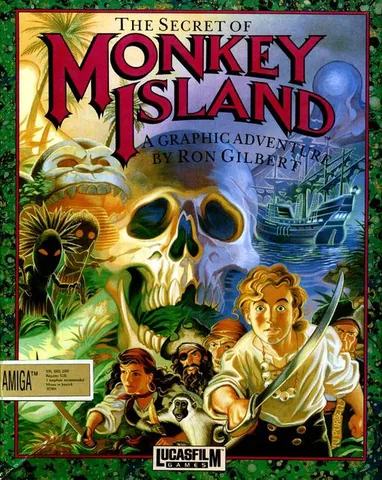
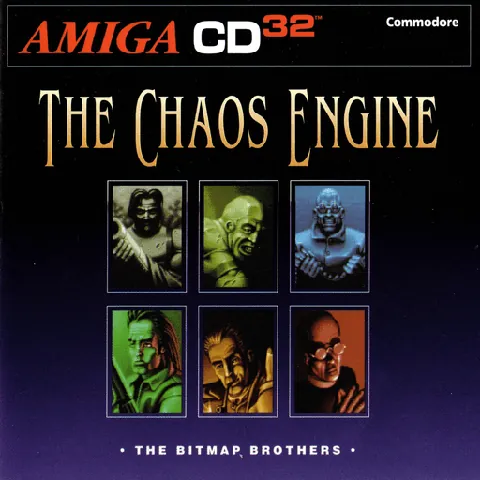
For games this meant a leap into another league. Shadow of the Beast, with its multi-layered parallax backgrounds and dozens of colours, stunned the whole world with what a home computer could actually do. The Amiga became home to genres and brands we still know today: Lemmings, Worms, Speedball 2, the cult Another World and Flashback were born here, and above all point & click adventures flourished — Monkey Island and Beneath a Steel Sky belong to the golden age of the genre. Britain's Bitmap Brothers, with stylish titles such as Chaos Engine, became icons of the Amiga scene. In Europe the Amiga dominated much as the Commodore 64 had before it.
Technology: graphics and sound
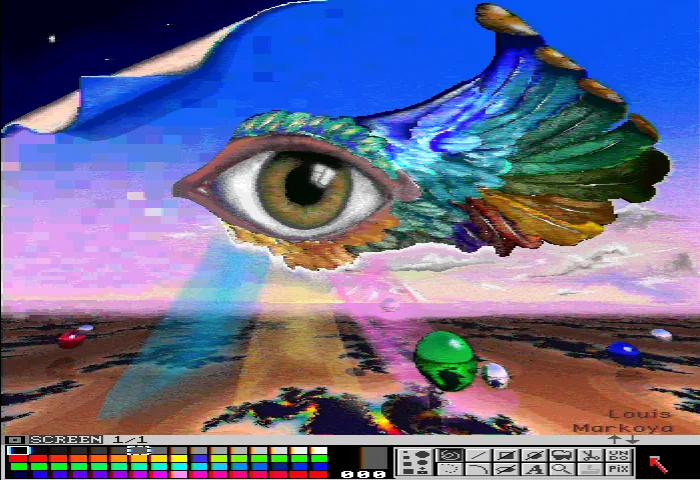
The Amiga's secret lay in a set of custom chips named after women — Agnus, Denise and Paula. Agnus contained the Blitter for lightning-fast movement of blocks of graphics in memory and the Copper, a coprocessor able to change display settings in the middle of a frame (hence those gorgeous colour gradients in the sky). Denise handled sprites and image generation, Paula the sound and the disk drive.
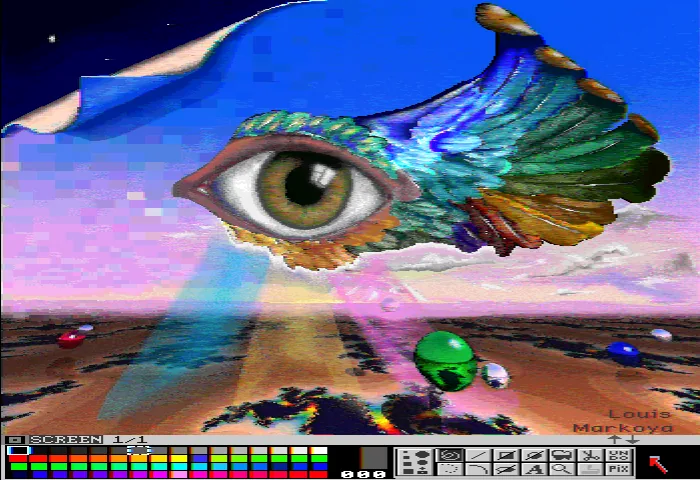
The standard resolution was 320×256 in PAL (or 320×200 in NTSC), with a palette of 4096 colours, of which 32 could commonly be displayed at once. Special modes pushed the boundaries further: HAM (Hold-And-Modify) allowed all 4096 colours to be shown at once, while EHB (Extra Half-Brite) offered 64. The hardware sprites, Blitter and Copper together enabled that famous smooth scrolling and dozens of moving objects without loading the processor.
The sound chip Paula was revolutionary: it offered 4 independent channels with 8-bit PCM samples and stereo output (two channels left, two right). Instead of purely chip-based synthesis the Amiga thus played real recordings of instruments — which gave rise to the phenomenon of tracker music (the MOD format) and to the whole demoscene, which wrung wonders out of the chips.
Connectivity and peripherals
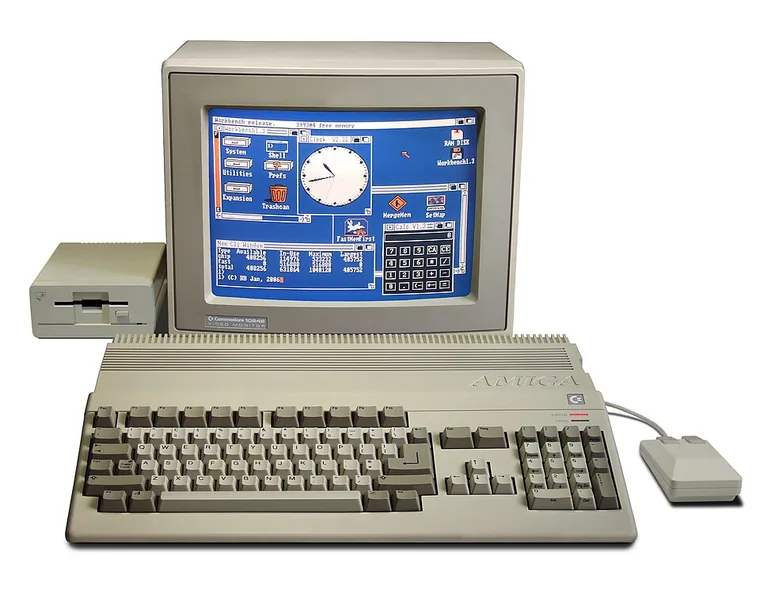
The Amiga was generously equipped for its time. Standard fare included two ports for joystick and mouse (the 500 model came with a mouse in the box — adventures and drawing programs would make no sense without it) and both serial and parallel ports. The AV output was crucial for games: composite video and separate stereo RCA jacks, so the sound from Paula rang out in full from a hi-fi system.
The floppy drive used a proprietary 880 KB format on a 3.5" disk. Available extras included a memory expansion card (typically into the so-called trapdoor slot beneath the computer, which expanded the A500 to 1 MB), external floppy drives, hard disks via controllers and accelerators with faster processors. Later models offered internal Zorro expansion slots.
Models and revisions
The Amiga line was broad. It began with the expensive professional Amiga 1000 (1985), soon followed by two pillars: the home Amiga 500 (1987) in the form of an all-in-one keyboard, which became the best-selling and most popular gaming model, and the desktop Amiga 2000 with slots for professional deployment.
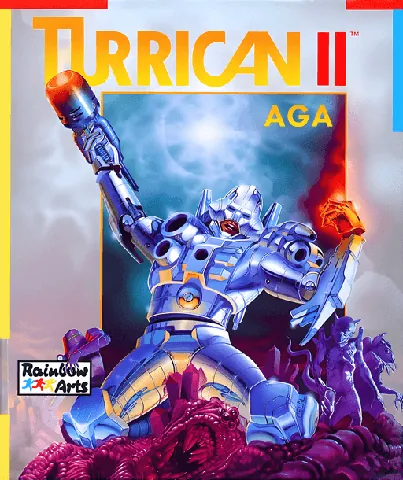
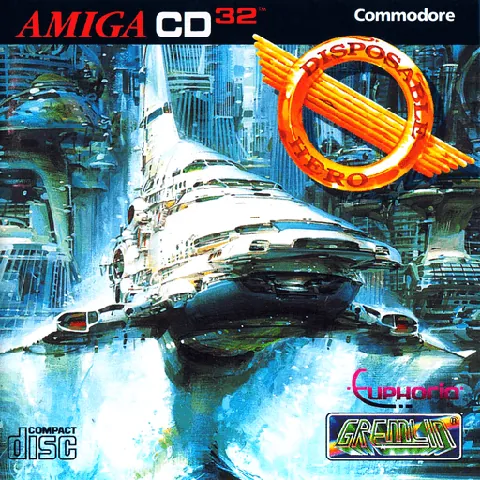
At the turn of the decade came the Amiga 3000 and, in 1992, the generation with the new AGA chipset: the affordable Amiga 1200 (successor to the A500 with 256 colours from a palette of 16.8 million) and the powerful Amiga 4000. Commodore also tried a console, the CDTV (1991), and later the gaming Amiga CD32 (1993) with a CD-ROM drive — the first 32-bit games console with CD on the market. Commercially it came too late; in 1994 Commodore went bankrupt.
Clones and variants
Because of its custom chips, the Amiga was not "cloned" as easily as the PC or the ZX Spectrum, so genuine hardware clones practically never appeared. There were, however, emulation add-ons in the opposite direction: cards and software that turned the Amiga into a PC (the Bridgeboard range) or a Macintosh (Emplant, ShapeShifter).
In Czechoslovakia the Amiga was a worshipped yet expensive and hard-to-obtain imported machine — unlike the ZX Spectrum, whose domestic clone Didaktik was made by Skalica and Didaktik. Here the Amiga was bought mainly by graphic artists, musicians and television studios; it kept its gaming popularity mostly within the community of enthusiasts and at floppy-disk swap meets.
Today's scene
The Amiga has one of the most devoted communities of all, and emulation today is mature. On the PC WinUAE reigns, while on handhelds and Linux its variant Amiberry does. The emulator needs a Kickstart ROM (a system file from the original machine) and games are best sourced in the WHDLoad format, which loads them quickly and reliably from disk instead of the tedious swapping of floppies. Most classics targeted the A500 model, which also serves as the basis for the recommended settings; for the most demanding AGA titles some minor performance tuning is occasionally needed.
But the scene is not just a museum — modern homebrew is being released too, for example stylish shmups such as Reshoot, new demo productions and even community hardware. The Amiga remains a symbol of "what might have been", a machine that was years ahead of its time.
Games on this platform (121)

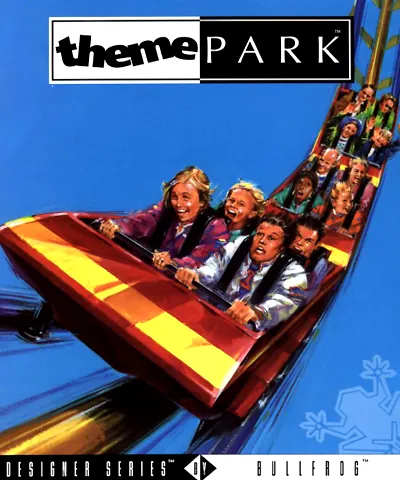
Theme Park
Bullfrog's management classic by Peter Molyneux; you build a park and watch the visitors.





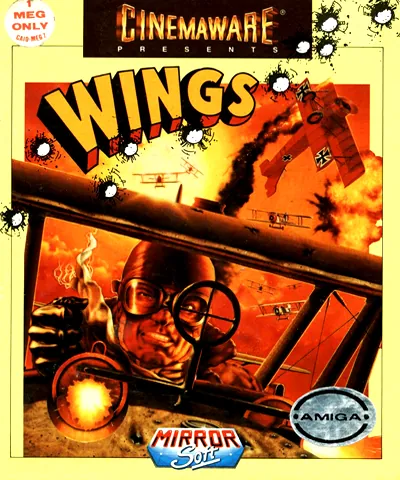
Wings
A Cinemaware flight adventure combining dogfights with cinematic cutscenes and personal drama.

No game in this genre.