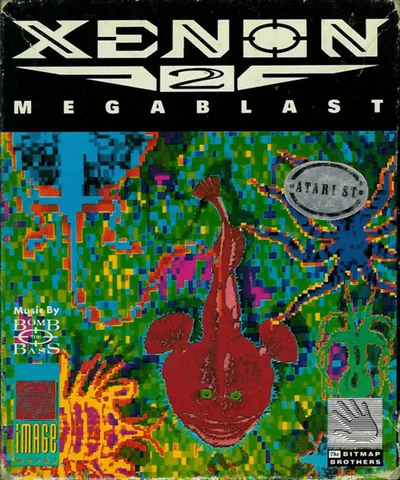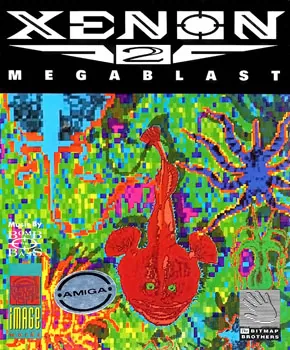
Xenon 2: Megablast
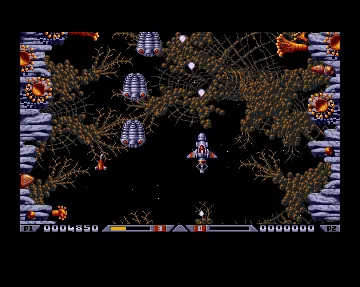
Xenon 2: Megablast is a vertically scrolling shoot 'em up from British studio The Bitmap Brothers that on the Amiga was among the best-selling and most highly regarded titles of the genre. The player pilots a combat ship that can switch between flight and ground modes, progressing through organically styled levels full of biomechanical enemies and giant bosses. Between sections the player can buy upgrades for weapons, shields, and companion drones in a shop, giving the game a light element of strategic planning beyond pure dodging and shooting. Deciding what to invest accumulated money in becomes just as important a part of progress as the firefights themselves.
Gameplay rests on carefully tuned difficulty and a variety of weapon combinations, letting the player gradually assemble their own build to match their playstyle. Visually the game impressed with finely drawn backgrounds and smooth animation, and for its time it was one of the best-looking titles on the Amiga altogether. The technical execution used the machine's hardware to the full and is still cited today as an example of just how far 16-bit computer graphics could be pushed in the action genre, convincing many players at the time that the Amiga could visually rival arcade machines.
An iconic part of the game is the music by Bob Catley and Bart Simon, reworked into chiptune form and featuring samples reminiscent of the track Da Da Da by the band Trio, which earned the game special attention from the contemporary press. Xenon 2: Megablast was met with high ratings in magazines on release and is still cited today as one of the defining shooters of the 16-bit home computer era. Its influence is visible in later Bitmap Brothers titles and in the general perception of the Amiga as a platform able to compete with arcade machines, and for genre fans it remains a must-play experience today, whether experienced on original hardware or through emulation.
Why play it: For shooter fans, Xenon 2: Megablast remains a must-play thanks to its music reworked from the track Da Da Da and its reputation as one of the defining titles of the 16-bit era.
Game 84 of 121 for Commodore Amiga