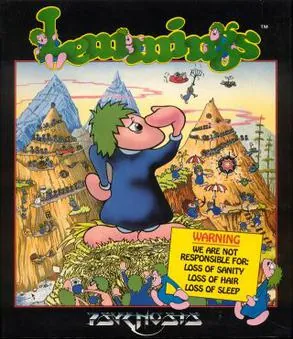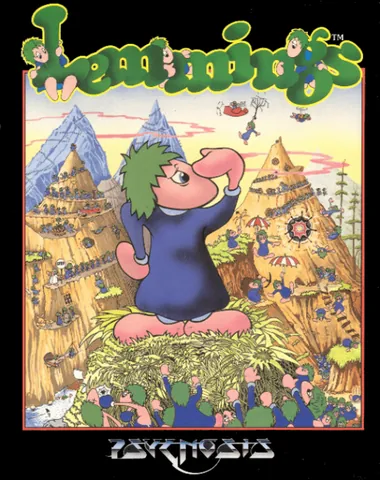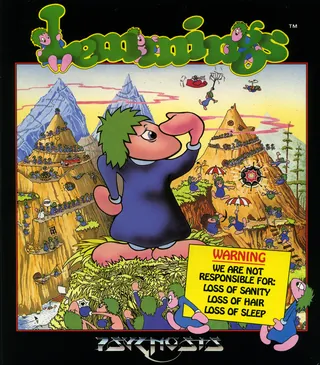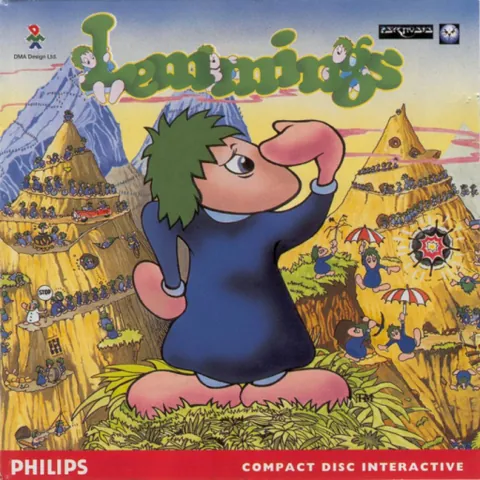
Lemmings
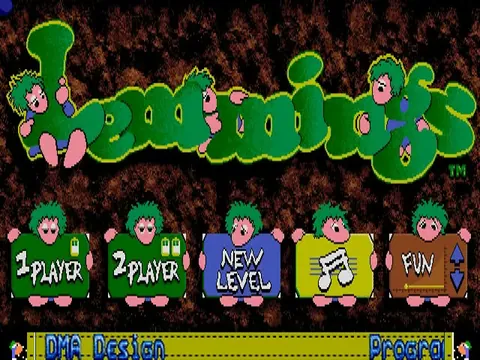
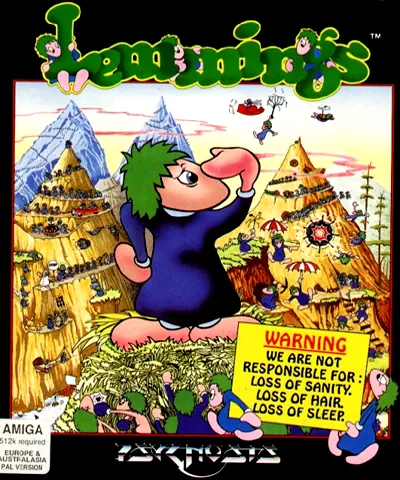
Little green-haired creatures that march mindlessly toward certain doom unless you help them in time. Lemmings from 1991 ranks among the most brilliant logic games ever, and on the Amiga, its home platform, it showed itself off in full glory.
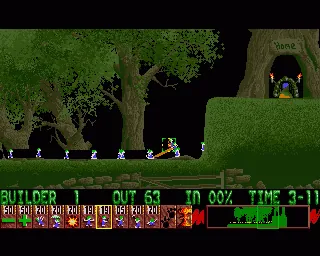
The principle is perfectly simple and at the same time inexhaustibly deep. A stream of lemmings pours from an opening, walking straight ahead, falling off cliffs and calmly striding into a chasm. Your task is to assign individual lemmings roles: diggers, bridge builders, blockers, floaters or, in extreme cases, the one who blows himself up. From the available abilities you must piece together a path that leads the required number of creatures to the exit.
The magic lies in how great depth arises from few rules. Each level is a puzzle that often has more than one solution, and the pressure grows with time and with the number of lemmings you are looking after. The game can be relaxed and insanely tense at the same moment.
Behind Lemmings stands the Scottish studio DMA Design, that is, the people who later created the Grand Theft Auto series. Even here you could see their sense for ideas, wit and gameplay. The title became an enormous commercial hit and was ported to just about everything that had a screen, from consoles to handheld devices.
Lemmings went down in history as one of the defining puzzle games of its time and still entertains today with its purity. It is proof that great game design does not need complexity, just a perfect idea taken to its logical conclusion.
Why play: A brilliantly simple idea with enormous depth; one of the best puzzles home computers ever received.
Game 5 of 121 for Commodore Amiga
The same title elsewhere (9)
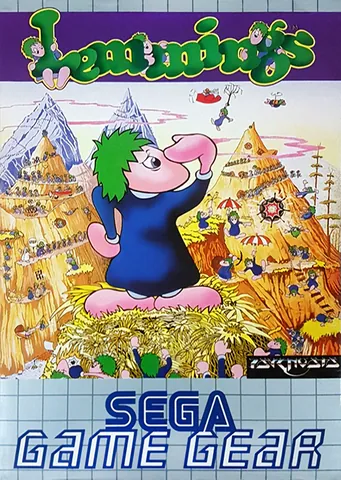
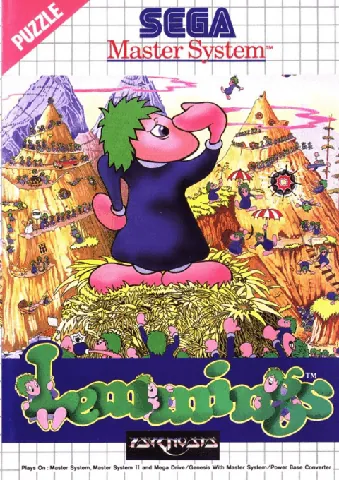
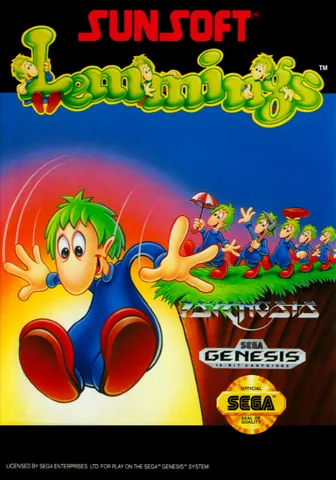
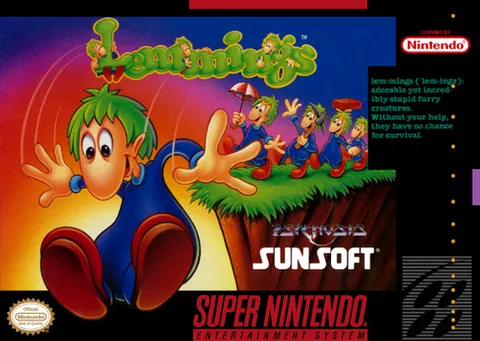
The Amiga is Lemmings' home platform and offers the reference version, with the full level count and smoothest mouse control. The DOS PC version stays very close, keeping mouse control equally precise, with EGA or VGA graphics only slightly adjusted. On the Commodore 64, developers had to split the game across multiple disks due to limited memory and reduce scrolling smoothness, yet preserved most levels. Portable versions for Game Boy and SEGA Game Gear suffer from small screen resolution — in hectic scenes with a hundred lemmings on screen it's hard to keep track, and D-pad control never quite matches mouse precision. On SEGA Mega Drive and Super Nintendo you play with a gamepad cursor, slower than a mouse, but both are colorful and include most original puzzles.