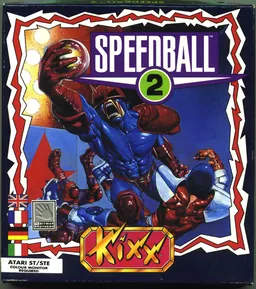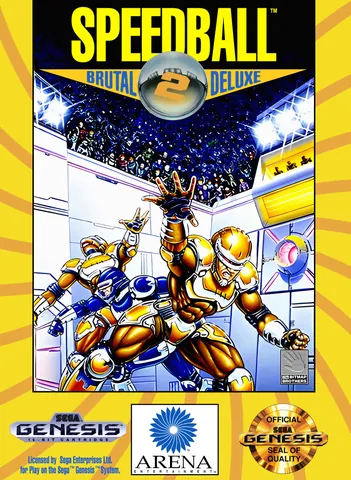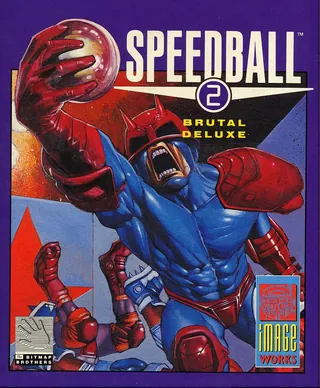
Speedball 2: Brutal Deluxe
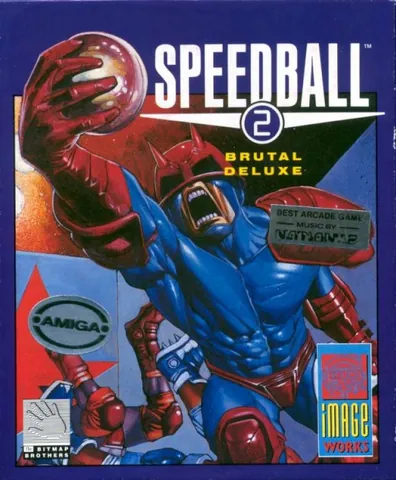
Ice Cream! Ice Cream! Every Amiga player who ever tasted Speedball 2: Brutal Deluxe knows this chant from the fans in the stands. This brutal futuristic sport from 1990 took metal, violence and a stylish aesthetic and mixed them into one of the most muscular titles of its time.
Speedball is an invented sport somewhere between football and handball, played in a metal arena with a steel ball. The rules are simple: get the ball into the opponent's goal. The catch is that you may injure, knock down and send your opponents to the infirmary with impunity. Points are collected through goals as well as hard hits, so every match becomes an adrenaline-fuelled brawl in which both strength and tactics matter.
Visually it is a textbook example of the hallmark of the studio Bitmap Brothers. Their cool, metallic, almost industrial aesthetic with sheen and grey became their signature, and Speedball 2 is its peak. The game feels harsh, stylish and grown-up, which fit its theme exactly.
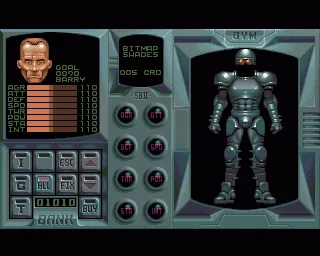
Besides the game on the field itself, the title also offers building your own team, buying players and upgrading their abilities, so it has strategic depth across a season. The absolute peak, however, is the multiplayer, in which two players batter each other for victory in a single arena, accompanied by that very famous chant.
Speedball 2 became one of the icons of the Amiga era and to this day stands as one of the best invented sports in the history of games. It even received later remakes, but the original retains its unmistakable charm.
Why play: A raw, stylish and addictive futuristic sport with the legendary atmosphere of the Bitmap Brothers; ideal when you want a metal brawl for two.
Game 9 of 121 for Commodore Amiga
The same title elsewhere (3)
The Commodore Amiga version is generally regarded by fans as the best — it benefited from a rich colour palette, smooth animation, and the Paula sound chip, which brought the game to life with sampled voice clips and a roaring crowd ('Ice Cream!') that added to the brutal arena atmosphere. The Atari ST had weaker colours and harsher, thinner sound from its YM2149 chip, giving the game a starker, less atmospheric feel. The PC/DOS version depended entirely on the graphics and sound card a player owned — with a sound card and VGA it came close to the Amiga, but without them both the music and the colours stayed noticeably poorer.