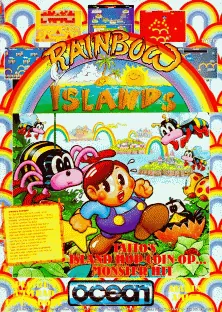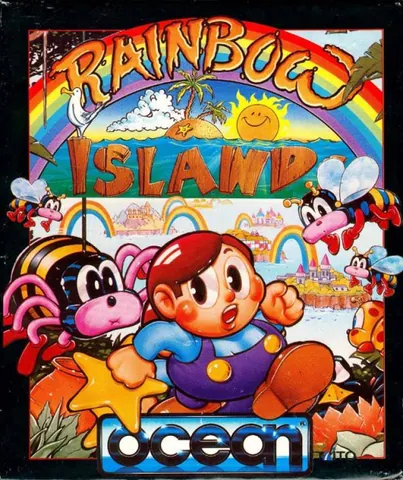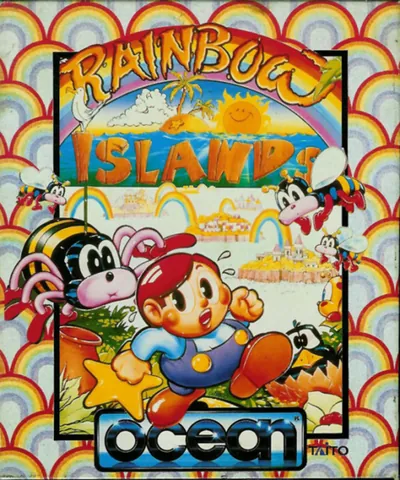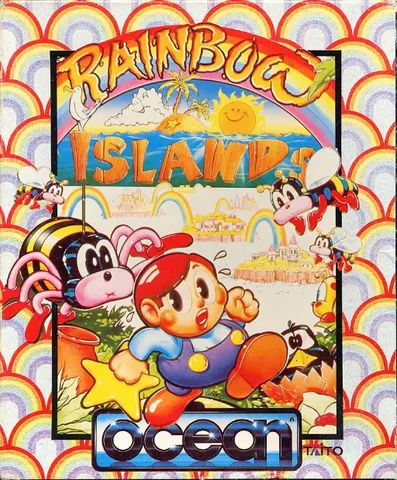
Rainbow Islands
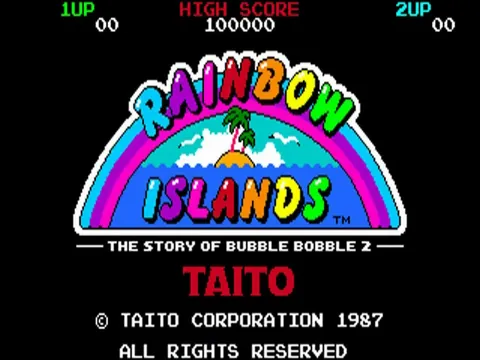
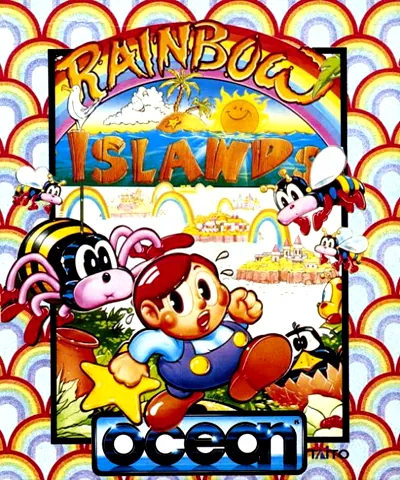
A snake turns out to be a rainbow, and the platformer turns into pure joy. Rainbow Islands, by its full name Rainbow Islands: The Story of Bubble Bobble 2, is an arcade classic by the studio Taito from 1987 that lit up screens on the Amiga with its colorfulness and surprising depth. It is a direct sequel to the beloved Bubble Bobble, this time, however, in the human form of the hero Bubby.
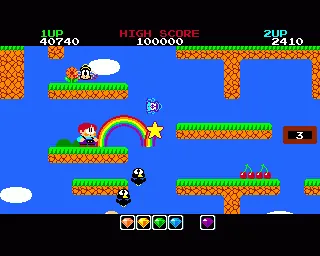
The key mechanic is shooting rainbows. Instead of bubbles, you create arcs of color that serve at once as a weapon against enemies and as stairs you climb upward. Each island consists of several levels, and the goal is to ascend before the rising water catches up with you. The game is famous for its abundance of hidden items, bonuses, and secrets; collecting diamonds in the correct order of colors unlocks hidden rooms and higher scores.
Taito was among the most inventive arcade studios in the second half of the 80s, and Rainbow Islands is a great proof of that. Beneath the adorable, brightly colored surface lies a surprisingly thought-out reward system and a secret, harder ending for the most stubborn. The home conversion for the Amiga, released at the turn of the 80s and 90s, was among the popular and visually accomplished ports.
Culturally, Rainbow Islands took its place alongside Bubble Bobble as one of the most characteristic titles of an era when arcades bet on instantly readable, friendly design. The catchy melody Over the Rainbow that accompanies the game became one of the hallmarks of the whole series. The game was later released on a number of platforms and saw modern reissues as well.
Today Rainbow Islands still feels fresh and accessible, and yet it hides enough depth to entertain even players seeking a challenge. It is an example of how a game can be both adorable and surprisingly complex.
Why play: For the joyful colorfulness, the original mechanic of rainbow stairs, and the surprising depth hidden beneath a welcoming surface.
Game 59 of 121 for Commodore Amiga
The same title elsewhere (6)
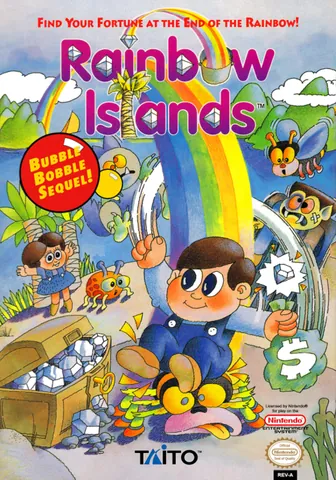
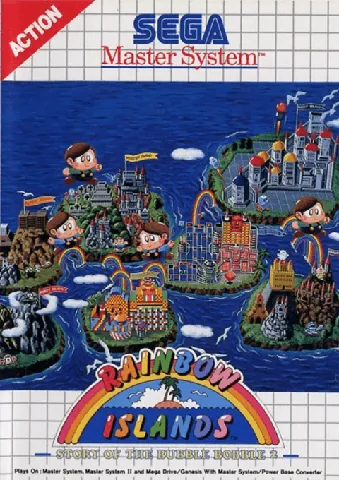
Rainbow Islands, the sequel to Bubble Bobble, differed across platforms mainly in how much colorful variety and smooth rainbow-climbing each system's hardware could handle. Taito's arcade machine remains the reference experience, with the richest color palette and smoothest movement. Amiga and Atari ST came closest to it, preserving both color and music. The 8-bit computers Commodore 64, ZX Spectrum, and Amstrad CPC had to limit on-screen colors and simplify backgrounds to keep scrolling playable, yet thanks to great music they earned their own loyal fans. The NES version was a direct rework by Taito with its own graphical style suited to the Nintendo console. SEGA Master System got a colorful conversion considered one of the nicer-looking ones among 8-bit consoles.