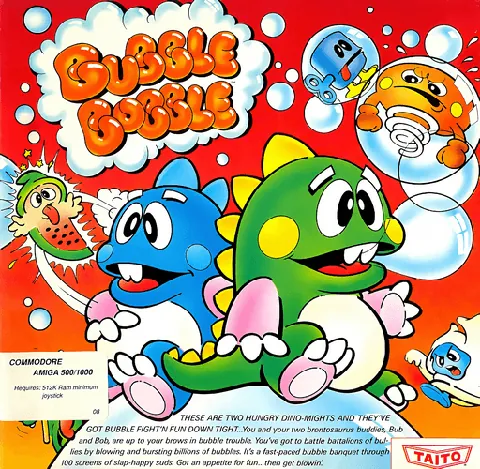
Bubble Bobble
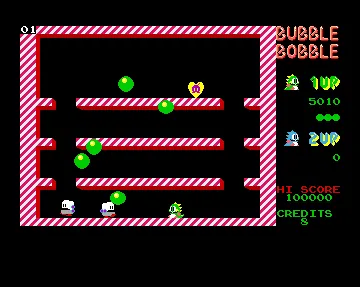
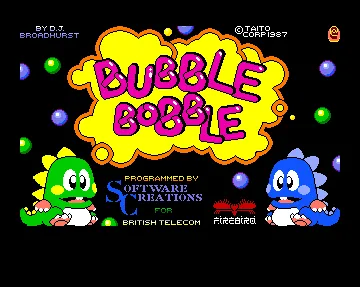
Two adorable little dragons, bubbles instead of weapons, and a hundred levels packed with enemies - Bubble Bobble is a game you can hardly not love, and on the Amiga it became shared fun for two players on one couch.
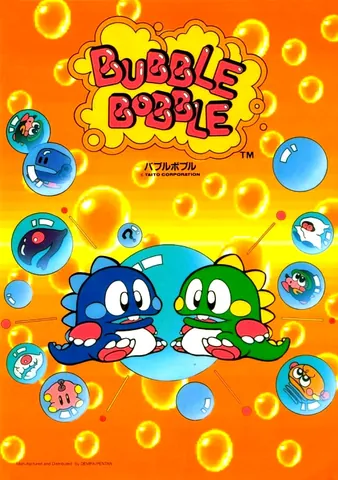
The original was created by the Japanese company Taito and arrived in arcades in 1986. The main heroes are the dragons Bub and Bob, who spew bubbles: they trap enemies inside them and then, by bursting them, turn them into fruit and treasures to collect. The principle is simple, but the real magic unlocks in two-player mode, where the cooperation of two players changes the pace and strategy of every screen.
The game contained a hundred levels and was famous for its secrets - hidden bonuses, the letters EXTEND whose collection rewarded the player, and above all a real ending that could be unlocked only by finishing cooperatively. This layer of hidden content made Bubble Bobble a game people returned to again and again.
The conversion for home computers was immensely popular in Europe, and the Commodore Amiga version benefited from more capable hardware - more colorful graphics and better sound managed to capture the infectious cheerfulness of the arcade original better than the 8-bit machines.
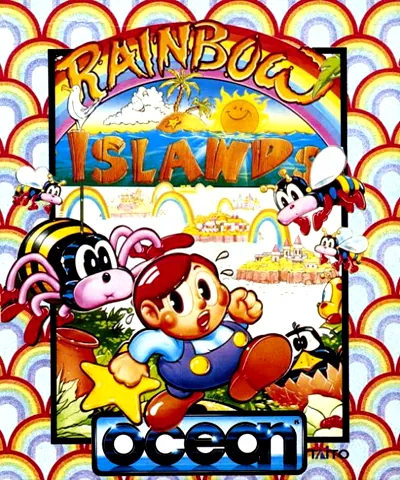
Bubble Bobble became the foundation of an entire series that continued with titles like Rainbow Islands and Parasol Stars, and its dragons joined the ranks of the most beloved mascots in gaming history. To this day it is remembered as a textbook example of the perfect cooperative arcade game.
Why play: For carefree, addictive, and above all superbly playable two-player fun that reliably conjures up a smile even after decades.
Game 53 of 121 for Commodore Amiga
The same title elsewhere (8)
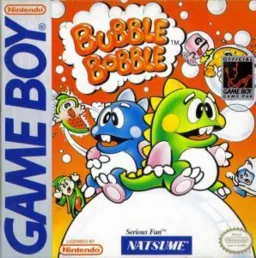
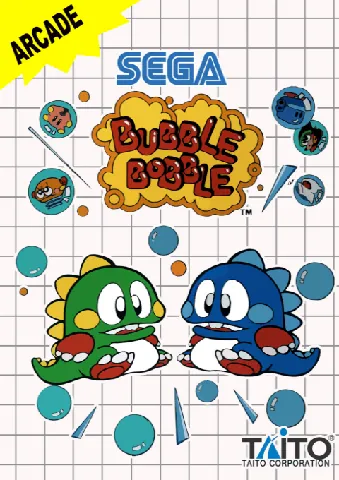
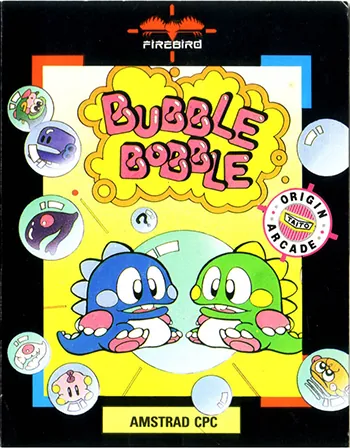
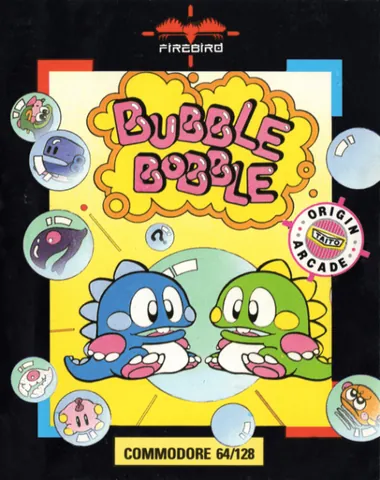
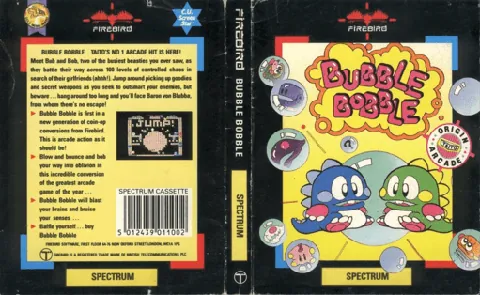
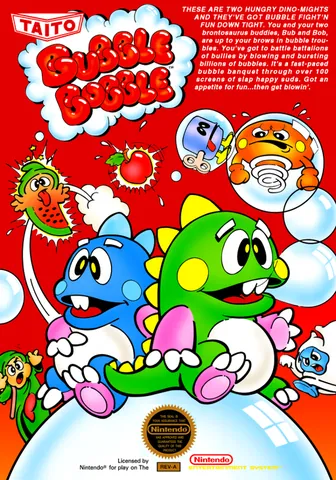
Taito's arcade original defined the game's charm, but home 8-bit versions earned their own reputation. The Commodore 64 version is famous for its music — the SID chip tune remains one of the most praised soundtracks of the 8-bit era. The NES conversion contains all one hundred original levels plus bonus modes and alternate endings, often seen as the most complete home version. ZX Spectrum and Amstrad CPC had to limit color and the smoothness of bubble movement due to weaker hardware, giving a plainer screen than the competition. Amiga and Atari ST offered faithful arcade-style graphics, but given the power of those machines, they're often judged as less ambitious ports than contemporary projects elsewhere. Game Boy reduced everything to a small monochrome screen, yet stayed addictive.