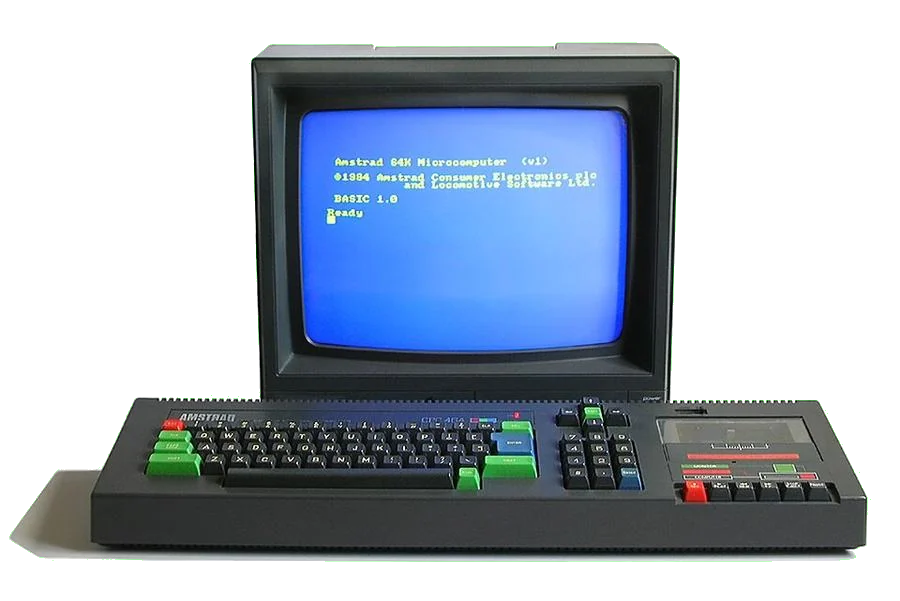
 Amstrad · 1984
Computers
Amstrad CPC
History & context
When Alan Sugar decided in 1984 that he would build a computer that every ordinary person would want in their living room, the result was a machine called the Amstrad CPC 464. The abbreviation CPC stood for Colour Personal Computer, and the brand's entire philosophy could be summed up in one phrase: the complete package. Whereas with the competing ZX Spectrum you had to source a television, a tape recorder and a power supply separately, Amstrad delivered a computer with a built-in cassette tape recorder (later a disk drive) and its own monitor in a single set. That made it a practical family machine that did not have to fight over the household TV.
The CPC caught on most strongly in Britain, France and Spain, where it still nurtures a strong nostalgic fan base to this day. In France it practically became the national computer, and a range of distinctive games and adventures were created there. It is powered by the eight-bit Zilog Z80 processor clocked at 4 MHz, so it shared the same foundation as the Spectrum for many titles — ports between the two platforms were common, only on the Amstrad they were usually in a more colourful and visually richer form.
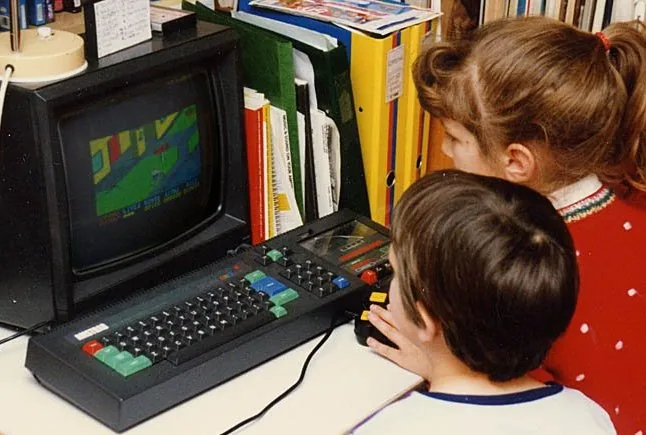
The graphics were handled by the CRTC (6845) chip, complemented by a chip generating colours from a palette of 27 colours. The CPC offered three main display modes, and choosing between them was a trade-off of resolution versus number of colours:
- Mode 0 — 160×200 pixels, but a full 16 colours at once; ideal for colourful, "chunky" pixels in arcade games.
- Mode 1 — 320×200 pixels and 4 colours; the most commonly used gaming mode, a good compromise.
- Mode 2 — 640×200 pixels and 2 colours; used mainly for text and office programs.
Compared to the Spectrum, the CPC had a major advantage in that it did not suffer from the so-called attribute clash — the colour collision where, on the Spectrum, only two colours could meet within a single character cell. The Amstrad therefore looked cleaner and more varied. Its weakness, on the other hand, was the missing hardware scrolling and sprites; everything was handled by the processor in software, so fast, smooth scrolling tended to be jerkier than on machines with dedicated hardware.
Sound was provided by the well-known General Instrument AY-3-8912 chip with three tone channels plus a noise generator. Owners of the Atari ST or MSX knew the same circuit, as did the 128K version of the later Spectrums. Thanks to it, the CPC could handle decent music and sound effects, and the music scene flourished on it.
From the outset the CPC had a convenient joystick connection right on the back (a standard nine-pin Atari connector), so there was no need to buy an interface as with the Spectrum. A key role was played by the monitor, which came in two variants: the monochrome green GT-65 and the colour CTM-644. The base unit itself drew its power from the monitor, so it was a well-thought-out but at the same time tightly bound system.
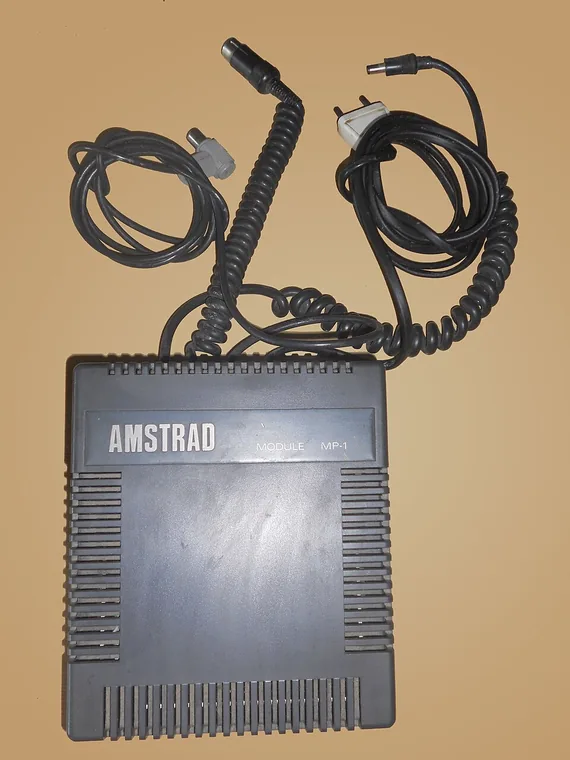
The MP-1 / MP-2 modulator and adapter served to connect it to an ordinary television or another image source. Among the other accessories worth mentioning are printers via the Centronics port and, within the broader ecosystem, the possibility of a memory expansion.
Models and revisions
The CPC line went through several important variants:
- CPC 464 (1984) — the first model with 64 KB of RAM and an integrated cassette tape recorder.
- CPC 664 (1985) — a briefly produced model that was the first to bring a built-in 3-inch disk drive.
- CPC 6128 (1985) — the most capable classic model with 128 KB of RAM and a disk drive; also popular for working with the CP/M operating system.
The use of 3-inch disks was distinctive (rather than the more common 3.5"), which Amstrad also adopted for its PCW word processors. At the twilight of the era, in 1990, the modernised Plus line arrived under new ownership — the 464 Plus and 6128 Plus models with an extended palette of 4096 colours, hardware sprites and cartridge support. Alongside them, the GX4000 games console was also created, built on the same foundation, though it failed to succeed on the market.
Clones and variants
The Amstrad CPC did not spawn as many unofficial clones as the Spectrum, but this architecture appeared in the Eastern Bloc too. The most notable mark was left in the German Democratic Republic by the KC compact computer (1989), which was an East German clone of the CPC compatible with its software.
From the standpoint of the Czechoslovak footprint, the CPC remained rarer here than the ubiquitous Spectrums and their domestic Didaktik clones — Amstrad hardly ever reached us officially and was more a matter of imports. Historically, machines compatible with the Spectrum dominated here, while the CPC remained a more exotic choice for most Czech and Slovak players.
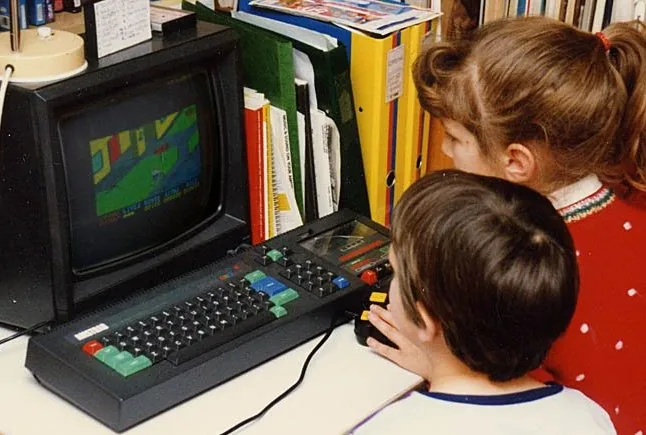
Emulation of the Amstrad CPC is trouble-free today. Among the top emulators are WinAPE and the multiplatform CPCEC or Caprice32; they also run comfortably within the collecting frontend RetroArch. Original game recordings are distributed as disk images (.DSK) or cassette images.
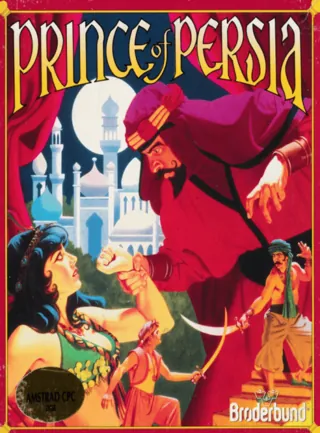
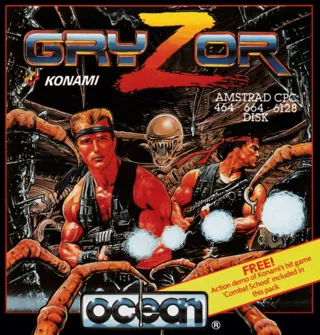
But what is nicest of all, the scene around the CPC is still alive. New homebrew titles and remakes are being created, among them for instance the acclaimed adventure Orion Prime. Competitions for new games and demos are held regularly, thanks to which the eight-bit Amstrad keeps pixelling on even four decades after its launch. For the retro gamer who already knows the Spectrum and the Commodore, the CPC is a pleasant discovery — a European 8-bit classic in a more colourful coat, full of gems like Prince of Persia, Gryzor, Rick Dangerous or Chase H.Q.
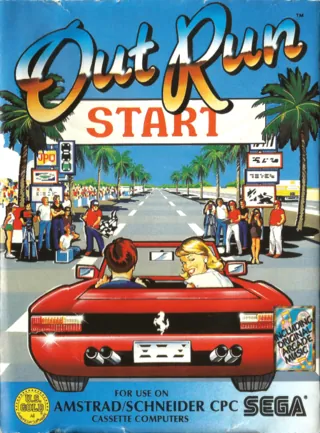
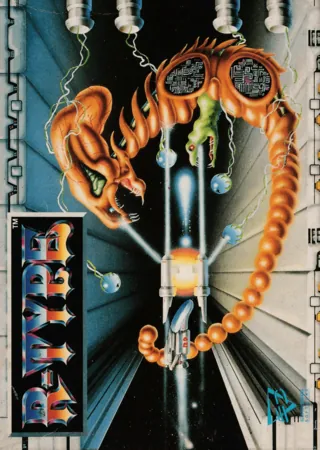
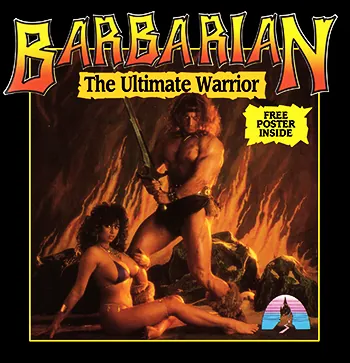
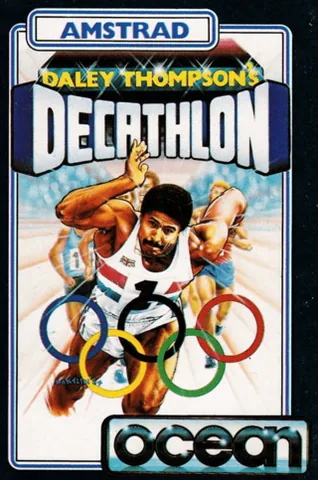
Games on this platform (26)




No game in this genre.