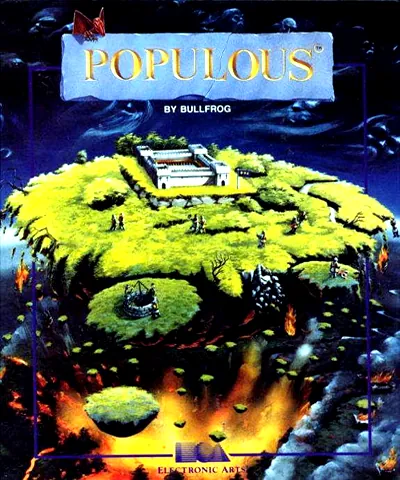
Populous
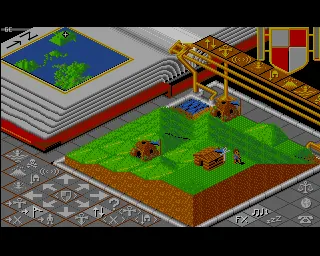
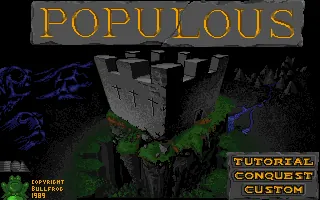
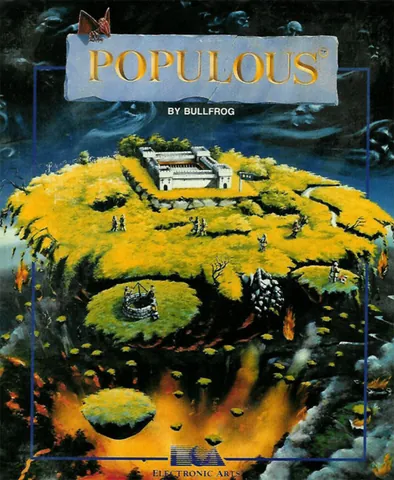
Populous is among the titles that literally founded a new game genre on the Amiga, the so-called god game. The player takes on the role of a deity who, through direct interventions in the landscape — raising and lowering terrain, sending down disasters or, conversely, blessings — leads their tribe of followers to expand and drive the rival people off the island. The controls are simple and intuitive: spells are selected and the terrain is adjusted with the mouse, while individual settlers behave semi-autonomously according to the conditions the player creates for them, building houses on leveled ground and seeking out the enemy on their own.
Gameplay rests on a delicate balance between terraforming and managing the mana energy the player needs to cast increasingly powerful spells, from earthquakes and swamps all the way to summoning the mighty Armageddon. As the game progresses, new spells and smarter opponents are added, so beneath the seemingly simple principle lie dozens of levels of increasing difficulty and variety. On the Amiga, the game made use of the machine's contemporary graphical capabilities for a clear isometric depiction of the islands and smooth map scrolling, which felt very fresh at the time, and it also offered two-player combat via a serial link between two computers, a fairly rare multiplayer feature in 1989. The game also fit comfortably into computers with minimal memory, so practically the entire Amiga community of the time could afford it.
The restrained but apt sound accompaniment reinforces the sense of omniscient power the player holds over their world, and simple melodies change according to the current events on the map. Populous met with markedly positive reception on release and is still considered the founding work of the entire god-game genre, which inspired not only its own sequels but also a number of other strategy titles across platforms. Even years later, it remains an exemplary case of how to squeeze a deep and addictive game system out of a simple idea, one that nevertheless fits into a few hundred kilobytes of memory.
Why play: Because of how it squeezed a deep and addictive system out of a simple idea, Populous remains the founding work of the god-game genre and is worth trying even decades later.
Game 103 of 121 for Commodore Amiga
The same title elsewhere (4)
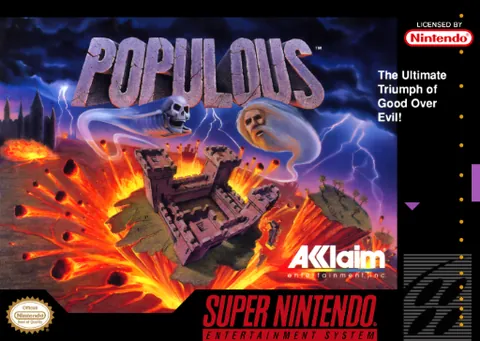
The Atari ST was Bullfrog's home development platform and defined the game's look and pacing. The PC/DOS version depended heavily on the sound card fitted — a bare PC speaker gives thin, chirpy beeps, while an AdLib or Sound Blaster card unlocks a far fuller sound, and the graphics likewise varied with the video card (CGA/EGA/VGA). The Super Nintendo release swapped the mouse for a gamepad, changing the rhythm of careful terrain-shaping, but it gained cleaner colours from the SNES's own palette and added an exclusive extra land plus two-player play over a link cable. Anyone wanting Populous in its purest form should reach for the Atari ST; anyone after more comfortable controls will appreciate the SNES.