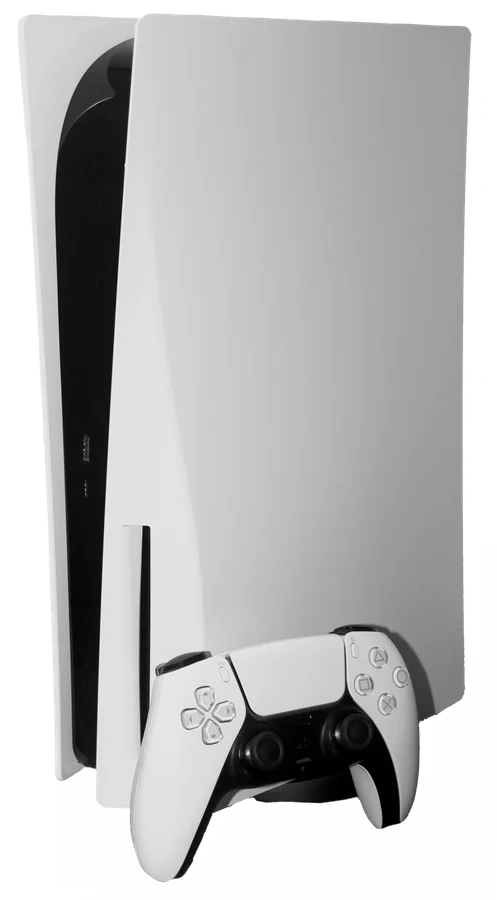
 Sony · 2020
Game consoles
Sony PlayStation 5
History & context
When the PlayStation 5 arrived on the market in November 2020, it landed in a world that wasn't exactly in a celebratory mood. The pandemic had shut down stores, production lines were faltering, and Sony's new console became, for a large portion of gamers, more of a hunt than a routine purchase. Yet — or perhaps precisely because of that — the PS5 went down as one of the most anticipated hardware launches in the history of the gaming industry. The bulky black-and-white machine with its dramatic curves divided opinions at first glance, but what it could do on the inside was far more interesting than its design.
This time, Sony didn't arrive with an architectural revolution the way it had with the PlayStation 3. On the contrary — it continued the proven path set with the PS4 and built the console on standard x86-64 hardware from AMD. The real novelty lay elsewhere: in storage. The extremely fast custom SSD wasn't just a marketing figure but an element that changed game design itself — the end of long loading screens, the end of hidden "elevators" and corridors meant to mask data loading.
The PS5 is also the only platform in this overview that is not retro. It's the current generation, a machine that's still on sale today and for which new games are still being released. We include it in the list for the sake of completeness — as the latest chapter in a long line that began with a gray box with a CD drive in 1994.
Technology: graphics and sound
At the heart of the PS5 is an eight-core AMD processor built on Zen 2 architecture, paired with an RDNA 2 graphics core. Both are based on technologies AMD was deploying in PCs at the same time, reaffirming the strategy of "PC-adjacent hardware, easy porting." For the first time in the history of Sony consoles, the graphics chip handles hardware-accelerated ray tracing — calculating reflections, shadows, and lighting by tracing rays, a technique that used to belong exclusively to the world of film production and expensive workstations.
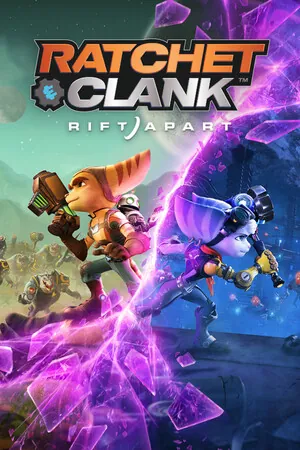
The key weapon, though, is the aforementioned SSD with its own controller and a dedicated unit for data decompression. This offloads the processor and allows content to stream into memory at a pace classic console hard drives never offered. Thanks to this, developers could design worlds with instant transitions between locations and considerably more detailed textures. A showcase example where the benefit was obvious at first glance was Ratchet & Clank: Rift Apart.
On the audio side, Sony introduced its own spatial audio solution, which tries to place sound sources in three-dimensional space around the player even on ordinary headphones. On the video side, the console targets 4K resolution, higher frame rates, and HDR, with many games offering a choice between a quality-focused mode and a performance-focused mode.
DualSense and peripherals
The PS5's biggest surprise, however, was hidden in the controller. DualSense abandoned the twenty-year-old DualShock name, and with it the classic rumbling vibration. It was replaced by haptic feedback, capable of simulating surprisingly subtle sensations — grainy sand underfoot, raindrops, the click of a mechanism. Added to that were adaptive triggers, which apply variable resistance: a taut bowstring, a jamming weapon, or a stiff brake could suddenly be felt in your fingers.
The pre-installed game Astro's Playroom served as an impressive showcase of both and remained, for many players, the best demonstration of what the controller can do. The console was later joined by the PlayStation VR2 headset, which continued the virtual reality line from the PS4 era, this time with its own motion tracking that requires no external camera.
Models and revisions
Alongside the standard model, Sony also introduced the Digital Edition — a variant without an optical drive, cheaper, but relying exclusively on digital purchases. The choice between the disc and the purely digital version became a regular part of the buying decision.
Later came the Slim revision with a smaller, lighter case and the option to attach the disc drive to the base unit afterward, and finally the more powerful PS5 Pro for players who wanted to squeeze the maximum visual quality out of the console. As with the PS4 Pro, games remain compatible across models — the Pro offers better visuals, not a different library.
PSN, backward compatibility, and games
The PS5 is backward compatible with the PlayStation 4. The vast majority of previous-generation games run on it, often with smoother performance and a more stable image, and saved games can be transferred as well. For owners of large libraries, this was a major argument — switching to the new console didn't mean starting from scratch.
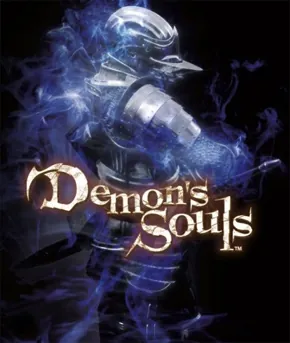
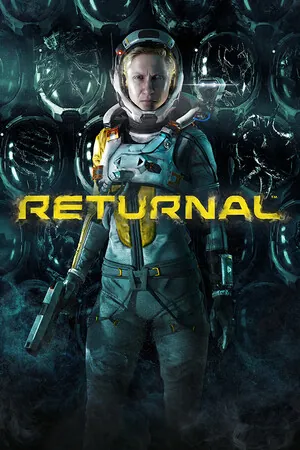
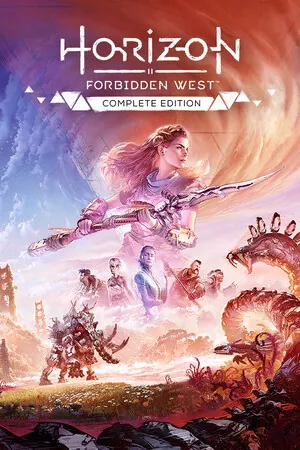
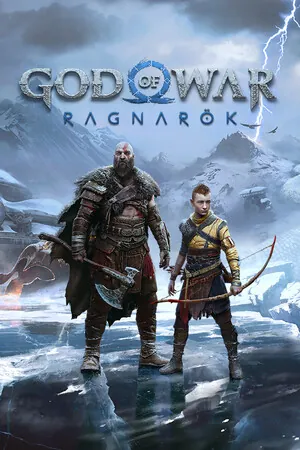
The PS5's catalog leaned on strong single-player franchises: the Demon's Souls remake, Marvel's Spider-Man: Miles Morales, Returnal, Horizon Forbidden West, and God of War Ragnarök. Meanwhile, the PlayStation Plus subscription branched out into several tiers, with the higher ones offering a catalog of downloadable and streamed games, including older titles from Sony's back catalog.
For roughly the first two years, however, the platform fought a different battle than competition: a shortage of units. A worldwide chip shortage crippled production, consoles vanished from online stores within seconds, and scalpers resold them at steep markups. The situation only evened out later, bringing the PS5 back to the status of a normally available product.
The scene today
Because it's a current generation console, none of what we're used to with older platforms applies to the PS5. Emulation practically doesn't exist — and even if it appeared, it would have no purpose: the console is still being sold and games for it are still being released. You won't be able to play the PS5 on devices like Batocera or a handheld Anbernic, and you won't be able to for the foreseeable future.
The path to games is the standard one: physical discs for disc-equipped models, digital purchases through the PlayStation Store, or a subscription. The second-hand market for both consoles and games is rich, and previous-generation games on disc can often be had for a fraction of their original price. For collectors, it's also worth noting that the disc-equipped PS5 can play physical PS4 games — from the perspective of long-term library preservation, that's not a small thing. In a few years the PS5 will become another chapter of retro history; for now, though, it's still writing the current one.
Games on this platform (176)



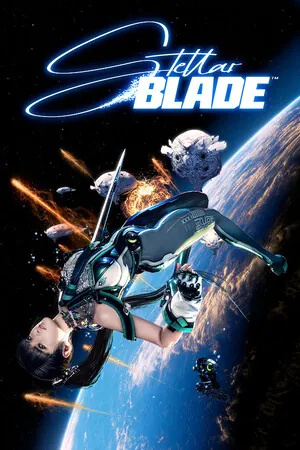
Stellar Blade
An action adventure about soldier Eve, who cleanses Earth of creatures called Naytiba.



















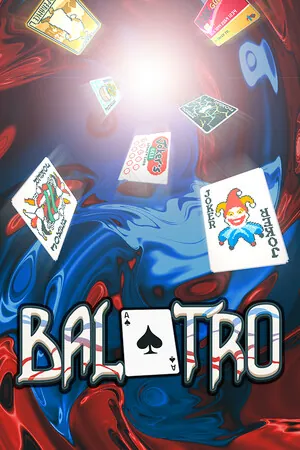
Balatro
A card roguelike that blends poker with deckbuilding; jokers change the rules and the score.











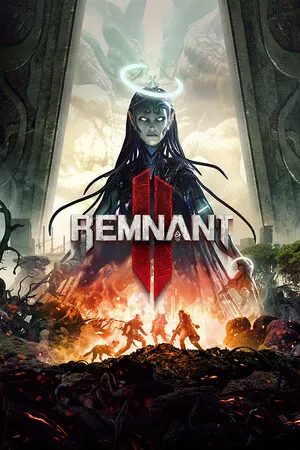
Remnant II
A soulslike shooter for up to three players; procedural worlds and Archetypes to combine.













































No game in this genre.