
Hades
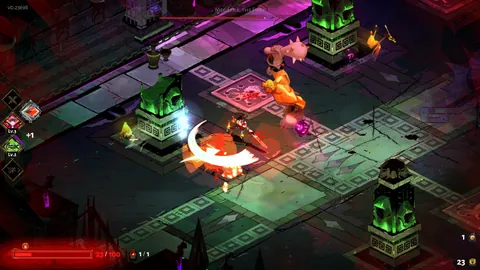
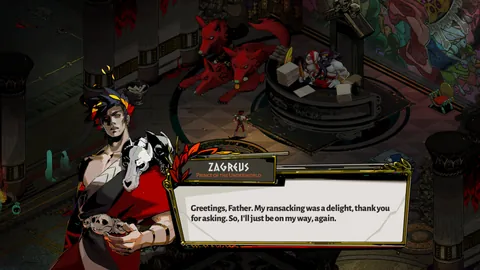

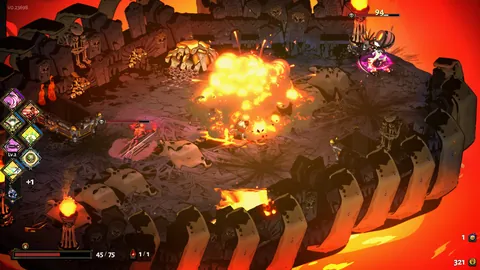
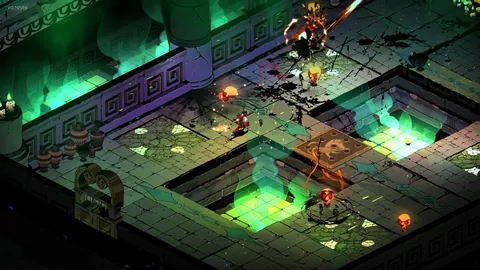
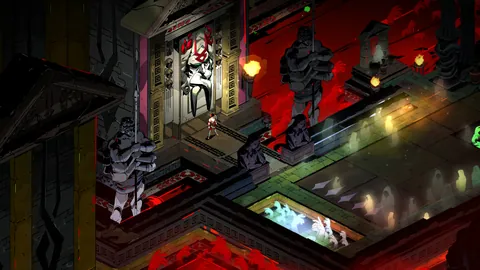

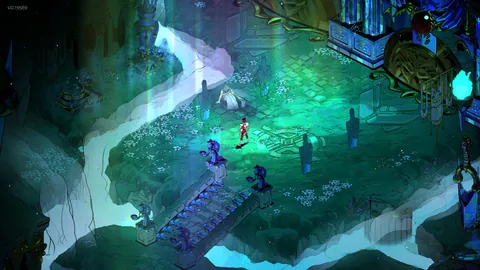
Hades is an action roguelike about Zagreus, son of the god of the underworld, who is trying to escape his father's realm and reach the surface. Every attempt follows the same room structure, but the contents and layout change each time, and after each death the hero returns home to try again. These returns are the heart of the game: between runs, relationships with the underworld's inhabitants deepen, gathered resources are spent on permanent upgrades, and new weapons are unlocked, from a sword to a bow to a thrown shield. During each escape attempt the player collects boons from the Olympian gods that alter how attacks behave, and their combinations produce a different-feeling build every time.
Combat is fast, readable, and built around dodging at the right moment; the difficulty is high, but every death pushes the story forward, so failure never feels like wasted time. The narrative is assembled from thousands of short dialogue lines that react to whatever just happened, gradually revealing a family drama rather than a single ending. Visually the game rests on hand-drawn portraits and a rich color palette for each region of the underworld, while the music combines rock guitars with Greek stringed instruments and ranks among the most praised game soundtracks of recent years. The PlayStation 5 version offers a high frame rate, near-zero loading between rooms, and haptic feedback that distinguishes each weapon.
Reception was extraordinary; the game collected numerous awards and became a textbook example of how to combine randomly generated progression with a tightly written story. Its influence on the genre is clear — many later roguelikes adopted the idea that death should advance both the narrative and permanent progression. Today Hades feels like an almost flawlessly balanced title that's hard to put down after just one run, and the best entry point into a genre that can otherwise be unforgiving.
Game 50 of 176 for Sony PlayStation 5