 IBM PC a klony · 1995
Computers
PC / Pentium a Windows 9x
History & context
The second half of the nineties was the period when the office box became the most powerful gaming machine in the world. It kicked off with the arrival of Intel Pentium processors and, in 1995, Windows 95 with its 32-bit environment and unified hardware interface. Until then, every game handled its own drivers — during installation, the player manually picked the sound card model and set the IRQ, DMA channel, and port address, and if you got it wrong, the game stayed silent or crashed. With the arrival of DirectX, the era of magic numbers ended.
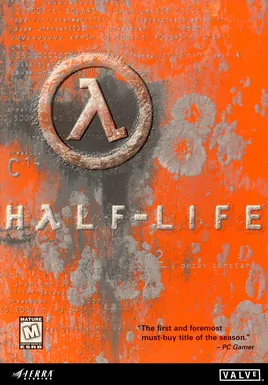
The transition wasn't instant: 1995 to 1997 belonged to titles released in both DOS and Windows versions, and only by the end of the decade did Windows fully take over. At the same time, the fastest technological spiral in gaming history got underway — whatever was cutting-edge in spring was average by Christmas. In terms of games, this was a golden age: the modern FPS was born here in the shape of Quake, Unreal, and Half-Life, real-time strategy games and simulators flourished along with the first big 3D RPGs — and because the PC wasn't a closed console, an enormous modding scene grew up around it.
Technology: graphics and sound
The biggest topic of the era was 3D accelerators. Until 1996, all 3D graphics were calculated in software on the CPU — hence the coarse, juddering textures at 320×200 resolution. Then along came 3dfx with the Voodoo Graphics card and the Glide interface, and the difference was night and day. Hardware acceleration brought bilinear texture filtering, perspective correction, transparency, higher resolution, and above all smoothness. For a lot of people, GLQuake on a Voodoo was the moment PC gaming changed for good.
The first Voodoo was still an add-in card connected by a cable to regular 2D graphics; Voodoo2 could run SLI mode with two cards side by side. But the competition quickly caught up: NVIDIA came out with the RIVA TNT and TNT2 chips, which combined 2D and 3D on a single card and bet on OpenGL and Direct3D, and in 1999 released the GeForce 256 — the first mainstream card with hardware T&L, meaning geometry and lighting calculations right on the graphics chip. ATI, meanwhile, offered the Rage line and, in 2000, the first Radeon. The 3dfx era was over.
Sound had its own development. The Sound Blaster line remained the standard, from the SB16 through the AWE32 and AWE64 with wavetable synthesis for better MIDI music; later came cards with hardware acceleration and 3D sound via A3D and EAX, which let you actually hear that the gunfire was coming from behind you. The CD-ROM was crucial too: games started playing full CD Audio tracks instead of chip music. Toward the end of the era, MP3 joined in.
Connectivity and peripherals
The baseline system moved from tens to hundreds of megahertz within a few years. Pentium gained MMX instructions, memory moved from EDO RAM to SDRAM, and graphics moved from the PCI bus to the dedicated AGP port with faster access to main memory.
For control, the standard that still holds today was established: keyboard and mouse. In shooters, the WASD + mouse scheme took hold — moving with the left hand and looking with the right — a combination born in the community around Quake. Simulators called for joysticks and flight control sets, racing games called for force-feedback steering wheels.
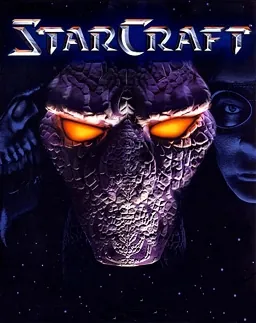
The biggest social change was online gaming. It started with a modem and a direct dial-up connection between two computers, then dial-up connections with high ping and a phone bill nobody wanted to explain at home. The first online services and lobby systems appeared. LAN parties became legendary — weekends when towers, monitors, and metres of cable got hauled into one room for a game of Quake or StarCraft.
Models and revisions
The PC differed from consoles in that no single "model" existed — a build was always an assembly of parts. Still, the era can be divided by processor: Pentium and its MMX version, then Pentium II in a slot-in cartridge, and finally Pentium III. Media changed in parallel: floppy disks were phased out, and the CD-ROM became the sole medium. Installations of hundreds of megabytes stopped being unusual, and big games shipped on several discs.
Clones and variants
The openness of the architecture was the PC's greatest strength. Compatible computers could be built by anyone, and Intel wasn't the only one supplying processors — the rival was AMD with its K6 line and, from 1999, the Athlon, which for the first time genuinely gave Intel a run for its money; Cyrix also offered a cheap alternative. Thanks to this competition, prices stayed low and performance climbed at a breathtaking pace.
In the Czech environment, this meant a boom of custom-built systems from computer markets and small local vendors. Companies mainly bought branded complete PCs, while gamers assembled their own machines piece by piece and upgraded gradually — new graphics card this year, processor next year. Gaming magazines with cover-mounted CDs were a source of demos and drivers.
The scene today
Retro PC gaming today has several paths. For transitional DOS titles, DOSBox helps; for classic adventure games, ScummVM. Windows games from the late nineties, however, often run directly on a modern system, or in compatibility mode with community patches for fast processors and widescreen resolutions. For titles written for Glide there are wrappers like nGlide and dgVoodoo, which translate the old calls to today's graphics interfaces.
The most convenient legal source is GOG.com, with pre-configured versions free of copy protection. For the biggest classics there are also source ports built on released source code — engines derived from Quake offer higher resolutions, modern controls, and online play. And then there's the most honest option of all: building a period-correct retro rig with a Pentium, a Voodoo card, and a Sound Blaster. Hunting down the parts has become a collector's hobby in its own right, and emulation can't replace the feel of a CRT monitor.
Games on this platform (229)


















Re-Volt
Radio-controlled car races at palm-sized scale — a supermarket or a schoolyard as the track.

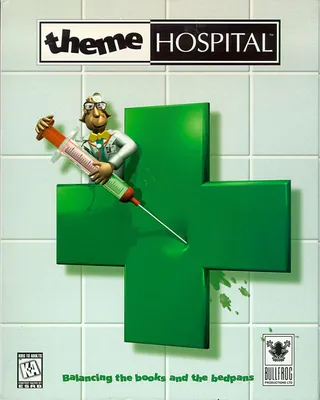
Theme Hospital
A hospital management simulation with made-up diseases and bizarre-looking equipment.

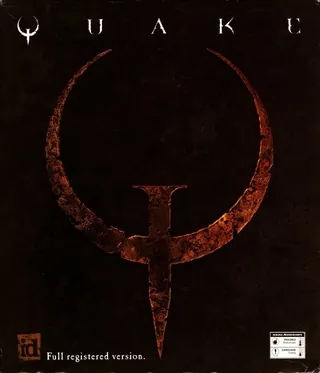
Quake
Doom got a third dimension; a dark gothic world of climbing, jumping, and falling into chasms.


































No game in this genre.