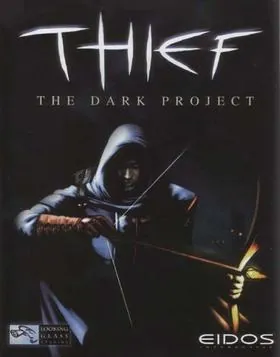
Thief: The Dark Project
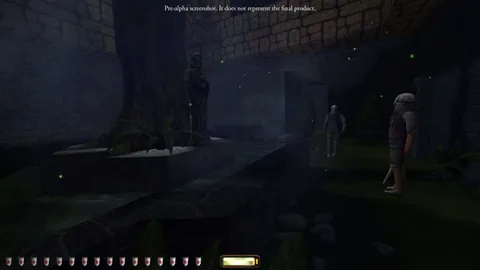
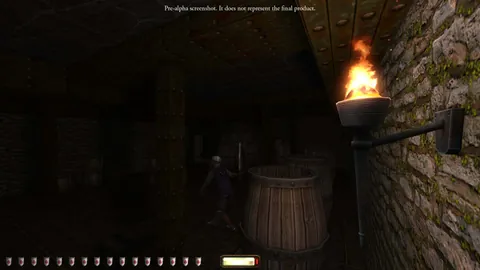
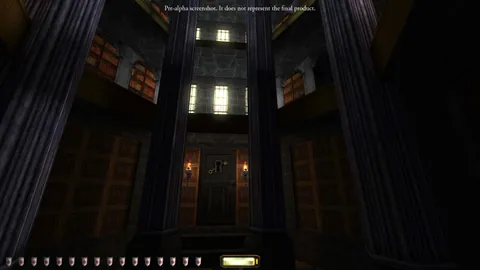
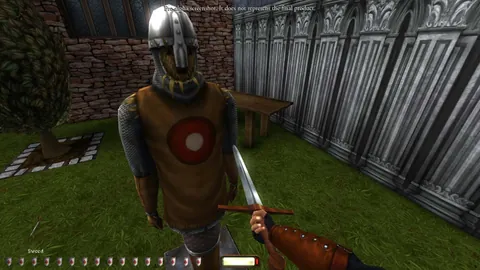
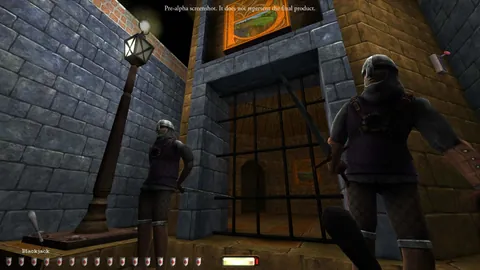
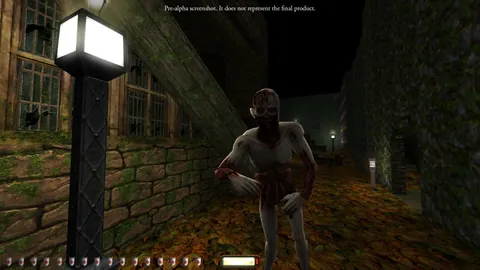
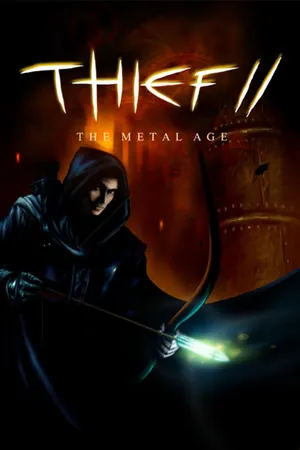
Thief: The Dark Project put players in the boots of the thief Garrett and did something that was almost heretical in 1998: it gave him a first-person view but forbade him from shooting. The game takes place in an unnamed city where medieval architecture blends with steam machinery and pagan magic, and Garrett makes his living by burgling the mansions of wealthy nobles. The jobs seem like ordinary heists at first, but they gradually get tangled up in a conflict between the rigid Hammerite cult and an old forest deity, so the second half of the campaign leaves the city rooftops behind and leads into tombs, temples, and places where the player, for the first time in the genre, learns to fear the dark from the other side.
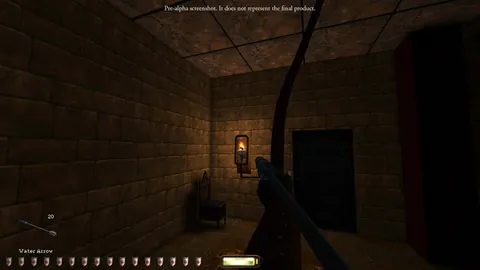
The entire game system rests on light and sound. A gem in the bottom corner of the screen shows how visible Garrett is, and the volume of his footsteps changes with the surface underfoot: on marble and metal he can be heard from across the hall, on carpet and moss almost not at all. Supporting this is an arsenal of special arrows that has become a textbook example: a water arrow douses a torch, a moss arrow creates a silent carpet, a rope arrow opens a path upward, and a noise arrow lures a guard elsewhere. Enemies are not just scenery, they react to open doors, to lights that have gone out, and to trails of blood, and they move gradually between calm, suspicion, and active search. Technically this was powered by an engine with advanced spatial sound propagation, and the game's audio remains its strongest asset to this day: wind whistling, guards muttering to themselves, and unsettling ambient loops keep the player tense better than any musical score could.
At the time it was a title critics embraced enthusiastically and one that immediately won a devoted community, even though it never commercially outgrew the big action franchises. Its influence is nonetheless unmistakable, practically every later stealth game has borrowed at least a visibility meter or its approach to sound from it. Today fan patches and hundreds of user-made missions keep the game alive, and although the textures and character models have aged, the level design and atmosphere hold up without excuses.
Game 68 of 229 for PC / Pentium a Windows 9x