 Atari · 1979
Computers
Atari 800 / 8-bit
History & context
When Atari introduced the 400 and 800 models in 1979, it raised the bar for home computers considerably. The machine, built around a pair of custom coprocessors — the ANTIC video chip and the GTIA/CTIA multimedia chip together with the POKEY sound chip — surpassed the competition of its time in both graphics and sound and stood a class above the consoles of the era, including the home Atari 2600, in gaming quality. Its development involved engineers around Jay Miner, who later designed the Amiga, so the Atari 8-bit architecture is in a sense a forerunner of what computers became famous for a few years later.
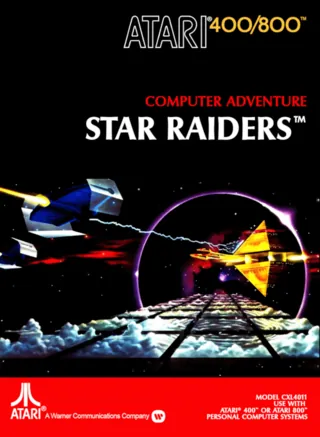
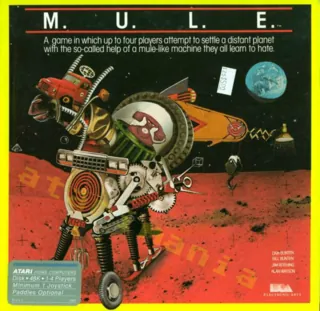
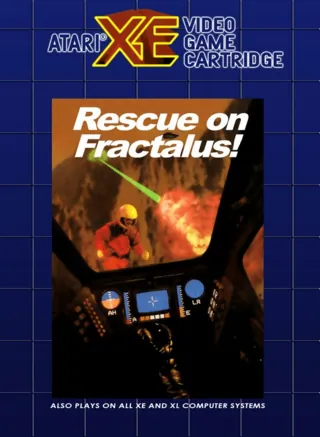
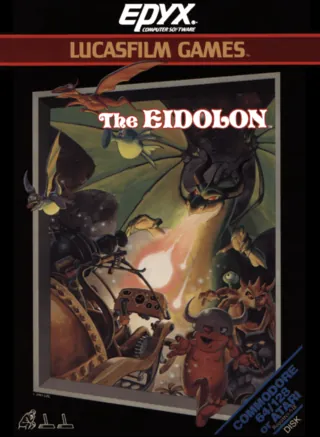
Crucially, this was not a gaming machine but a full-fledged computer with a keyboard, programmable in BASIC, loading software from cassettes, floppy disks, and cartridges. The library is therefore enormous and diverse in genre — from arcades through strategy games to text adventures. The flagship titles are the legendary Star Raiders (a space battle from the cockpit, astonishing for 1979), the economic strategy M.U.L.E., and the Lucasfilm experiments with fractal landscapes Rescue on Fractalus! and The Eidolon.
Technology: graphics and sound
The heart of the machine is a trio of chips. ANTIC is essentially a standalone graphics processor that reads from memory a so-called display list — a program describing how the screen is to be assembled from lines of various graphics modes. This makes it possible to mix text and graphics modes on a single screen and easily create smooth hardware scrolling (fine pixel-by-pixel movement) as well as interrupts on a specific line.
Colors are handled by GTIA (still CTIA in the first units) with a palette of 128 colors (GTIA can do 256). Standard resolution reaches up to 320 × 192 points; low resolution draws in more colors, high resolution in fewer. GTIA also provides Player/Missile Graphics — hardware sprites (four "players" and four "missiles") with collision detection, which for games meant smooth character movement independent of the background.
The POKEY sound chip offers four channels of sound with adjustable frequency, volume, and distortion (they can be paired into two 16-bit channels for cleaner tones). But POKEY doesn't serve only sound — it also handles reading the keyboard, joysticks (paddle inputs), and serial communication. The processor is a MOS 6502 clocked at around 1.79 MHz.
Connections and peripherals
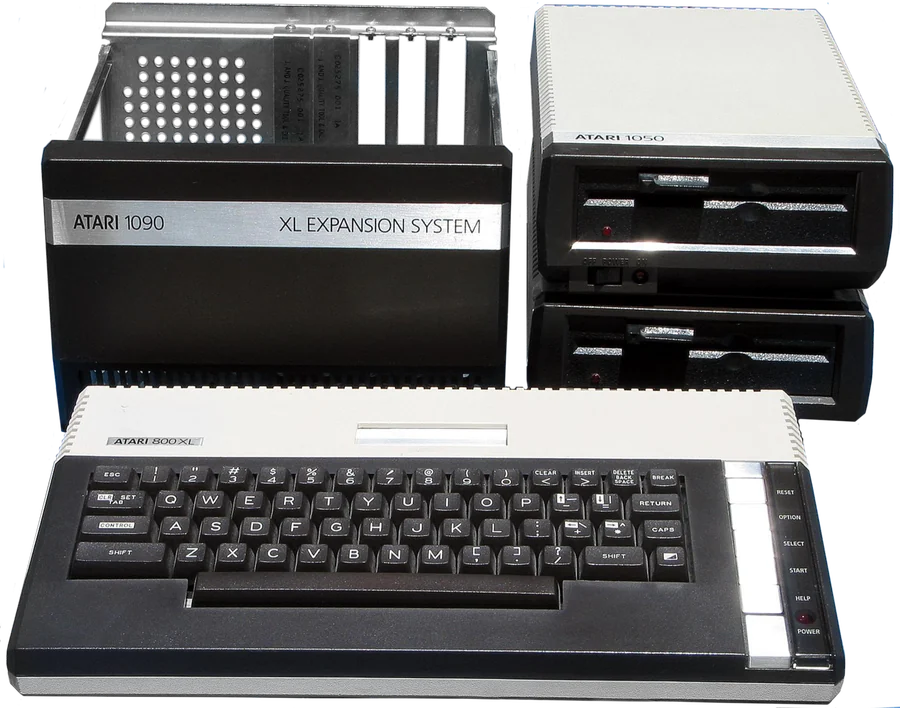
Atari bet on its own serial bus SIO (Serial Input/Output), into which peripherals were daisy-chained: the Atari 410 cassette recorder, the Atari 810 floppy disk drive (and later the 1050), and printers. It was a pioneering concept of intelligent peripherals with their own logic — a distant relative of today's USB.
Games and joysticks used the standard 9-pin Atari ports (compatible with Commodore joysticks and others); the 400/800 models had four ports outright, so they allowed multiplayer play on a single machine (e.g., M.U.L.E.). Paddle controllers were available, later also a mouse (an ST mouse/Amiga mouse can be used in the connection) and modems for connecting to a telephone line. The image was output via an RF modulator to a television, while higher models and variants also offered better-quality composite/AV output.
Models and revisions
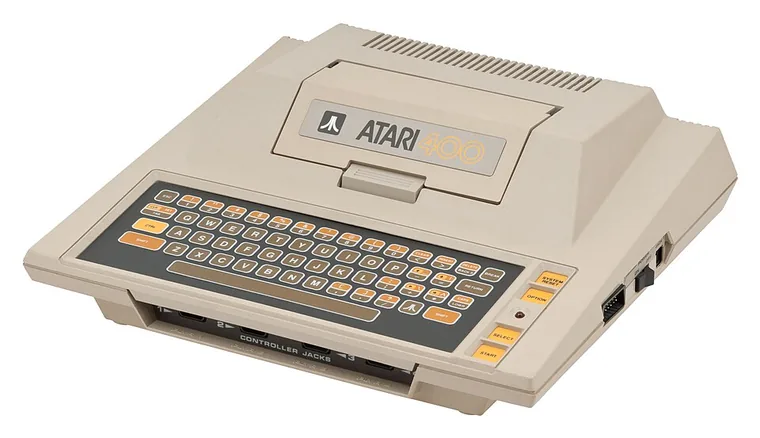
The family went through several generations. After the original 400 (membrane keyboard, cheaper) and 800 (full keyboard, expandable memory), the early 1980s brought the XL line — the 1200XL, the popular 600XL, and the 800XL — with a more modern design and built-in BASIC. After Jack Tramiel took over the company, the more economical XE line arrived: the 65XE, the 130XE (with 128 KB of RAM), and the game-oriented XEGS (Atari XE Game System) from 1987, which was sold as a console with a keyboard but hardware-wise remained the same old 8-bit Atari. High software compatibility was maintained across generations.
Clones and variants
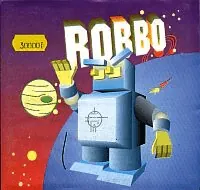
Unlike the ZX Spectrum, for which the domestic clone Didaktik was created in Czechoslovakia, the Atari 8-bit was officially imported and cloned in few places. All the stronger, however, was the user and gaming scene in the Eastern Bloc, especially in Poland and Czechoslovakia. Atari was more accessible and popular behind the Iron Curtain, and a devoted community grew around it that still creates to this day. The Polish puzzle classic Robbo became a legend, and the modern scene churns out new titles — the annual Polish competition "Fujicup" brings dozens of fresh games. Among the technical variants, the stereo POKEY sound expansion (two chips) and the memory expansions, which became a standard among enthusiasts on many XE/XL machines, are worth mentioning.
Today's scene
Emulation is trouble-free today — the reference Atari800 (and its core in RetroArch) runs at full speed even on small handheld consoles. For the classics, extensive archives such as AtariMania serve well, while news and home-grown production are gathered by the legendary website Fandal. Homebrew is alive: besides the annual competitions, new demoscene productions and games making use of expanded memory and modern flash cartridges are being created. For the retro gamer, the Atari 8-bit is thus an exploratory territory with its own atmosphere — and a scene that is close to us both geographically and at heart.
Games on this platform (124)


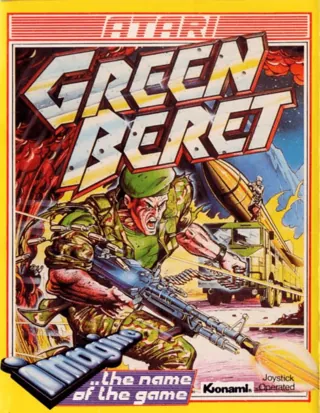
Green Beret
A knife, barbed wire, and a merciless run-and-gun legend straight from the arcade halls.

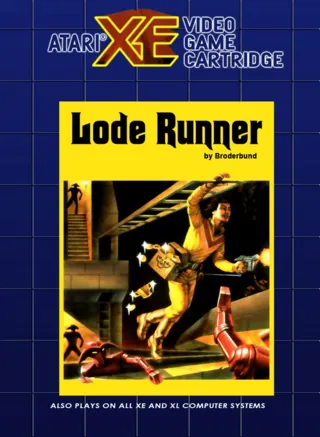
Lode Runner
Legendary platformer where you can shoot holes in the floor and trap guards inside them.
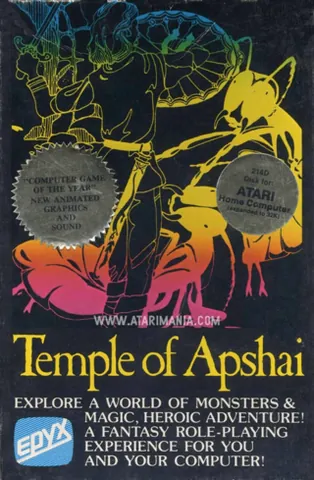
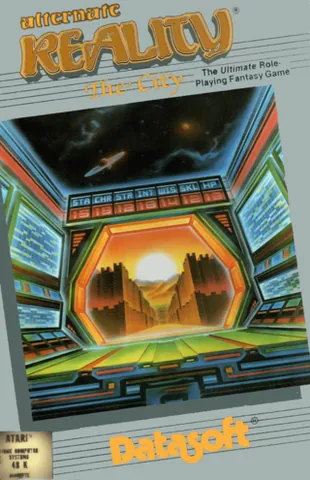
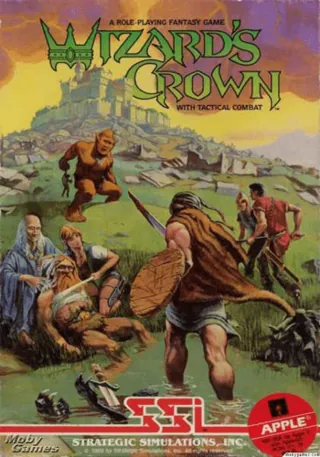
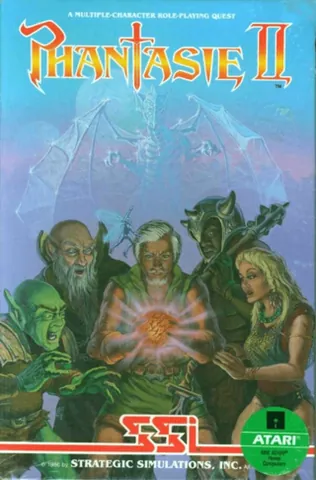





No game in this genre.