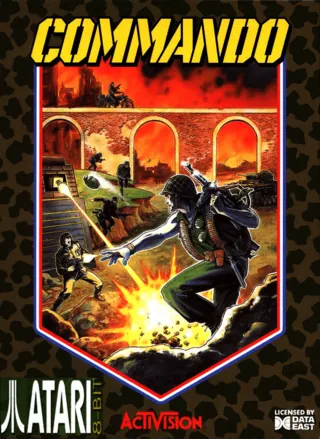
Commando
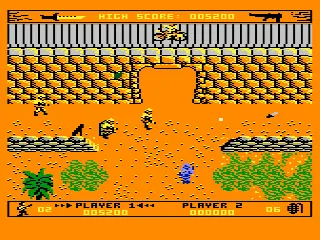
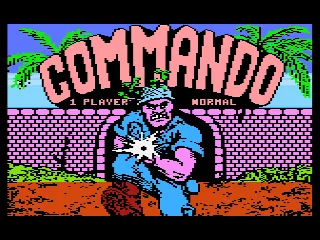
One soldier, a machine gun, a handful of grenades and an entire enemy army rolling against you from top to bottom of the screen — Commando is the essence of arcade run & gun transferred straight from the arcade into the living room. On the 8-bit Atari it offered exactly what players loved: a simple principle, instant action and a difficulty that forced you to try again and again.
In terms of gameplay, it is a vertically scrolling shooter in which you advance up the battlefield against an endless flood of enemies. You fire a machine gun in eight directions and throw a limited number of grenades at fortified nests and groups of soldiers. The key is rhythm — constant movement, saving grenades for the right moments and memorizing waves of enemies. It is pure action built on reflexes and endurance.
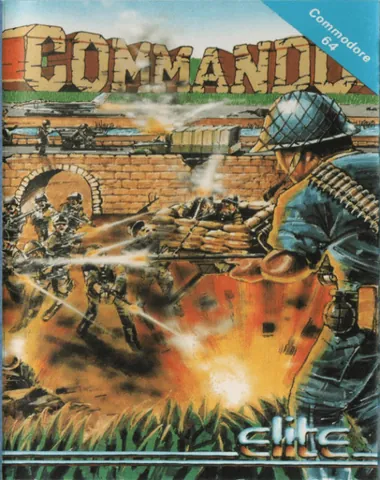
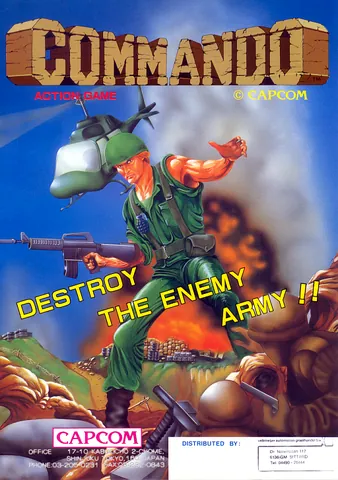
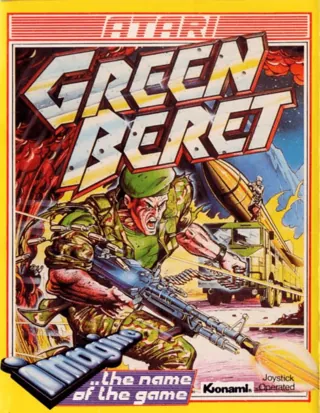
In terms of development, it is a home port of an arcade hit, which in the European market was handled by publishers associated with the Elite and Imagine brands in the mid-eighties. Converting an arcade game onto weaker home hardware was a prized discipline back then, and a successful port meant a big commercial hit, because players longed to have the gaming experience at home.
Commando's cultural significance lies in the fact that it belonged to the wave of arcade conversions that defined home gaming of the eighties. The run & gun with a single hero against overwhelming odds became an archetype that a whole series of other games built upon, and Commando is often mentioned as one of its prominent representatives.
Today you can play the game in an emulator or on the original and immediately understand why it was so addictive — the principle is readable in a second, but mastering it takes hours. It is an ideal title for short, intense doses of retro action and a reminder of the time when arcade ports ruled home computers.
Why play: For pure, addictive arcade action of one soldier against overwhelming odds that embodies the run & gun of the eighties.
Game 31 of 124 for Atari 800 / 8-bit
The same title elsewhere (3)
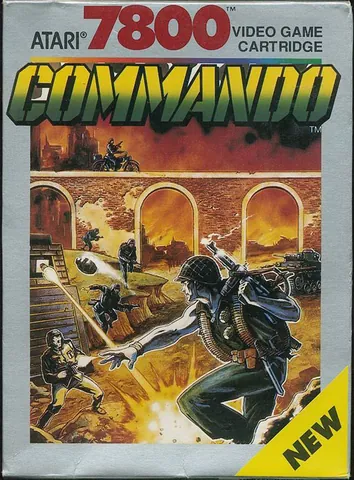
The arcade original benefited from the power of dedicated coin-op hardware — smooth vertical scrolling, plenty of enemies on screen at once, and crisp colours. The home 8-bit ports had to cut corners: on the Commodore 64 the SID chip at least gave decent music and sound, though the number of enemies and scrolling smoothness still fell short of the arcade. The Atari 800 offered a similar compromise with somewhat simpler graphics. The later Atari 7800 port could draw on the Maria graphics chip, which handled more moving sprites without flicker, making the action feel denser and closer to the arcade experience than the earlier 8-bit versions.