Elite
Elite is among the most influential computer games of the 1980s, and its Atari 800 version brought owners of the 8-bit machine an open universe like nothing seen before. The player takes on the role of an independent pilot who flies between dozens of star systems, trades goods ranging from food to illegal drugs and weapons, completes cargo-delivery contracts, and, out in open space, often finds themselves face to face with pirates or patrols. The foundation is wireframe 3D graphics with hidden-line removal, which ran surprisingly smoothly on the Atari and still feels like a small technical marvel given the machine's power, since few home computers of the time dared offer similarly complex vector graphics.
The game has no linear story or fixed goal — progress is measured by a rank the player earns by destroying enemy ships and trading successfully, and that same freedom governs how long, and in what direction, they'll travel through the galaxy. Controlling the ship in six degrees of freedom, docking at stations, and the combat physics placed demands on the player that were unusual for home computers at the time, and the manual even included a short story expanding the game world and explaining the basics of space law and trade. On the Atari the game played essentially identically to other 8-bit platforms, which only confirms how well the core concept translated across systems, even though loading from floppy disks noticeably slowed transitions between systems on some machines.
Elite is still cited today as one of the first games to show that an open world and an economic simulation could work even on modest hardware, and its influence is visible throughout the later generation of space simulators and open-world games in general. On the Atari 8-bit it's a title still worth trying today, though it demands patience with the controls, orientation on the star map, and the galaxy's economy, which the game never explains all at once but instead leaves the player to work out through gradual trial and error.
Why play it: For players willing to invest patience in the controls and in an economy they have to work out for themselves, it offers one of the most influential open worlds in the history of games.
Game 91 of 124 for Atari 800 / 8-bit
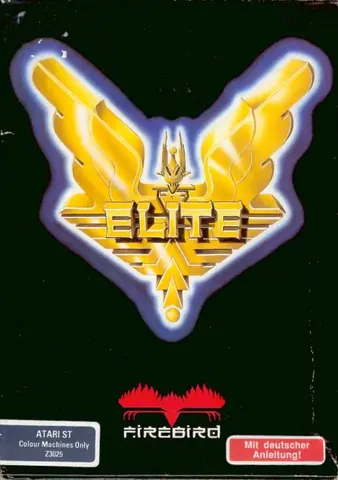
The same title elsewhere (3)
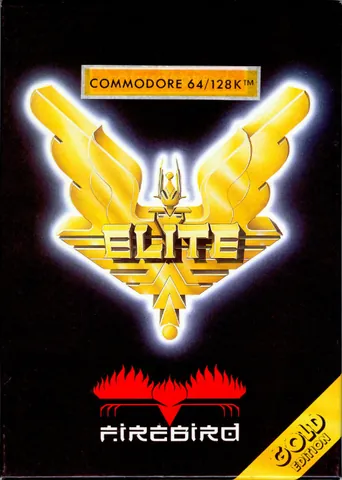
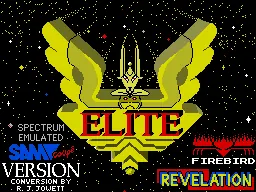
This space legend originated on the BBC Micro with purely wireframe 3D ship graphics, and the home 8-bit ports handled that legacy differently. The Commodore 64 version gave ships filled, colored surfaces instead of plain outlines, making combat and docking look clearer and visually richer. The ZX Spectrum version stayed closer to the original wireframe style due to its more limited speed and memory, though the trading and combat systems are identical on both machines. Anyone wanting nicer, clearer 3D should pick the C64; fans of the stark wireframe look will prefer the Spectrum.