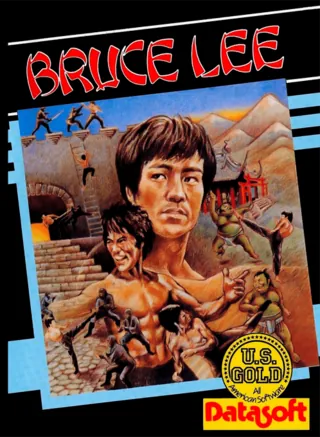
Bruce Lee
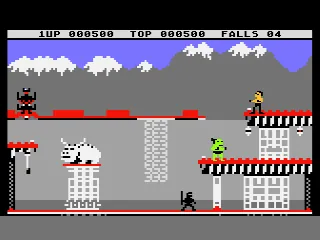
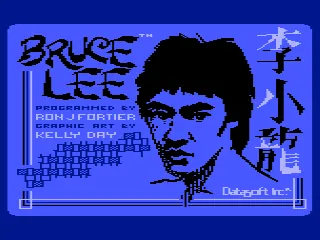
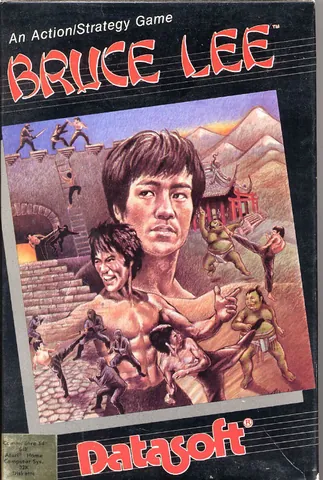
A torch-lit chamber, two lurking enemies — the hulking Yamo with his staff and the nimble ninja with his sword — and you in the middle as the legendary martial-arts master who must collect all the lanterns and advance further. Bruce Lee, from 1984, is proof that a simple idea executed with feeling can entertain for decades.
The game was created by the studio Datasoft and came out on a range of eight-bit machines including the Atari 8-bit, the Commodore 64, and the ZX Spectrum. The principle is perfectly straightforward: each screen is a chamber full of traps, platforms, and obstacles, and your task is to collect the scattered lanterns that unlock the way into the next room. All the while, two eternal opponents chase you.
The charm of Bruce Lee lies precisely in that clean, instantly understandable gameplay coupled with rising difficulty. The fights are simple — kicks and punches — but moving through the chambers, avoiding hazards, and timing your jumps demand attention and quick reflexes. The game escalates smoothly and makes you try again and again.
Also exceptional is the cooperative-competitive two-player mode: the second player can control one of the opponents, turning the title into thrilling fun for a pair at one keyboard. This element gave the game a social dimension that wasn't a given in the eight-bit era.
Bruce Lee earned its cult status especially in Europe, where eight-bit computers had a huge base. For many players it ranks among the unforgettable titles of childhood and still appears on lists of favorite classics of the era. It's exactly the type of game that whole generations return to nostalgically.
Why play: For a legendary, instantly addictive old-school platformer that you'll enjoy alone or for two — and that gets under your skin within the first few minutes.
Game 7 of 124 for Atari 800 / 8-bit
The same title elsewhere (2)
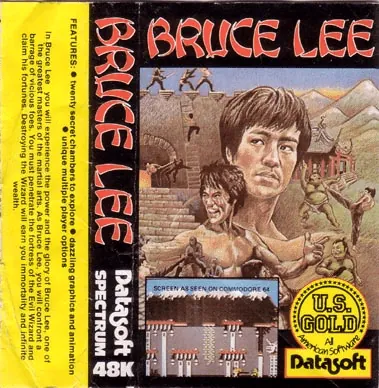
The Atari 800 was one of the lead platforms and offered smooth animation and solid colour that other versions were often measured against. The Commodore 64 benefited from its SID chip, giving the music and sound effects more depth and the colourful character sprites cleaner contrast. On the ZX Spectrum, though, the game was held back by the platform's classic weakness — attribute clash, where neighbouring objects on an 8x8 block can only share two colours, flattening the scene — plus a weak beeper that could only manage simple tones instead of music. Anyone chasing the experience closest to the original should pick the Atari or C64 version; the Spectrum port is really for fans of that era's home-computer scene.