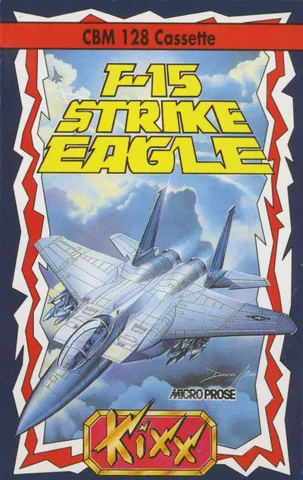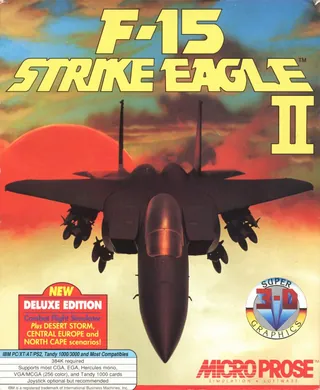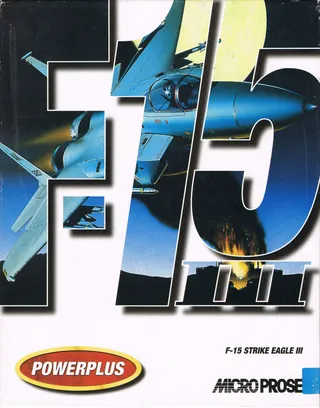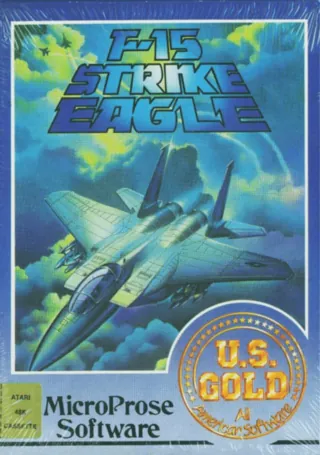
F-15 Strike Eagle
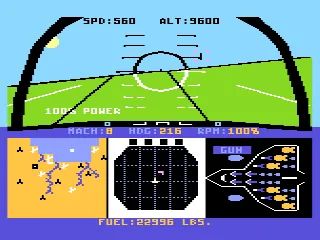
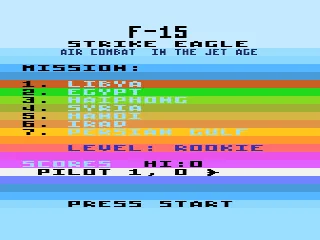
You sit in the cockpit of one of the most famous fighter jets of its day, enemy targets pop up on the radar and you have to handle targeting, weapons and the return to base — and all of this runs on the 8-bit Atari of 1985. F-15 Strike Eagle was one of the first flight simulators that managed to offer real depth, and for a lot of players it was their first serious contact with military simulation.
In terms of gameplay, it is a mission-based flight simulator. You pilot a fighter jet, monitor the radar, manage weapons systems, destroy ground and air targets and try to complete the assignment and land safely. For the hardware of the time it offers a surprising degree of complexity — a combination of action and tactics, where it isn't enough just to shoot but you have to understand the situation around you. It was precisely this depth that set the game apart from simple arcade shooters.
In terms of development, the title is tied to the MicroProse studio and its co-founder Sid Meier, who later became famous for the Civilization series. F-15 Strike Eagle was among MicroProse's early successes and helped the studio build its reputation as a maker of quality simulators. Meier's design showed that even on a modest machine you could build a game with layers and a sense of detail.
The game's cultural significance is considerable — it laid the foundation for an entire era of military simulators, which became one of the pillars of computer gaming in the eighties and nineties. Thanks to titles like this, MicroProse established itself as a leading brand of the genre, and F-15 Strike Eagle is often mentioned as one of its founding cornerstones.
Today the game is valued as a historical milestone. In an emulator you can try out what a flight simulator looked like in the genre's early days — with an emphasis on mastering the systems and completing missions, not on photorealism. For fans of simulations and the history of MicroProse it is a mandatory stop.
Why play: For Sid Meier's founding flight simulator that brought surprising depth to the 8-bit and kicked off an entire era of military sims.
Game 33 of 124 for Atari 800 / 8-bit
The same title elsewhere (1)
Both home versions came from MicroProse in the same year and had to work within the limits of mid-1980s 8-bit machines — blocky graphics, only a handful of colors on screen, and a noticeably lower frame rate than later flight sims. The difference between the Atari 800 and Commodore 64 lies mainly in sound and smoothness: the Commodore drew on its SID sound chip for atmospheric tones in the menus and takeoff sequence, while the Atari relied on its own graphics chips to scroll the terrain beneath the wings a touch more smoothly. Cockpit, radar and weapons controls stayed essentially identical on both machines, so today the choice mostly comes down to taste in period sound versus visuals.