Arkanoid
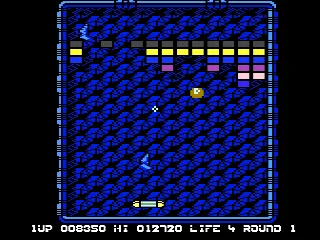
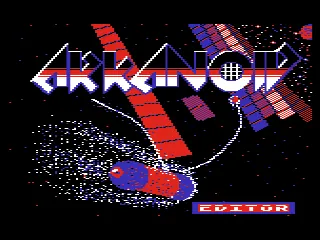
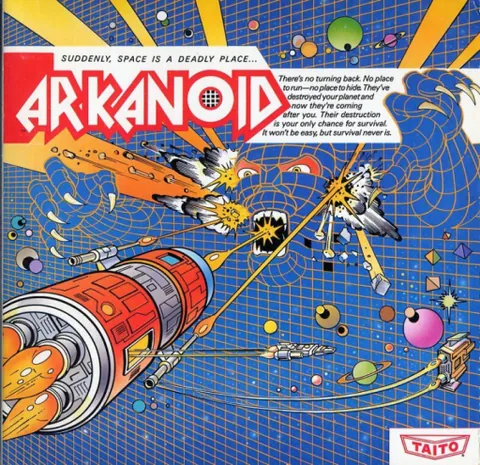
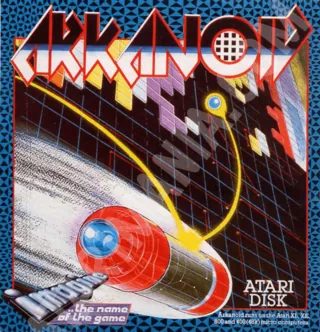
There are games that defined an entire genre, and then there is Arkanoid – a title that not only dusted off the good old Breakout from Atari but elevated it into an arcade phenomenon of the eighties. When Taito released Arkanoid into the arcades in 1986, no one suspected how deeply it would burrow into the memory of a generation of players. The version for the 8-bit Atari from 1987 brought this experience all the way into living rooms and proved that bouncing a ball could be more addictive than many a shooter.
The principle is ingeniously simple: you control a platform called the Vaus, bounce the ball and, piece by piece, smash the colorful wall of bricks above you. But what pushed Arkanoid into another league were the power-ups falling from the broken blocks – widening the paddle, laser fire, slowing the ball, magnetic catching or splitting the ball into three. Suddenly it wasn't just about reflexes but about tactics: which blocks to break first, when to take a risk and when to play it safe. This layer of decision-making transformed a simple little game into a nerve-wracking race for the highest score.
On the 8-bit Atari the game benefited from responsive controls. While the joystick offered a solid experience, the real magic showed itself with the paddle controller, which allowed smooth and precise movement of the platform – exactly as the developers intended in the arcade original. The smooth scrolling of the colorful bricks and the brisk pace made this conversion one of those you could — and really did — watch.
Arkanoid's cultural footprint is enormous. The game practically restarted interest in the block-breaker genre and inspired dozens of clones and sequels – its direct successor was Arkanoid: Revenge of Doh. The characteristic enemy, the floating ship Doh at the end, and the iconic bounce sound became part of the pop culture of the arcades. For many players this game was their first encounter with the concept of power-ups as such.
Thanks to its wide spread onto home computers, including the 8-bit Atari, Arkanoid became one of the titles that defined what "just one more game" means. It is a perfect example of how to take a simple idea and polish it down to the last detail.
Why play: Because it is the essence of arcade addictiveness in its purest form – a few minutes easily stretch into an hour of chasing a higher score.
Game 34 of 124 for Atari 800 / 8-bit
The same title elsewhere (1)
The Taito arcade original ran on powerful cabinet hardware, delivering smooth motion, bright colors and pixel-precise ball bounces that home 8-bit machines struggled to match. The Commodore 64 conversion has long been rated among the best home ports of the game — it keeps the brisk pace, colorful bricks and a punchy soundtrack thanks to the SID sound chip. The Atari 800 version offers the same core gameplay but with simpler graphics and fewer details, typical of 8-bit arcade conversions of the era. Anyone wanting to experience Arkanoid in its best home form today should reach for the Commodore 64; the Atari version is mostly a historical curiosity.