Montezuma's Revenge
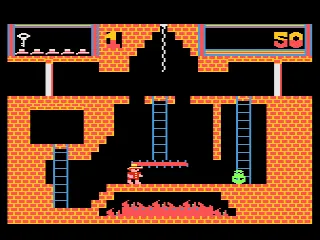
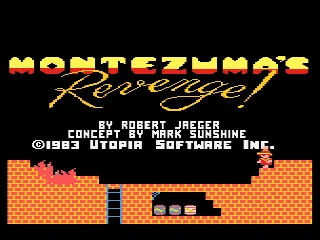
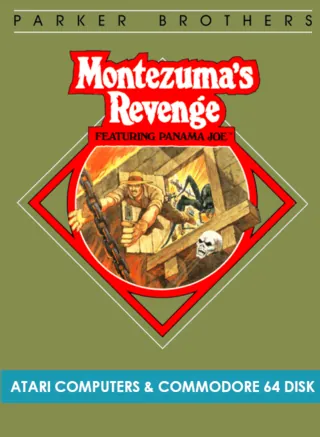
Deep in an Aztec pyramid, surrounded by skulls, snakes, and fiery pits, you clutch a key and try to figure out which of the dozens of doors it opens. Montezuma's Revenge, from 1984, is the embodiment of the merciless exploration platformer — a game that doesn't spare you and pulls you in all the more for it.
The title stands at the very beginning of the genre of exploration platformers now called metroidvania or platforming with an emphasis on mapping and searching. The player explores a vast pyramid made up of interconnected chambers, collects keys of various colors, opens the corresponding doors with them, dodges traps, and overcomes enemies like snakes, spiders, and dancing skulls. There's no hand-holding — you have to earn your orientation and progress yourself.
The game came out on many platforms including the Atari 8-bit, the Atari 2600, the Commodore 64, and others, and became famous for its notoriously high difficulty. It demands patience, precise jump timing, and above all the ability to memorize the maze layout. For players of the day it presented a challenge that could take many hours.
What's fascinating is that Montezuma's Revenge gained a second life in modern science. It became a favorite testing ground for research into artificial intelligence and machine learning — precisely because it is extraordinarily difficult for learning algorithms. The rewards in the game are very sparse and far removed from the initial actions, so systems learning by trial and error have great trouble even understanding what the game wants from them.
Thus a children's eight-bit challenge became a symbol of one of the hard problems of modern AI. Few games from 1984 can boast that top research laboratories study them decades later. Montezuma's Revenge thereby connects retro nostalgia with unexpected present-day relevance.
Why play: For the forefather of exploration platformers, whose legendary difficulty today puzzles not only players but artificial-intelligence researchers as well.
Game 8 of 124 for Atari 800 / 8-bit