Bubble Bobble
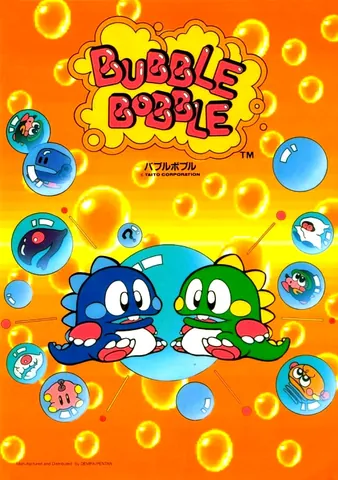
Two adorable little dragons, Bub and Bob, imprisoned in the Cave of Monsters, have only one way to fight their way out: blowing bubbles. In these they trap enemies and then, with a pop, turn them into fruit and treasures. Bubble Bobble is pure joy of playing wrapped in a colourful, irresistibly catchy arcade platformer that has enchanted whole generations.
Originally it was an arcade hit from the Japanese studio Taito from 1986, whose author was Fukio Mitsuji. The game quickly became a classic and in the following years saw ports to practically every platform of the time, the Atari ST not excepted. The home conversions brought arcade fun to players' homes and the versions for 16-bit computers were among the favourites.
The gameplay is ingeniously simple: each of the hundred single-screen levels asks you to clear the area of enemies. You blow bubbles, trap monsters in them, jump on them and collect falling treasures and bonuses. The game is famous for the number of hidden secrets, the EXTEND letters which, once they spell the word, grant an extra life, and the secret doors. And above all: it plays best in two, the co-operation of Bub and Bob is the very heart of the experience.
Bubble Bobble also became famous for its tricky system of endings. The true ending and the encounter with the true boss can only be unlocked by a pair of players who finish the game together, which was an ingenious way to motivate players to co-operate. The catchy musical loop that plays round and round wrote itself into the memory of everyone who ever tried the game.
The game's success gave birth to an entire series, followed up by titles such as Rainbow Islands or Bubble Symphony, and Bub and Bob became iconic mascots of Taito. To this day Bubble Bobble is synonymous with indestructible, time-proof arcade fun, and on the Atari ST it represents one of the loveliest pieces of the library.
Why play: For carefree co-operative fun in two and an infectious arcade charm that never ages.
Game 12 of 72 for Atari ST
The same title elsewhere (8)
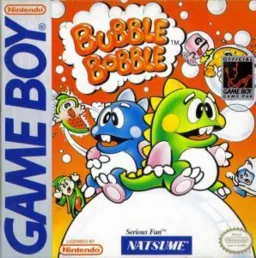
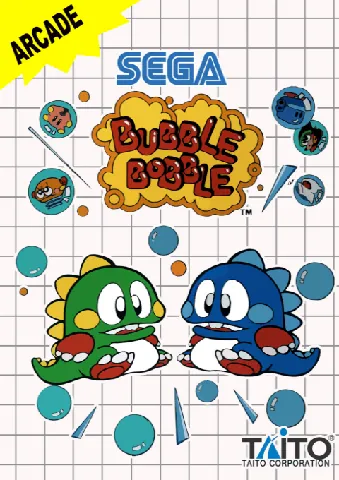
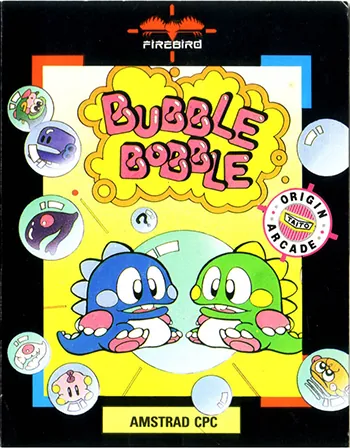
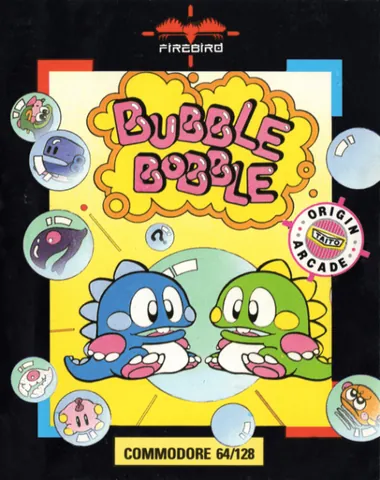
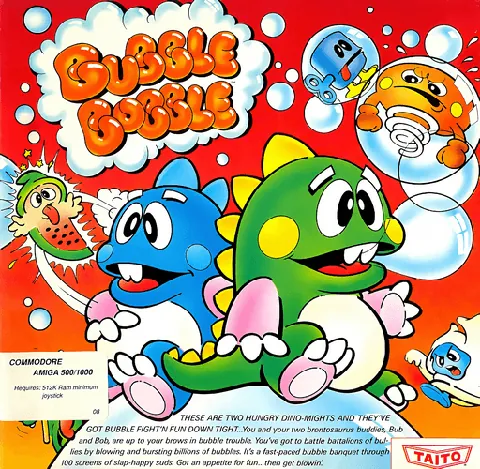
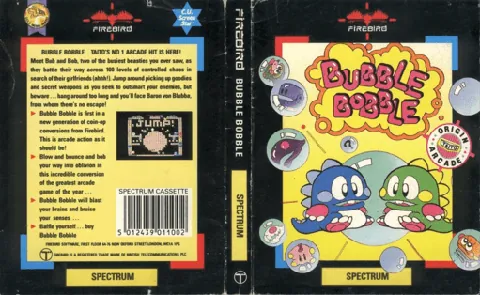
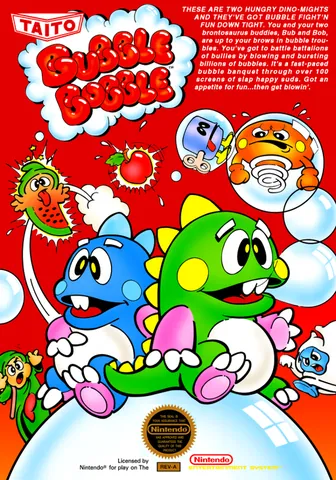
Taito's arcade original defined the game's charm, but home 8-bit versions earned their own reputation. The Commodore 64 version is famous for its music — the SID chip tune remains one of the most praised soundtracks of the 8-bit era. The NES conversion contains all one hundred original levels plus bonus modes and alternate endings, often seen as the most complete home version. ZX Spectrum and Amstrad CPC had to limit color and the smoothness of bubble movement due to weaker hardware, giving a plainer screen than the competition. Amiga and Atari ST offered faithful arcade-style graphics, but given the power of those machines, they're often judged as less ambitious ports than contemporary projects elsewhere. Game Boy reduced everything to a small monochrome screen, yet stayed addictive.