Bubble Bobble
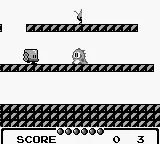
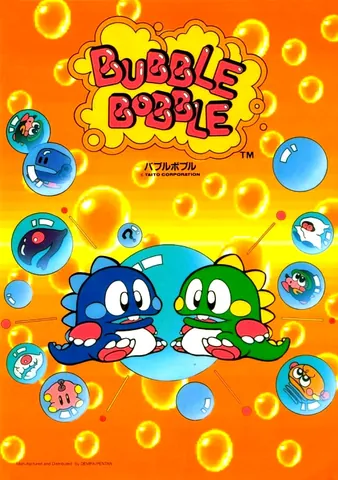
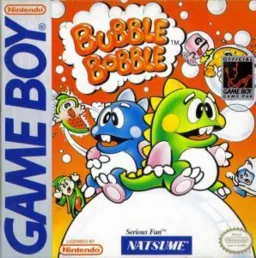
Two cute little dragons who spew bubbles and trap enemies inside them. It sounds innocent, but Bubble Bobble gradually turns into one of the most addictive and surprisingly merciless arcade challenges ever made. On the Game Boy this classic from Taito appeared in a version that retained all the charm of single-screen action.
The principle is brilliantly simple. You control the little dinosaur Bub (and in co-op his brother Bob too), moving across the platforms of a single screen and blowing bubbles. When you catch an enemy in a bubble, you have to pop it to destroy them and collect the fruit or treasure they leave behind. Each of the dozens of levels is a self-contained puzzle in motion, where the timing of your jumps and of when you release a bubble both matter.
Bubble Bobble was created in the mid-eighties as a bit of fun that became a phenomenon. Taito created a title whose charm lies in the contrast between adorable graphics and the surprising difficulty of later rounds. The game became famous for hidden secrets, bonuses and especially the true ending, which you only unlock in two-player co-op, making it one of the first games to celebrate playing together.
The handheld version naturally lacks the colors of the home and arcade machines, but the fast, clean gameplay transferred to the small screen wonderfully. Bubble Bobble gave rise to a whole family of games led by Rainbow Islands and Parasol Stars, and its little dragons became one of Taito's most recognizable mascots. It influenced countless later arcade platformers and to this day appears in new releases and collections.
What makes Bubble Bobble immortal is its accessibility. You learn it within seconds, but mastering all one hundred rounds is a challenge for many hours. It's the pure joy of play that retro fans never stop discovering.
Why play it: Instantly understandable, yet it won't bore you for years. Bubble Bobble is the ideal handheld arcade game for short moments and long evenings alike, ideally as a pair.
Game 44 of 147 for Nintendo Game Boy
The same title elsewhere (8)
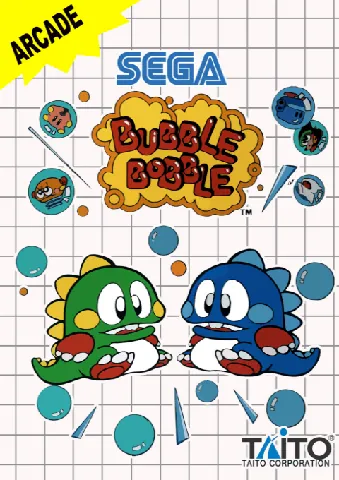
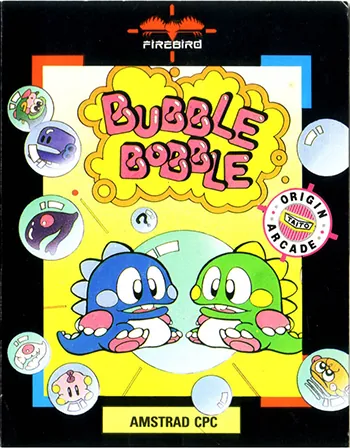
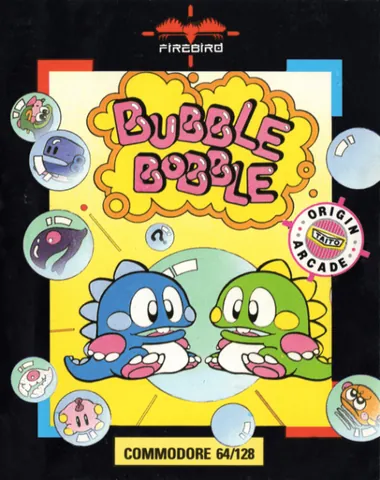
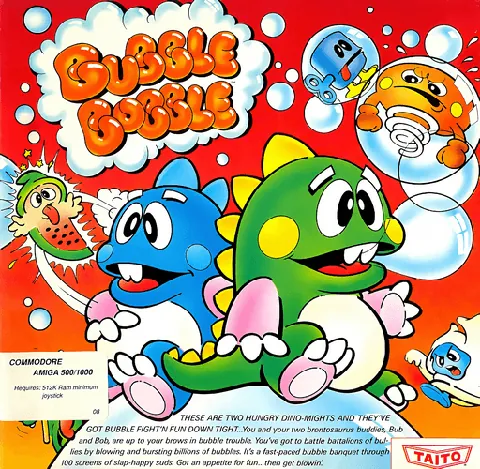
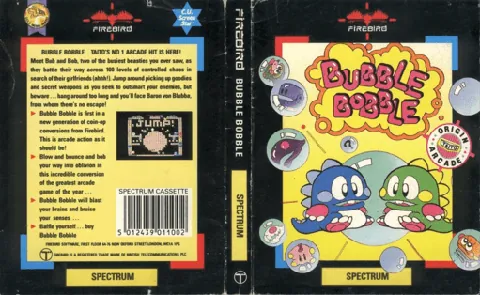
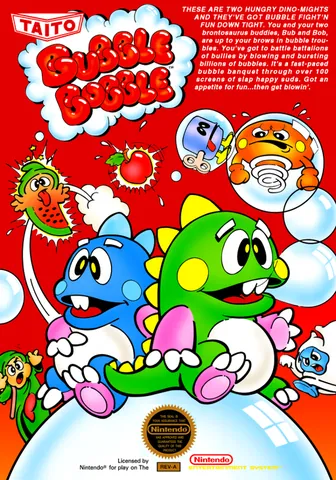
Taito's arcade original defined the game's charm, but home 8-bit versions earned their own reputation. The Commodore 64 version is famous for its music — the SID chip tune remains one of the most praised soundtracks of the 8-bit era. The NES conversion contains all one hundred original levels plus bonus modes and alternate endings, often seen as the most complete home version. ZX Spectrum and Amstrad CPC had to limit color and the smoothness of bubble movement due to weaker hardware, giving a plainer screen than the competition. Amiga and Atari ST offered faithful arcade-style graphics, but given the power of those machines, they're often judged as less ambitious ports than contemporary projects elsewhere. Game Boy reduced everything to a small monochrome screen, yet stayed addictive.