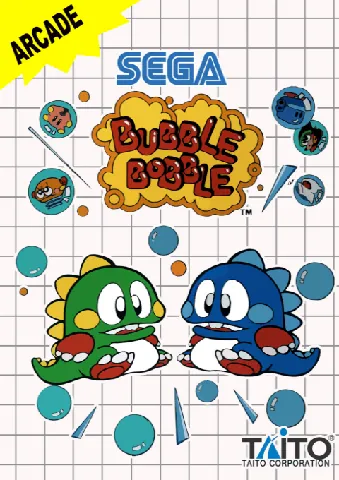
Bubble Bobble
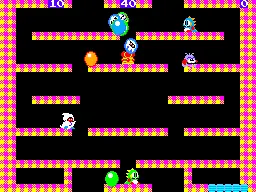
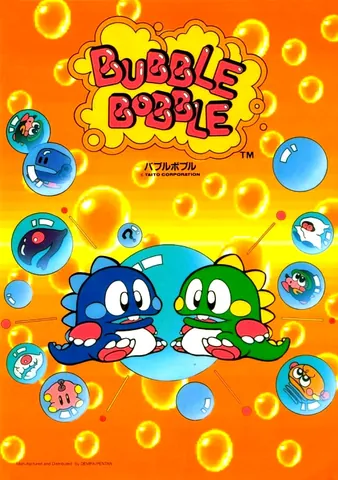
Two adorable little dragons who spit bubbles and sing one of the most infectious melodies in gaming history. Bubble Bobble by the Japanese studio Taito, originally an arcade hit from 1986, is proof that the magic of a video game needn't rest on complexity, but on pure, shared joy of playing.
The gameplay is perfectly self-contained within a single screen per level. As Bub and Bob, two little dinosaurs, you trap enemies in bubbles and then destroy them by popping the bubbles. You collect fruit, sweets and bonuses and advance through a hundred levels toward the final showdown. The strength of the game lies in cooperation — two players side by side experience chaotic, warm fun you never forget.
Bubble Bobble was also famous for its secrets. Hidden bonuses, the EXTEND letters whose collection moved you further, and above all the true ending, accessible only in two-player mode. This layer of hidden content rewarded the curious and built a cult around the game.
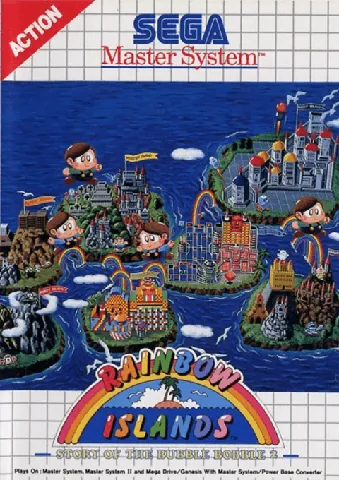
In developmental terms it was one of the titles that defined Taito's identity in the mid-eighties, alongside hits like Space Invaders or the later Bubble Bobble series and its successor Rainbow Islands. The characters Bub and Bob became one of the company's icons, and the game was ported to a countless number of home systems.
The SEGA Master System version is among these console conversions that were meant to bring arcade joy home. For players without access to an arcade, it was a way to enjoy that infectious music and cooperative bubble action on their own screen.
Why play it: For carefree cooperative fun, an unforgettable melody and a feeling of warm retro happiness that works even decades later.
Game 24 of 67 for SEGA Master System
The same title elsewhere (8)
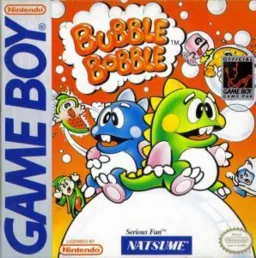
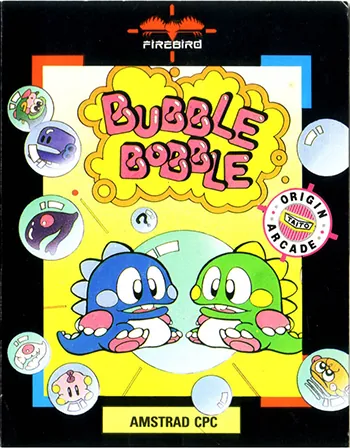
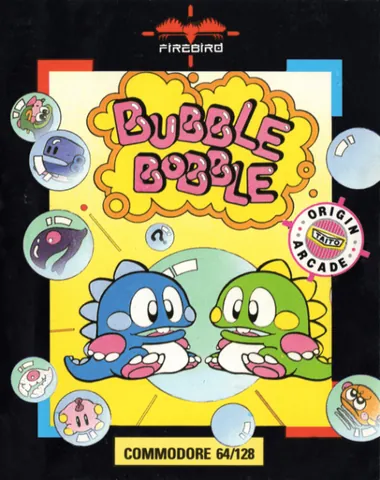
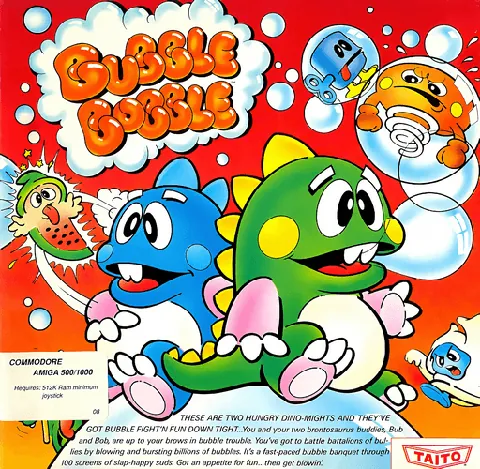
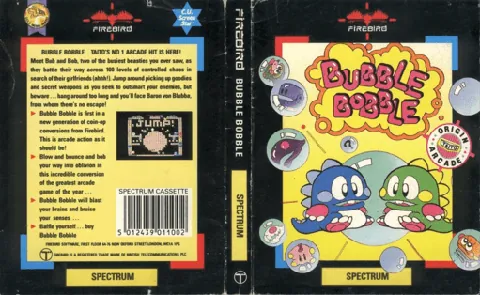
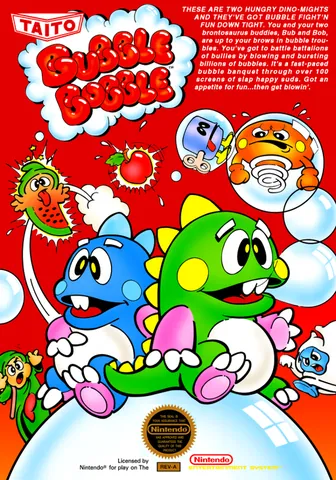
Taito's arcade original defined the game's charm, but home 8-bit versions earned their own reputation. The Commodore 64 version is famous for its music — the SID chip tune remains one of the most praised soundtracks of the 8-bit era. The NES conversion contains all one hundred original levels plus bonus modes and alternate endings, often seen as the most complete home version. ZX Spectrum and Amstrad CPC had to limit color and the smoothness of bubble movement due to weaker hardware, giving a plainer screen than the competition. Amiga and Atari ST offered faithful arcade-style graphics, but given the power of those machines, they're often judged as less ambitious ports than contemporary projects elsewhere. Game Boy reduced everything to a small monochrome screen, yet stayed addictive.