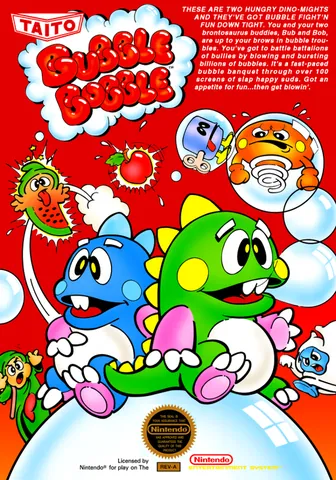
Bubble Bobble
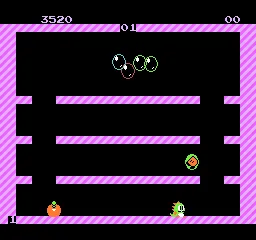
Two little dragons, endless bubbles and a hundred rounds full of enemies to trap. Bubble Bobble on the NES brings one of Taito's most beloved arcade classics to Nintendo's home console, and with it all the charm and surprising depth that made the game immortal.
You control the little dinosaur Bub, who can spew bubbles. When you catch an enemy in a bubble and pop it, you destroy the enemy and collect fruit or treasure. The whole game takes place on a single screen, and each of the many dozens of rounds is really a small puzzle in motion. What matters is the timing of your jumps, when you release the bubble, and the clever use of space. On the NES, moreover, two-player co-op works splendidly and is the heart of the whole experience.
Taito created Bubble Bobble in the mid-eighties and hit upon a flawless formula. The magic lies in the contrast between the adorable graphics and the harsh difficulty of the later rounds. The game became famous for its secrets and especially for the true ending, which you unlock only if you complete all one hundred rounds in two-player co-op. That made Bubble Bobble one of the first games to genuinely celebrate playing together at one screen.
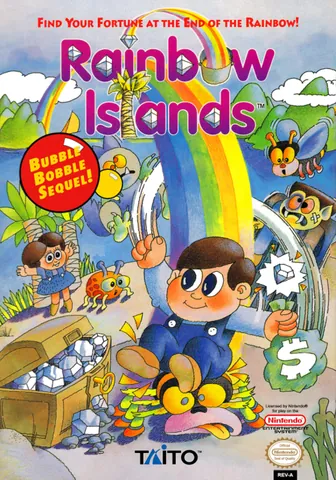
The game's success gave rise to a whole family of titles including Rainbow Islands and Parasol Stars, and the little dragons Bub and Bob became iconic Taito mascots. Bubble Bobble influenced countless later arcade platformers and is still re-released today in modern collections and compilations.
The NES version is among the sought-after ones because it captures the game's original spirit well and co-op works excellently on it. It is pure joy of play — addictive and accessible, yet with enough hidden content for those who want to dig deeper.
Why play it: Addictive, instantly understandable and even better with two. Bubble Bobble on the NES is one of the finest co-op arcade games of its time.
Game 46 of 120 for Nintendo NES
The same title elsewhere (8)
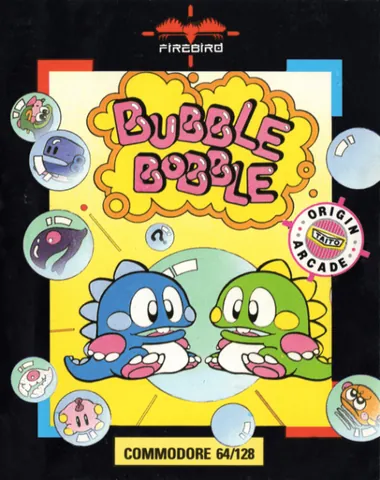
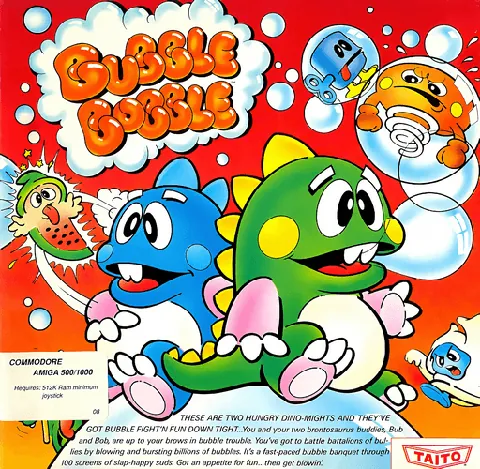
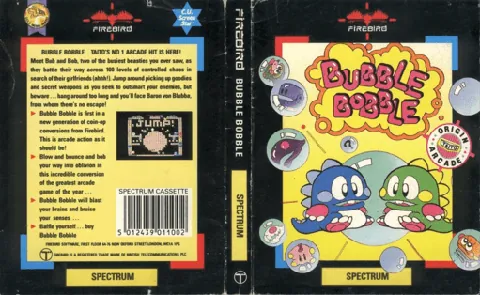
Taito's arcade original defined the game's charm, but home 8-bit versions earned their own reputation. The Commodore 64 version is famous for its music — the SID chip tune remains one of the most praised soundtracks of the 8-bit era. The NES conversion contains all one hundred original levels plus bonus modes and alternate endings, often seen as the most complete home version. ZX Spectrum and Amstrad CPC had to limit color and the smoothness of bubble movement due to weaker hardware, giving a plainer screen than the competition. Amiga and Atari ST offered faithful arcade-style graphics, but given the power of those machines, they're often judged as less ambitious ports than contemporary projects elsewhere. Game Boy reduced everything to a small monochrome screen, yet stayed addictive.