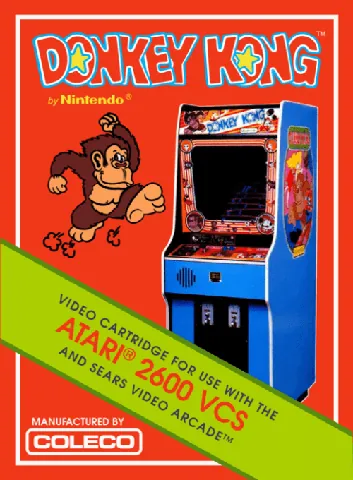
Donkey Kong
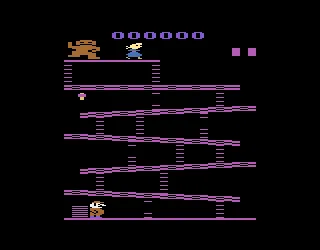
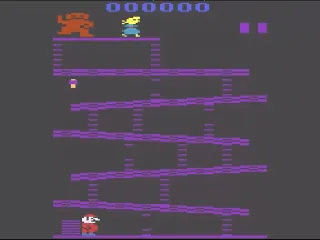
Donkey Kong was released for the Atari 2600 in 1982 by Coleco under license from Nintendo, bringing to home consoles the story of carpenter Jumpman trying to save his girlfriend, kidnapped by a giant gorilla. The player jumps over barrels, flames, and other obstacles while climbing a series of sloped platforms, and can occasionally grab a hammer to temporarily destroy enemies until the effect wears off along with the clock's gear icon, forcing the player to rely on jumps alone once more.
The port became notorious mainly for the Atari 2600's technical limitations, which forced developers to drop one of the original arcade screens and significantly simplify the characters and environments compared to Nintendo's original, including a reduced color palette and fewer animations. Even so, the game managed to capture the basic principle of jumping over obstacles and climbing upward toward a goal, which defined the entire platformer genre in the early 1980s, and it remained recognizable even to players who only knew the arcade original from the coin-op machines in arcades. The controls stayed deliberately simple - a single joystick and one jump button are enough to handle every screen, so even younger or less experienced players picked it up quickly.
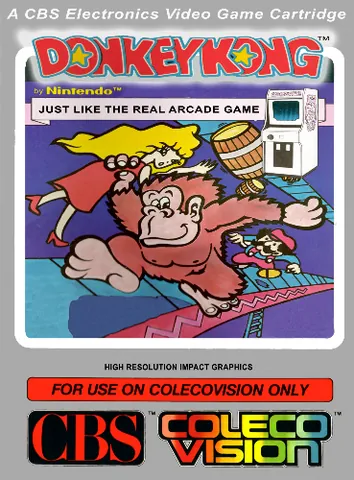
Despite noticeable compromises, Donkey Kong was among the best-selling titles for the Atari 2600 and, for many players, was their first encounter with a character who would later become one of the most famous in video game history. Today, the Atari 2600 version is often viewed as an example of the limits of an early home console compared to arcade cabinets, yet it also remains a historically significant record of early multi-platform game licensing and of rival console makers competing for the rights to popular arcade brands at a time when the home console market was still just gaining momentum - and Coleco was using the license to lay groundwork for its own console, the ColecoVision, which received a notably more faithful version of the same game.
Why play it: As a historical record of the early multi-platform licensing battle over Donkey Kong, it's worth a look for collectors, though players seeking a faithful experience are better pointed toward the ColecoVision version.
Game 37 of 69 for Atari 2600
The same title elsewhere (6)
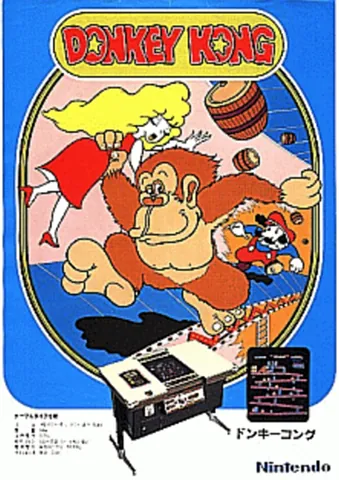
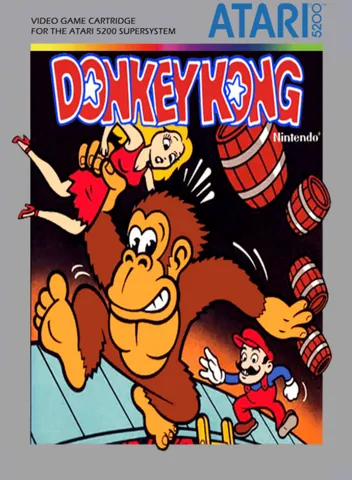
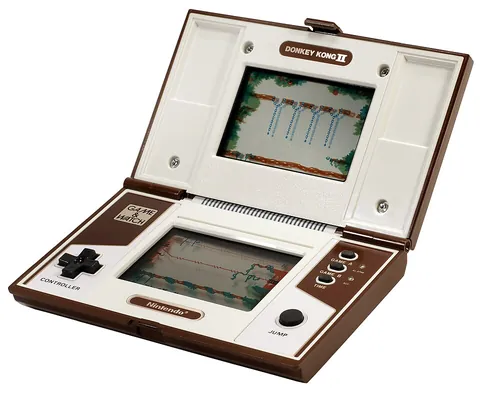
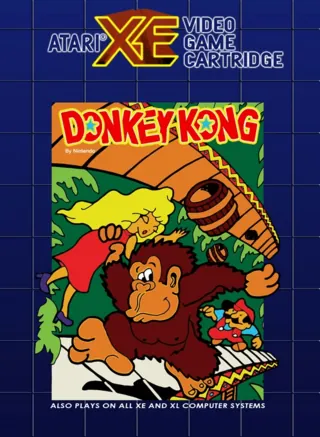
Nintendo's 1981 arcade original featured four stages – ladders, rolling barrels, elevator platforms and the rivet floor – and became the yardstick every home conversion was measured against. The 1982 ColecoVision version was remarkably accurate for its time in both looks and feel and became the main reason people bought the console, though cartridge memory limits forced it to drop one of the arcade's four stages. The pack-in cartridge bundled with the Atari 7800 offered its own solid rendition close to the original, though it still fell short of the arcade's smoothness and detail. Anyone wanting the complete game with every stage should reach for an arcade emulation.
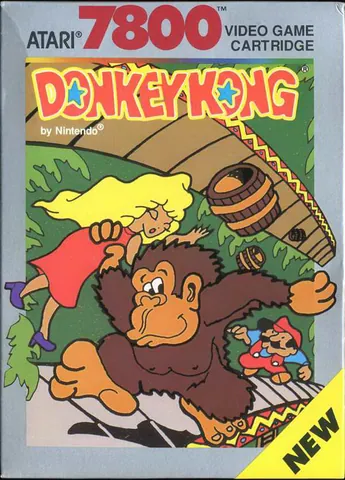
From the same series Donkey Kong →
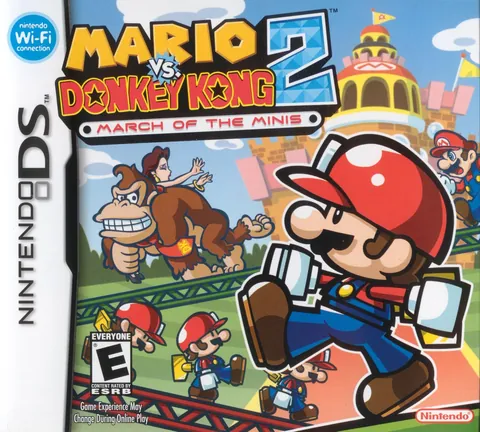 Mario vs. Donkey Kong 2: March of the Minis DS
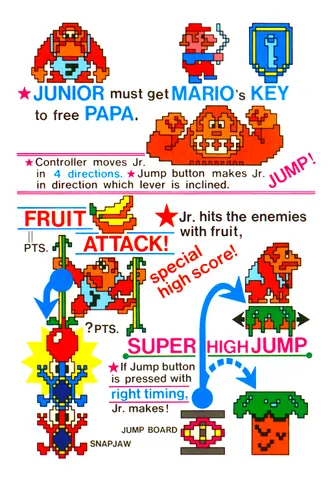 Donkey Kong Jr. MAME · G&W · 1982
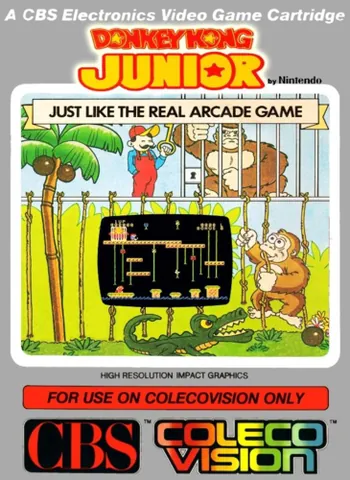 Donkey Kong Junior Coleco · 1982
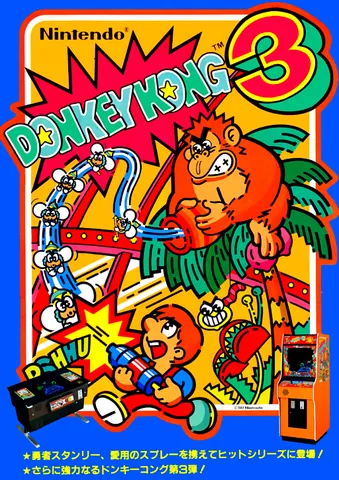 Donkey Kong 3 MAME · 1983
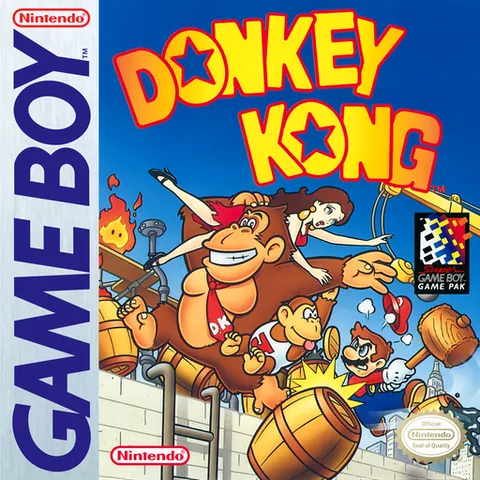 Donkey Kong (1994 / "Donkey Kong '94") GB · 1994
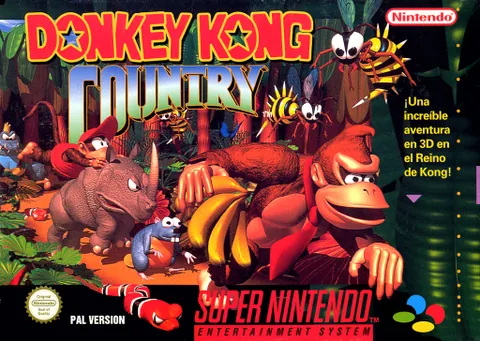 Donkey Kong Country 1–3 SNES · 1994–1996
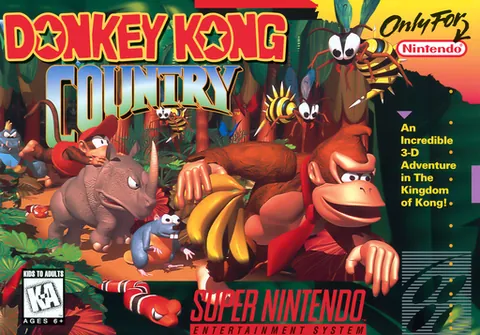 Donkey Kong Country SNES · GBC · GBA · 1994
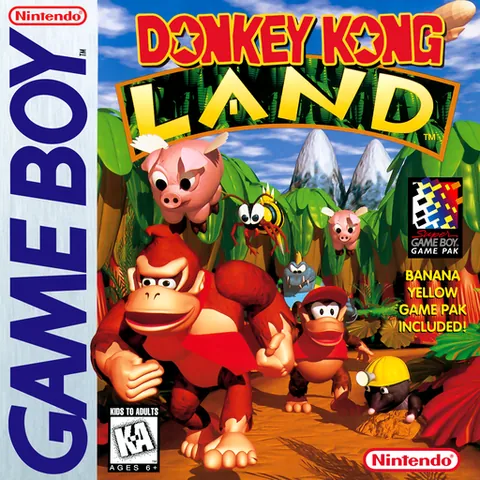 Donkey Kong Land GB · 1995
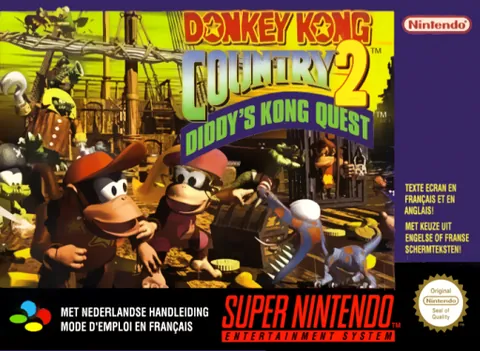 Donkey Kong Country 2 SNES · GBA · 1995
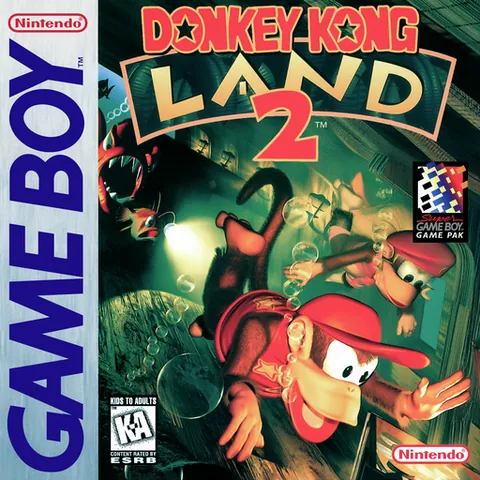 Donkey Kong Land 2 GB · 1996
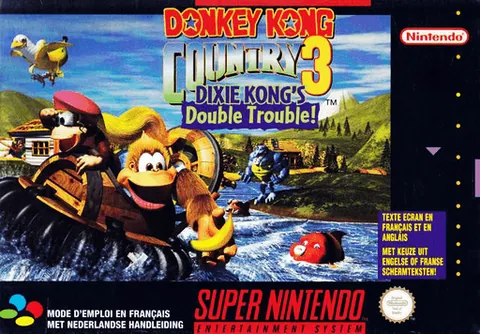 Donkey Kong Country 3 SNES · GBA · 1996
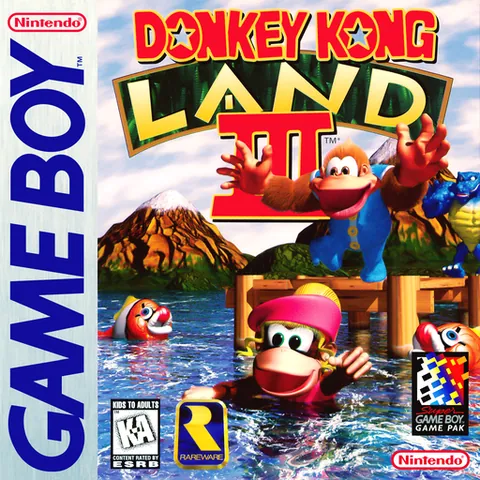 Donkey Kong Land III GB · 1997