Donkey Kong Country
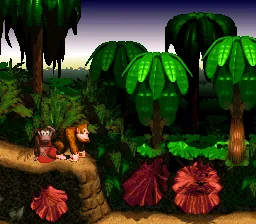
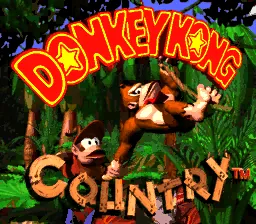
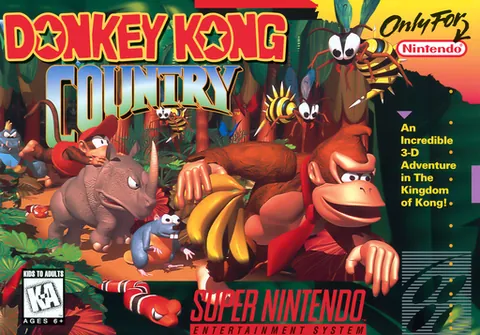
When Donkey Kong Country arrived in 1994, players couldn't believe their eyes. The characters and environments looked as if they had been rendered on an expensive workstation, not like something running on a console from 1990. With it, the British studio Rare proved that the Super Nintendo still had plenty of untapped potential inside it, and brought the gorilla Donkey Kong back into the spotlight.
In terms of gameplay it's a precise 2D platformer. You control Donkey Kong and his nimbler nephew Diddy, switching between them depending on the situation, collecting bananas and the letters K-O-N-G, searching for hidden bonus rooms and fighting your way through traps, barrel cannons and enemies led by the reptile King K. Rool, who stole the banana hoard. Animal helpers like the rhino Rambi or the bird Expresso aid you, and every level is designed with an emphasis on pace, precision and rewarding attentive players. The game also doesn't skimp on variety: from mine carts hurtling along rails through underwater passages to caves and snowy peaks, it offers a colorful palette of situations that regularly shift the pace and the demands on the player.
The technical sensation was the so-called pre-rendered graphics. Rare modeled the characters and objects in 3D using Silicon Graphics technology and converted them into 2D sprites, creating a plastic look unheard of at the time. It was accompanied by David Wise's ambient soundtrack, which to this day ranks among the most acclaimed in the genre's history.
Donkey Kong Country became an enormous commercial hit and one of the best-selling titles on the Super Nintendo ever. It helped Nintendo stay competitive in the so-called console wars against Sega and its Mega Drive and effectively gave birth to a successful new gaming brand that lives on to this day. Its huge success subsequently opened the door to two sequels on the same console and later to further returns on newer platforms. It is precisely the variety of environments together with the carefully measured difficulty that holds the game together and makes it an experience that even after decades feels fresh and playable.
The story of its creation is important too. Rare, a small British studio previously known more for smaller titles, impressed Nintendo with its technical experiments to such an extent that Nintendo entrusted it with one of its most precious brands. The bet paid off: the game arrived in 1994, that is at a time when Sega with its Mega Drive was at its peak, and it helped Nintendo catch its breath again in the fight for players' favor precisely through the power of its audiovisual presentation.
Culturally, it was the moment when it became clear how important presentation and marketing are. The game became Nintendo's flagship in the mid-nineties and its visuals helped define what players thought a next-generation game should look like, even before fully 3D consoles arrived. Donkey Kong became a first-rate star once more, and the series Rare launched lives on in various forms to this day.
Why play: A technically groundbreaking platformer that plays superbly to this day, with a legendary soundtrack, which showed what the Super Nintendo could really do.
Game 69 of 154 for Super Nintendo
The same title elsewhere (1)
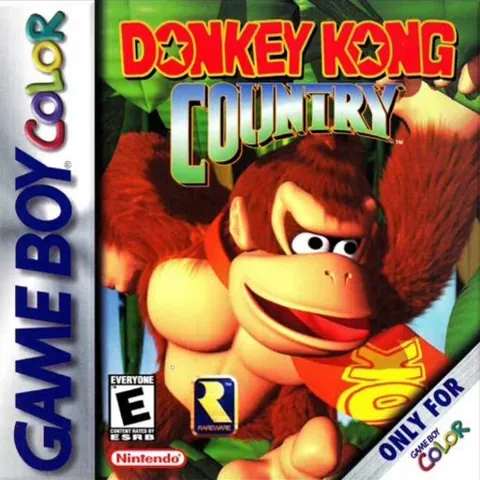
The Super Nintendo version shocked players in 1994 with pre-rendered graphics created on expensive Silicon Graphics workstations, which at the time looked like far more powerful technology than the SNES actually had. The 2000 portable Game Boy Color port tries to replicate that spectacle on much weaker hardware — the graphics are still pre-rendered, but with a more limited color palette and on a smaller screen, the music sounds different due to the Game Boy's different sound chip, and some platforming sequences were simplified for performance. For the most impressive and smoothest experience, the SNES version remains the reference, but the GBC port is an admirable technical feat on a handheld.
From the same series Donkey Kong →
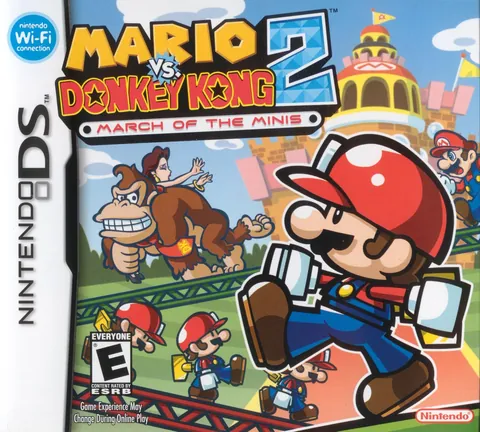 Mario vs. Donkey Kong 2: March of the Minis DS
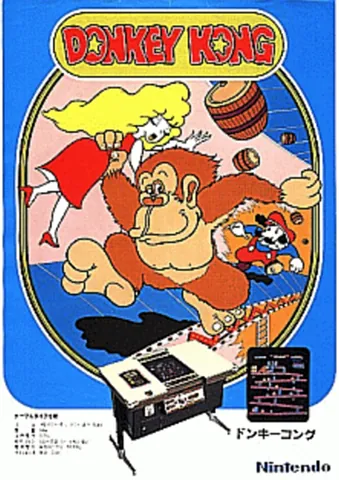 Donkey Kong MAME · Coleco · 2600 · 5200 · G&W · A800 · 7800 · GB · 1981
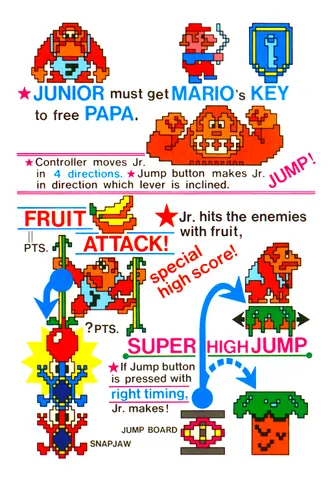 Donkey Kong Jr. MAME · G&W · 1982
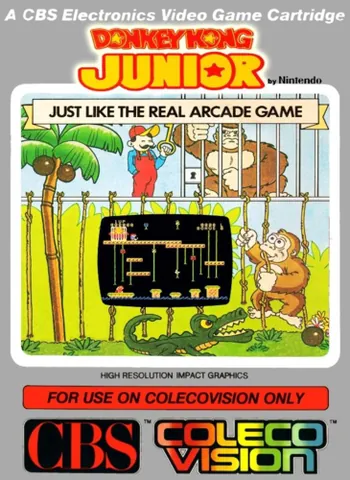 Donkey Kong Junior Coleco · 1982
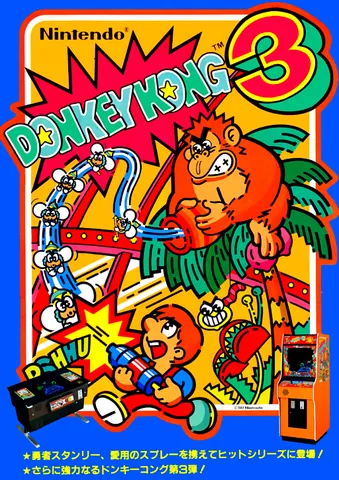 Donkey Kong 3 MAME · 1983
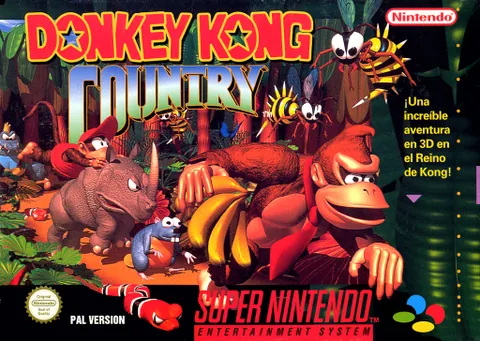 Donkey Kong Country 1–3 SNES · 1994–1996
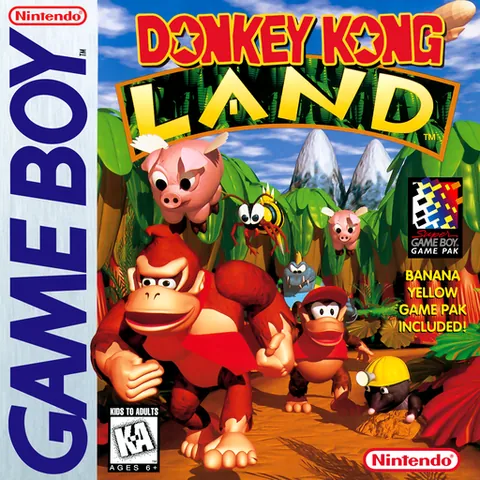 Donkey Kong Land GB · 1995
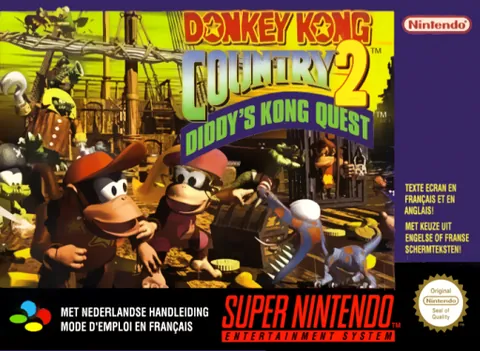 Donkey Kong Country 2 SNES · GBA · 1995
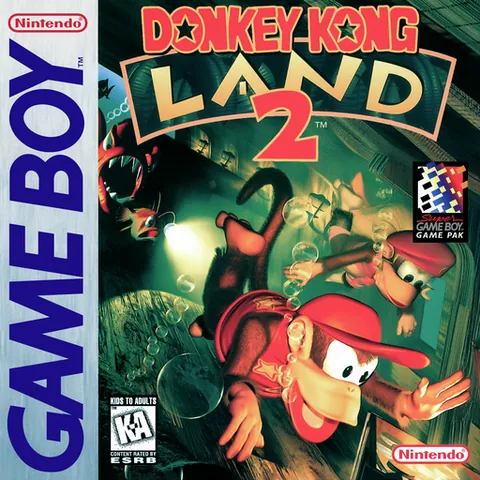 Donkey Kong Land 2 GB · 1996
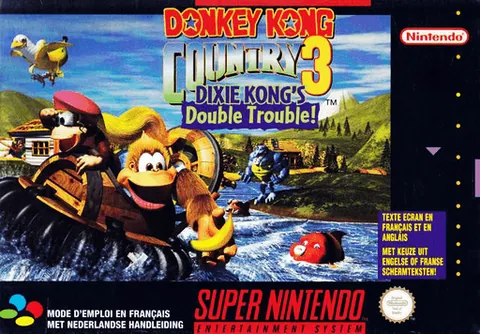 Donkey Kong Country 3 SNES · GBA · 1996
 Donkey Kong Land III GB · 1997
 Donkey Kong 64 N64 · 1999