Donkey Kong Jr.
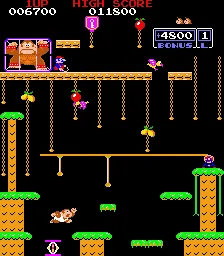
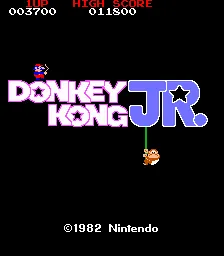
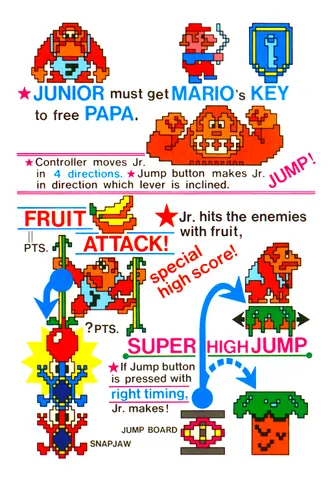
Do villains have a right to revenge? In Donkey Kong Jr. from 1982, Nintendo dared to do something unexpected - it turned the roles inside out. The hero of the previous installment became the antagonist, and the player takes on the small son of the giant gorilla, who sets out to rescue his imprisoned dad from a cage. It is to this day the only game in which Mario is the villain.
The gameplay cleverly builds on its famous predecessor but changes the perspective and the movement. Donkey Kong Jr. does not just climb ladders - he hangs and clambers along vines and chains, and climbing two vines at once is faster than one. This small mechanic gives the game a fresh tactical depth. The player fights through four distinct screens full of jungle, traps, crocodilian Snapjaw enemies, and falling fruit that can be dropped onto pursuers.
The game's creation was again overseen by Shigeru Miyamoto with Nintendo at the peak of its arcade fame. After the phenomenal success of the first Donkey Kong, it was a logical sequel that, however, did not copy but experimented. The role reversal was a bold narrative move, and the vertical vine sections showed that Nintendo could build on a proven formula without repeating itself.
Culturally, Donkey Kong Jr. earned itself a lasting place for several reasons. It is an integral part of the original arcade trilogy, received ports to the Famicom home system and countless retro compilations, and its music and characters are recalled by later titles including the fighting game Super Smash Bros., where Junior briefly appeared. For collectors and historians it is also a valuable record of a time when the studio could afford to play freely with its own icons.
Today the game may come across as less flashy than its predecessor, but that is precisely its charm - it is a clever, understated variation that proves even a sequel can have its own identity. And the sight of Mario as a jailer retains to this day the appeal of a charming gaming curiosity.
Why play it: The only game where Mario is the villain, and on top of that a fresh vine platformer that cleverly develops the famous original instead of slavishly copying it.
Game 30 of 258 for Arcade
The same title elsewhere (1)
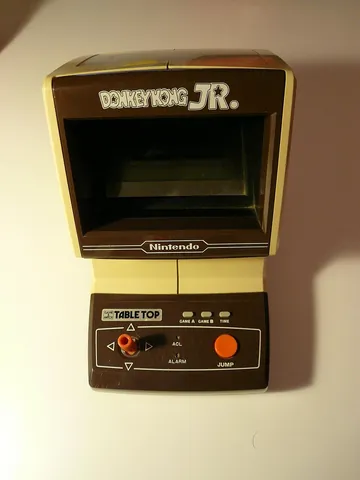
From the same series Donkey Kong →
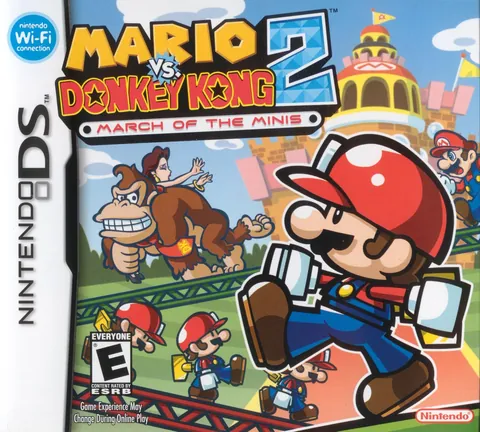 Mario vs. Donkey Kong 2: March of the Minis DS
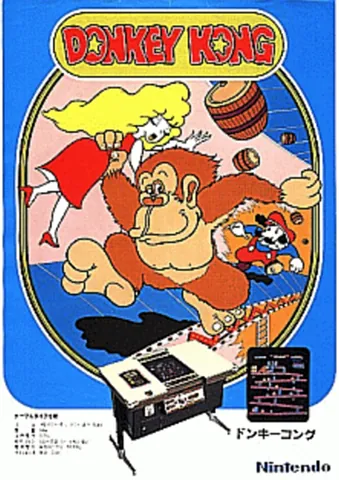 Donkey Kong MAME · Coleco · 2600 · 5200 · G&W · A800 · 7800 · GB · 1981
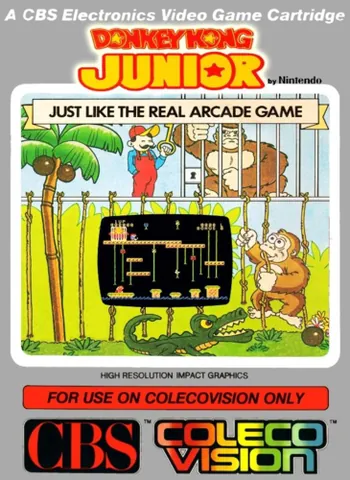 Donkey Kong Junior Coleco · 1982
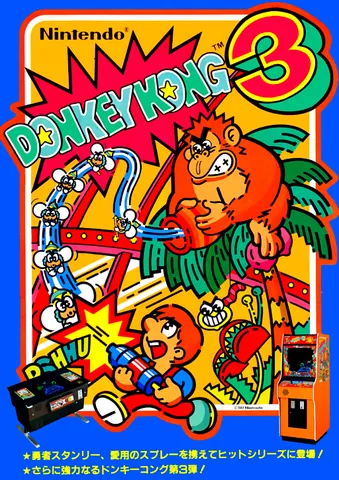 Donkey Kong 3 MAME · 1983
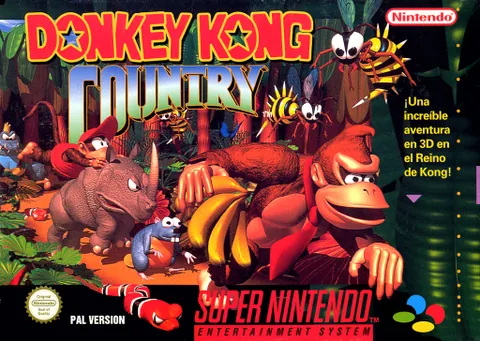 Donkey Kong Country 1–3 SNES · 1994–1996
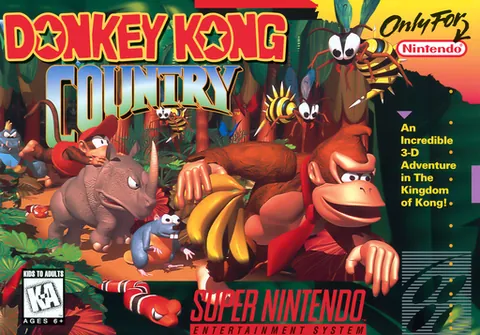 Donkey Kong Country SNES · GBC · GBA · 1994
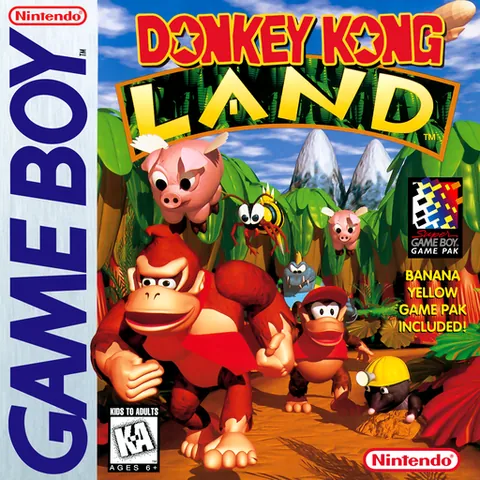 Donkey Kong Land GB · 1995
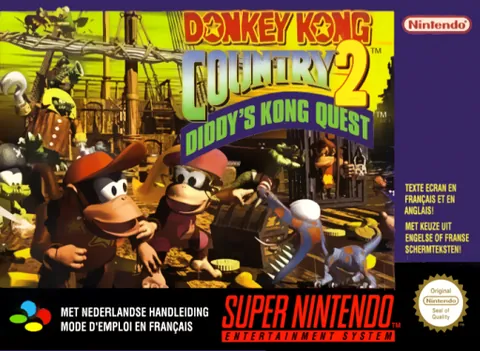 Donkey Kong Country 2 SNES · GBA · 1995
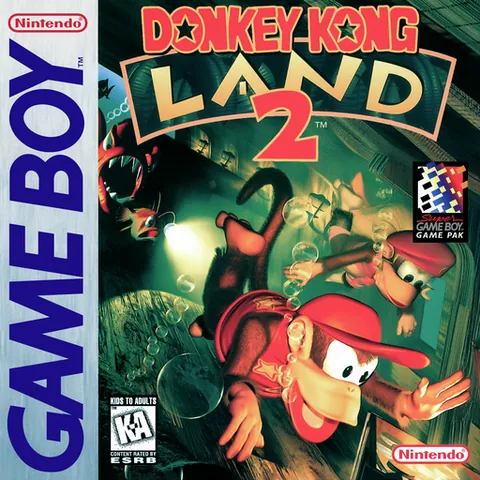 Donkey Kong Land 2 GB · 1996
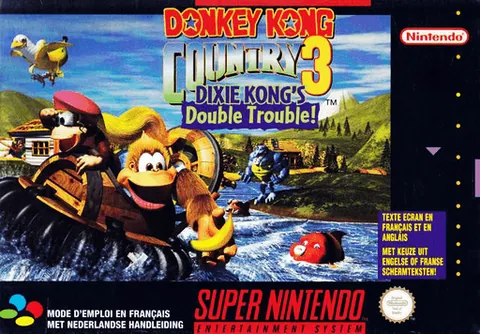 Donkey Kong Country 3 SNES · GBA · 1996
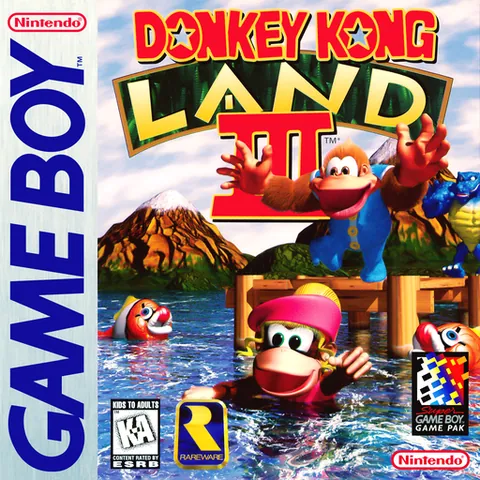 Donkey Kong Land III GB · 1997
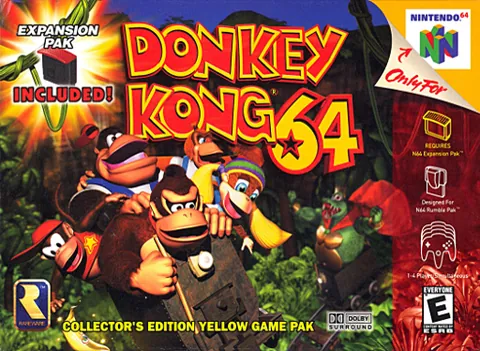 Donkey Kong 64 N64 · 1999