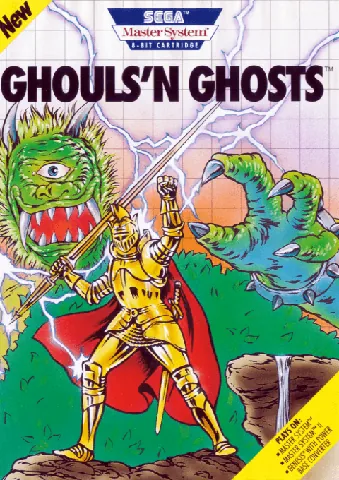
Ghouls 'n Ghosts
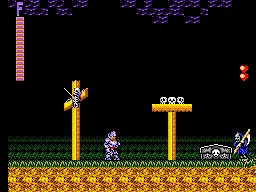
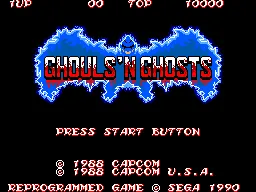
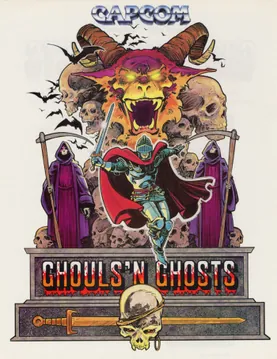
The knight Arthur stands in a graveyard when a demon abducts his princess, and you set out on one of the most demanding adventures in gaming history. Ghouls 'n Ghosts, the sequel to Capcom's famous Ghosts 'n Goblins from 1988, is synonymous with brutal difficulty that players remember with both love and dread.
The gameplay is a merciless action platformer. Arthur walks through levels full of the undead, demons and monsters, collects weapons like spears, daggers and scythes, and tries to survive. The famous mechanic is the armour: after the first hit you lose it and run around in your underpants; the second hit means death. That turns every encounter into a test of nerves and precision.
Ghouls 'n Ghosts is also famous for the fact that you have to complete the game twice to reach the true ending, and even then only with a special weapon you've found. This devilish structure stretched an already exhausting challenge to the limits of human ability and ranked the series among the hardest games of all.
The SEGA Master System version is an eight-bit conversion of the arcade and sixteen-bit original. Adapting such a game to weaker hardware was demanding, but the port gave Master System owners a chance to take on the series' legendary difficulty on their own console.
The series' cultural significance is enduring. The knight Arthur became a Capcom icon and appeared in other games too; the series continued with titles like Super Ghouls 'n Ghosts and the modern Ghosts 'n Goblins Resurrection. For many players it remains the yardstick of what a truly hard game means.
Why play it: For a hardcore challenge that doesn't forgive, an iconic knight in his underpants and the satisfaction of every mastered stretch of this infernal classic.
Game 28 of 67 for SEGA Master System
The same title elsewhere (5)
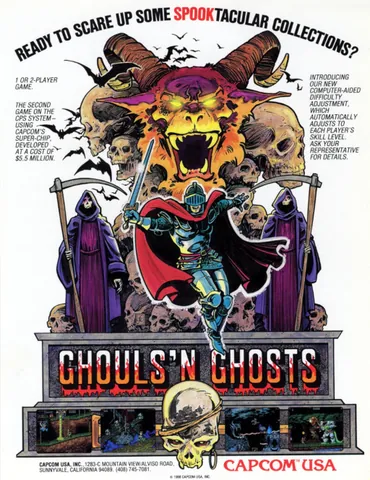
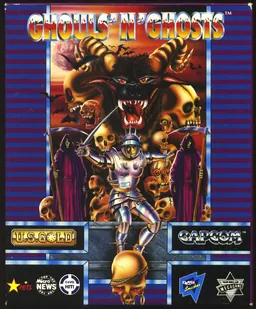
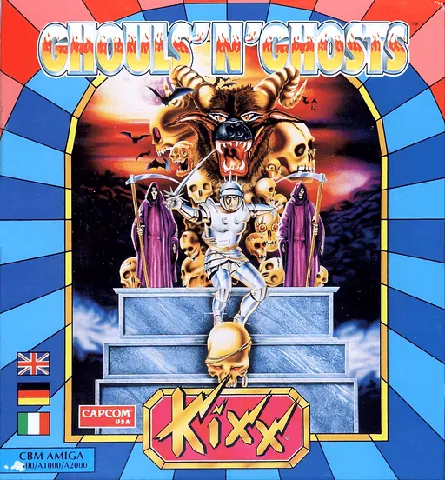
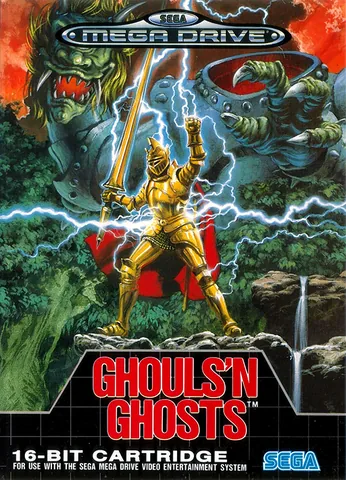
Capcom's 1988 arcade original ran on CPS hardware with sharp colors and merciless speed that home versions could only try to match. The closest conversion is the Sharp X68000 port, a Japanese computer built close to arcade hardware, so its graphics and pacing come nearest of all. The Mega Drive version ranks among the best home ports, though it had to trim some background detail. The Master System offered a simplified, shorter take with fewer colors. The Amiga and Atari ST struggled with slower scrolling and noticeably choppier animation compared to the arcade machine.