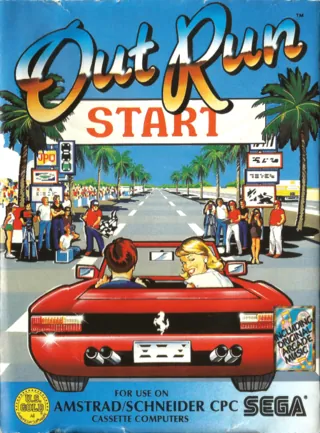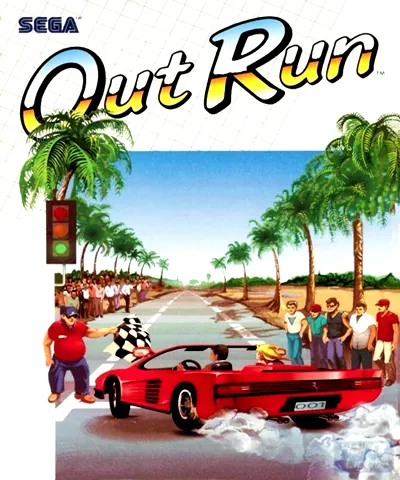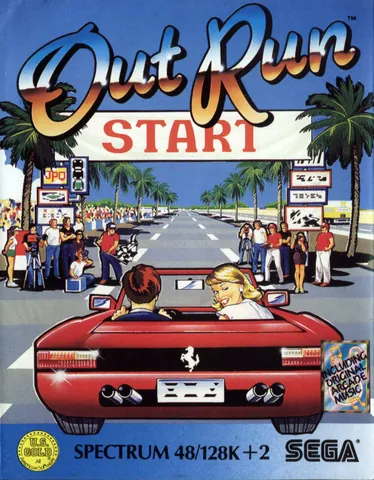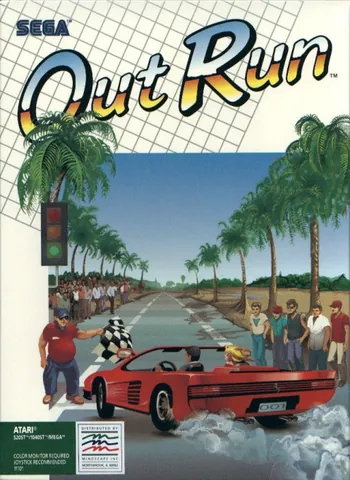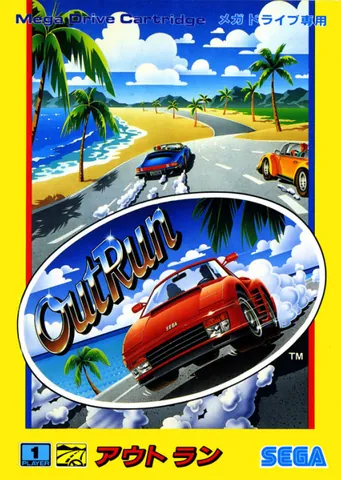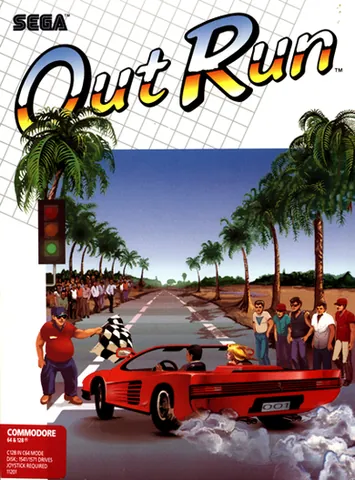
Wind in your hair, a blonde in the passenger seat, and a red Ferrari Testarossa racing along a coastal road — that was the dream of the mid-eighties that Out Run brought straight from the arcade into the living rooms of Commodore 64 owners.
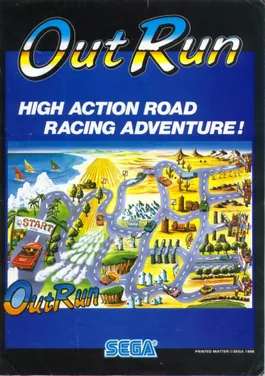
The original was created in 1986 for Sega by the legendary designer Yu Suzuki, and it was a revolution in several respects at once. Instead of a race for first place, it was about the pure joy of driving: the player fled against the clock from checkpoint to checkpoint, and at every fork chose for themselves which branch of the route to take next. This created five different endings and several distinct paths across the scenery — from desert through rocky canyons to snow-covered plains.
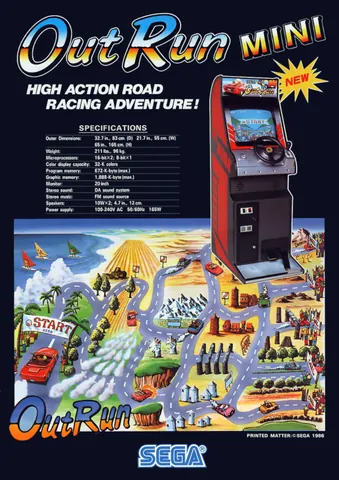
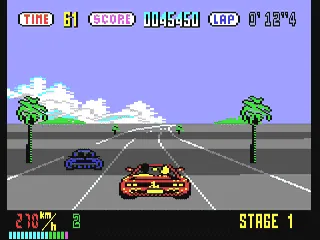
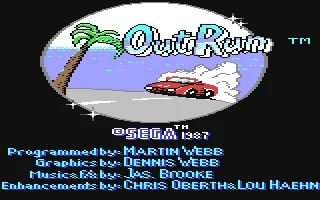
The arcade cabinet became famous for its moving cockpit, which tilted into the corners, and for its selection of music from the radio — tracks like Magical Sound Shower went down in the history of game soundtracks. The conversion to eight-bit computers including the Commodore 64 was released in Britain by U.S. Gold. The home versions necessarily had to sacrifice some of the smoothness and colorful splendor of the arcade, yet they tried to capture the true essence: the sense of speed, the branching tracks, and the iconic car.
On the modest C64 hardware, Out Run was a technical challenge, and the result was the subject of period debates about how much could be squeezed out of an eight-bit machine. Whether reviews praised or criticized the smoothness, the magic of the source material and the brand itself were enough for the game to find an enormous audience.
Out Run became one of the most influential racing titles of all time and kicked off a whole series of sequels and later remakes. Its DNA — arcade driving for pure joy, route selection, and a sunny atmosphere — still inspires developers around the world today.
Why play: For a nostalgic drive toward the sun that defined what the pure joy of speed should look like on an eight-bit computer.
Game 47 of 121 for Commodore 64
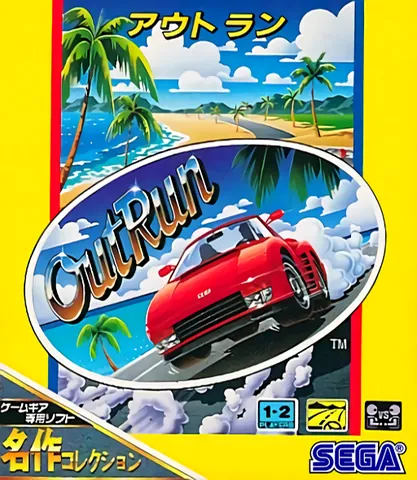
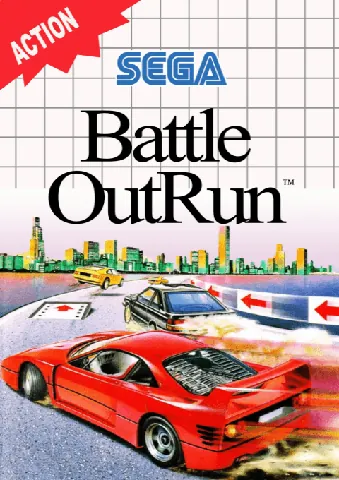
The same title elsewhere (9)
Sega's 1986 arcade original ran on special Super Scaler hardware that let the road scale smoothly into the distance, with three selectable tunes playing from the cabinet's speakers. Home computers could not fully recreate that illusion of speed: the Commodore 64, Amstrad CPC, and Atari ST versions all show noticeably choppier road scrolling and less track detail. The Amiga kept decent smoothness and nicer visuals despite the limitations, while the Master System surprised with fairly faithful graphics and music for an eight-bit console. For the real arcade feeling, the original remains unmatched.