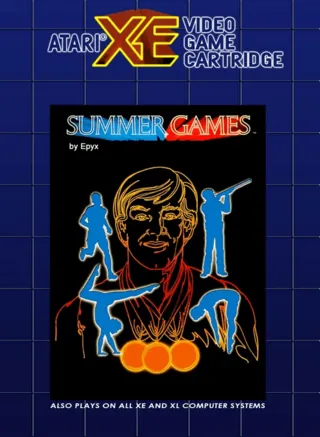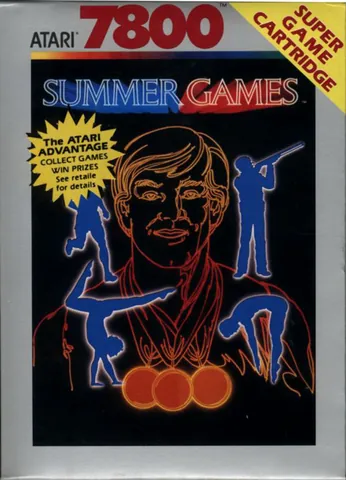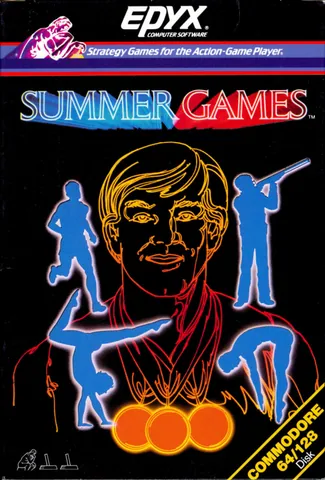

An Olympic fanfare, a crowd in the stands, and you with fingers sweaty from the joystick. That's what the pinnacle of sporting competition looked like on home computers of the eighties, and Summer Games from the California studio Epyx stood at the front line of it. This collection of summer disciplines became synonymous with what came to be called the "multi-event" sport, and for many Commodore 64 owners it was their first contact with what competing against friends at a single screen looks like.
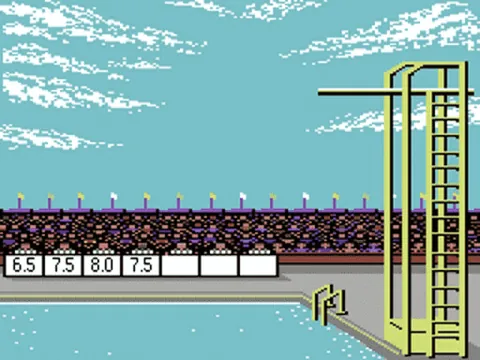
The game's construction is ingeniously simple. You choose a country whose flag then flies over the stadium, and you gradually fight your way through a series of Olympic disciplines, from swimming through diving and gymnastics to sprints and other track-and-field events. Each discipline has its own controls, its own rhythm, and its own trick that needs to be mastered. Some require precise timing of a press, others frantic waggling of the joystick. It was precisely this variety that set Summer Games apart from the simpler titles of the time.
Epyx was in its day synonymous with quality action software for eight-bit machines, and Summer Games laid the foundation for an entire successful series. The game managed to extract unexpectedly colorful graphics and digitized sounds from the Commodore 64, and its ceremonial opening ceremony with the lighting of the flame and the flags was among the most spectacular opening scenes that home computers of the time offered.
The cultural footprint of this game is deep. Summer Games launched the genre of sports compilations, which was followed by a sequel as well as a winter variant and later countless imitators. For an entire generation of players it became the definition of what an "Olympics on the computer" looks like, and competing for the best time or the highest score in the living room with a bunch of friends became an unforgettable ritual.
Today Summer Games recalls how little it took to create a great social experience. No internet leaderboards, just you, a joystick, and the urge to beat the person next to you.
Why play: For nostalgia for an era when the Olympics were played at a single screen and the winner was decided by the calluses on your thumb, and to understand the roots of the entire sports-compilation genre.
Game 53 of 121 for Commodore 64