M.U.L.E.
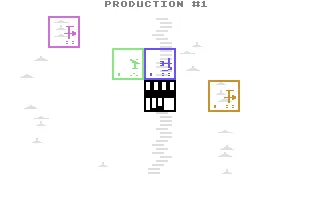
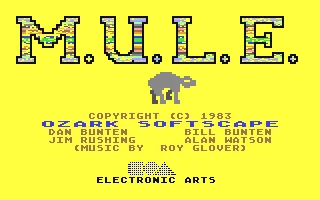
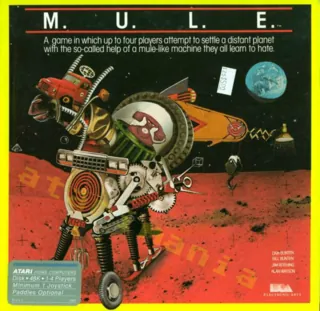
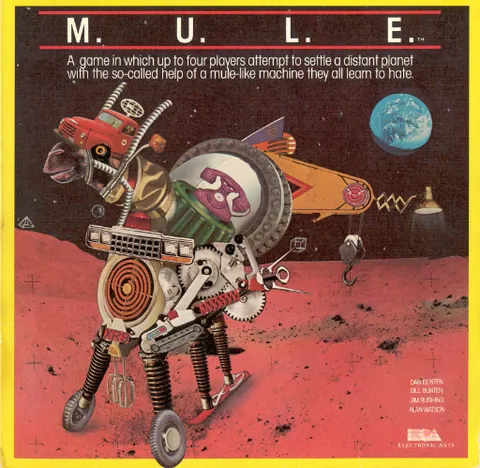
When people today talk about games that were decades ahead of their time, M.U.L.E. ranks near the top of the list. This economic strategy game for up to four players from Ozark Softscape (led by Dan Bunten) was released in 1983 under the Electronic Arts banner and is still studied today as a textbook example of brilliant multiplayer design. You colonize the planet Irata, buy plots of land, mine energy, food, and smithore ore, and hire robotic mules (Mult-Use Labor Elements — hence the name) to make your slice of the world fertile.
The magic of the game lies in the tension between competition and cooperation. The individual with the highest wealth wins, but if the colony as a whole goes bankrupt, everyone loses — so you sometimes have to prop up your rivals to keep the market from collapsing. Auctions play out in real time, prices fluctuate according to supply and demand, and a single random event can turn the standings upside down. The economy truly breathes here.
M.U.L.E. was never a commercial blockbuster, but it became an immortal legend among connoisseurs. Sid Meier and other designers repeatedly cite it as an inspiration. On the Commodore 64 it's one of the best reasons to gather three friends around a single keyboard.
Game 55 of 121 for Commodore 64
The same title elsewhere (1)
M.U.L.E. was created on Atari's 8-bit home computers, which had built-in support for up to four joysticks at once, letting all four players sit at a single machine each with their own stick. The Commodore 64 has only two physical joystick ports, so its port had to handle the third and fourth player through the keyboard, making it somewhat less comfortable when playing with a full table. On the other hand, the C64 benefits from its SID sound chip, which gives the music and sound effects a fuller, richer sound than Atari's POKEY chip. Content and visuals are very close between the two versions, so the choice mainly comes down to more comfortable four-player control versus richer sound.