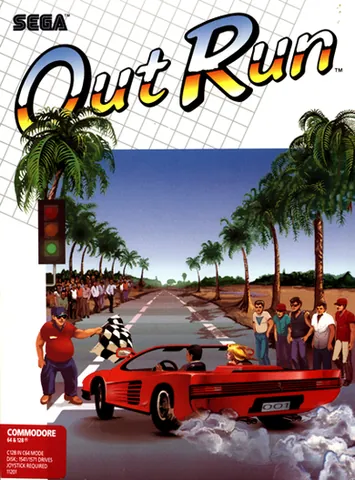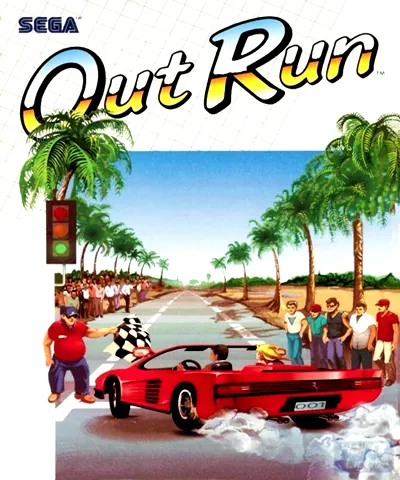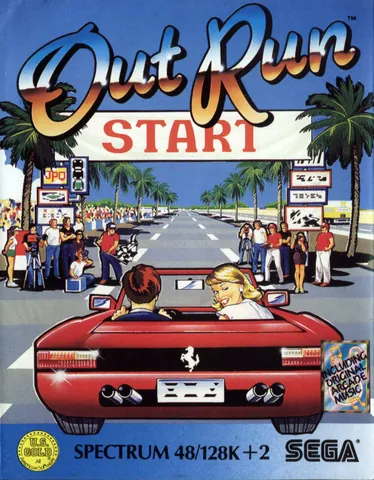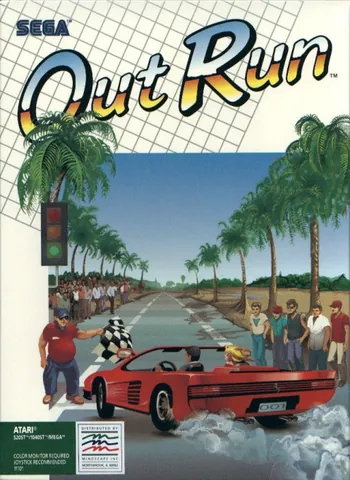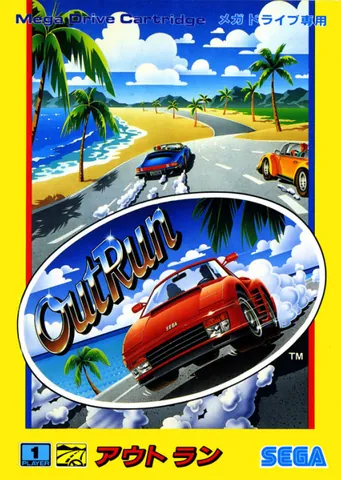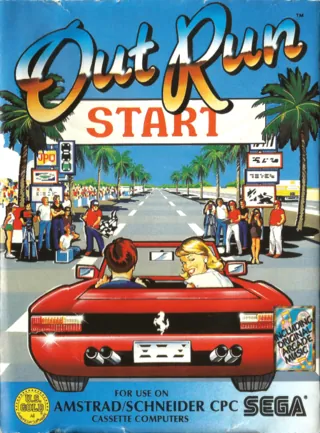
Wind in your hair, a blonde in the passenger seat and an endless road before the bonnet vanishing over the horizon – Out Run is a celebration of freedom behind the wheel, and even its conversion to the Amstrad CPC tries to bring this feeling of a holiday drive to the home computer screen. The original was a revelation in its day, and its name still conjures images of a red Ferrari racing down a coastal road under a blue sky.
The game principle is brilliantly simple: you don't compete with other drivers for position but with relentlessly ticking time. At the end of each stretch the road forks and the player chooses which way to go – this branching structure offers several different destinations and encourages repeated playing. Instead of aggression, style, smoothness and the joy of speed rule here, which made Out Run more a feeling for life than just a racing game.
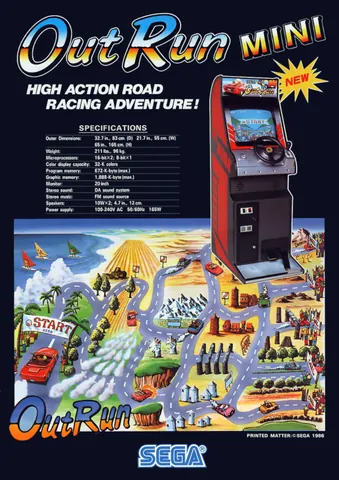
Behind the original stands the legendary Japanese designer Yu Suzuki and the studio Sega, which released the game into arcades in 1986 in a version with a moving cabinet that tilted according to the curves. This technological and musical timelessness – a soundtrack of licensed-style melodies the player chose by switching the radio – made Out Run the benchmark of so-called arcade racing. Home conversions for the eight-bits including the Amstrad CPC were prepared by European teams and faced the tough task of imitating the original's pseudo-3D scaled graphics.
Out Run's cultural footprint is enormous. It defined an entire subgenre, inspired countless followers, and its aesthetic of a coastal drive into the setting sun became so iconic that the music and visual scene still cite it today. The game received many sequels, and the name Out Run still means a synonym for carefree racing.
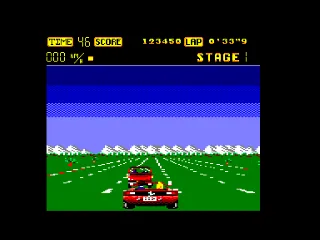
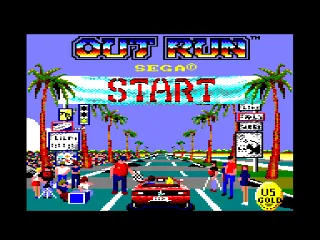
On the Amstrad CPC, Out Run is necessarily more modest than the dazzling arcade original, but as a historical document it has its worth. It recalls a time when arcades tried to get into living rooms and when even an eight-bit machine could offer at least a flash of the feeling that you had an open road and the whole summer ahead of you.
Why play: For the timeless joy of pure driving and the chance to sample one of the most influential racing titles in history on a home eight-bit.
Game 22 of 26 for Amstrad CPC
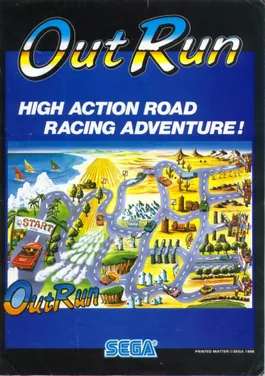
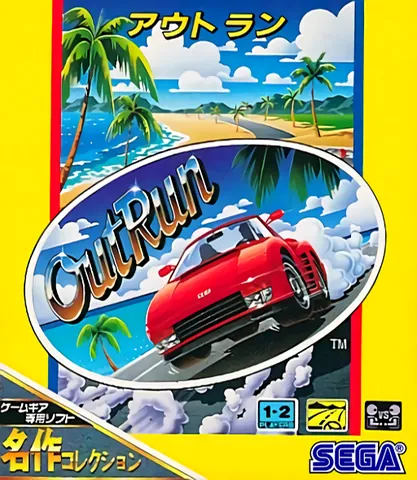
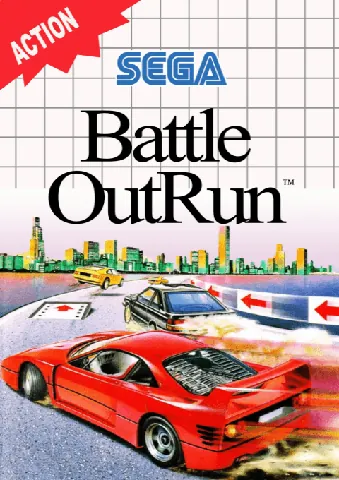
The same title elsewhere (9)
Sega's 1986 arcade original ran on special Super Scaler hardware that let the road scale smoothly into the distance, with three selectable tunes playing from the cabinet's speakers. Home computers could not fully recreate that illusion of speed: the Commodore 64, Amstrad CPC, and Atari ST versions all show noticeably choppier road scrolling and less track detail. The Amiga kept decent smoothness and nicer visuals despite the limitations, while the Master System surprised with fairly faithful graphics and music for an eight-bit console. For the real arcade feeling, the original remains unmatched.