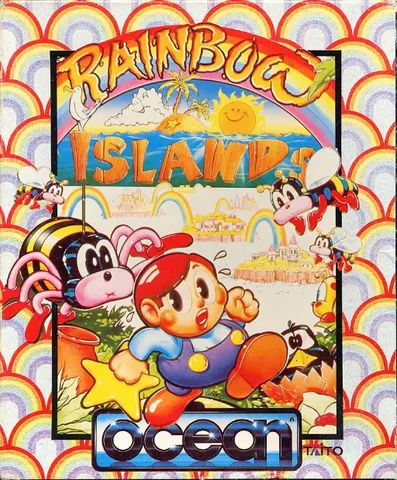
Rainbow Islands
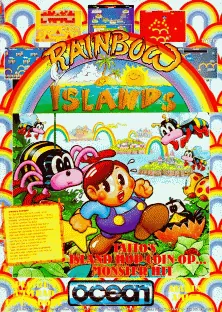
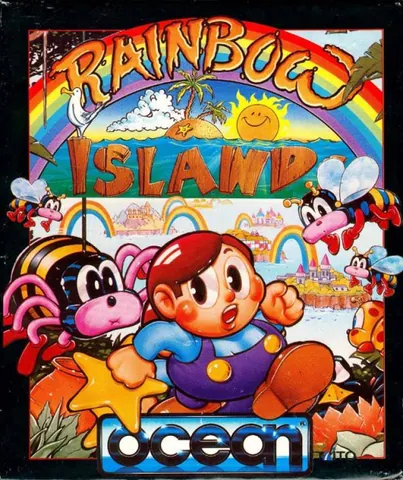
Rainbows instead of weapons, cute critters instead of enemies, and an all-pervading optimism — Rainbow Islands is a game that manages to be both sweet and surprisingly deep at the same time, and on the Commodore 64 it brought a hearty dose of colorful joy.
The arcade original was created by the Japanese company Taito in 1987 as a direct sequel to the Bubble Bobble phenomenon. The main hero Bub this time transformed from a little dragon into human form, and his main ability was creating rainbows. These served at once as stairs for climbing upward, as a bridge, and as a weapon — you just had to let the rainbow fall onto an enemy. The goal of each level was to climb upward as quickly as possible before the rising water level buried everything beneath it.
The game was famous for its hidden mechanics: collecting colored diamonds in the correct order, secret rooms, and an alternative ending that rewarded the most persistent players. So beneath the sugary shell lay surprisingly rich gameplay with room for mastery.
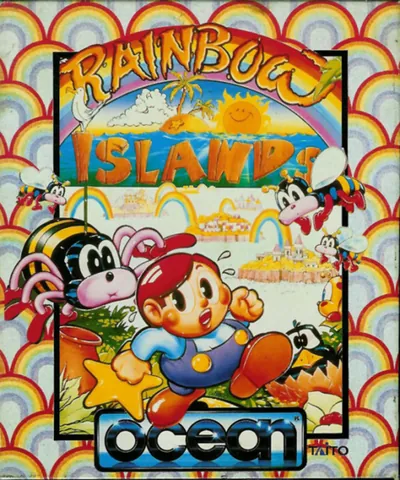
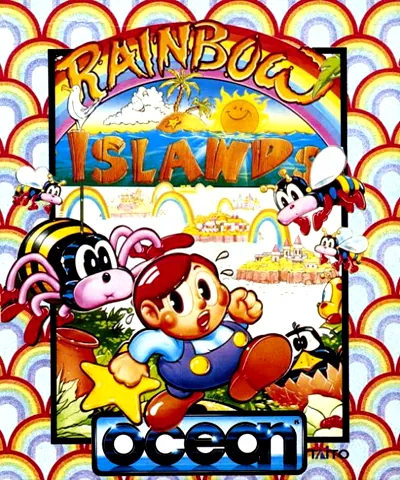
The conversion for home computers was released in Europe by Ocean, and the version for the Commodore 64 was among the well-done conversions of arcade hits of the time. The eight-bit machine couldn't fully capture the colorful splendor of the arcade, but the characteristic climbing design and the rainbow mechanic remained intact.
Rainbow Islands ranked among the beloved classics of the so-called Bubble Bobble series and is still remembered today as one of the most inventive platformer concepts of the eighties. Its lightness and colorfulness earned it a place in the hearts of an entire generation of players.
Why play: For an infectiously cheerful yet surprisingly thoughtful platformer, where every rainbow is at once a path upward and a tool of destruction.
Game 49 of 121 for Commodore 64
The same title elsewhere (6)
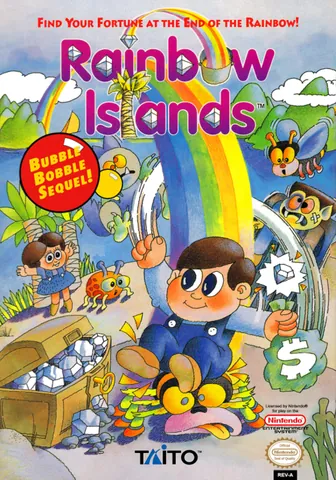
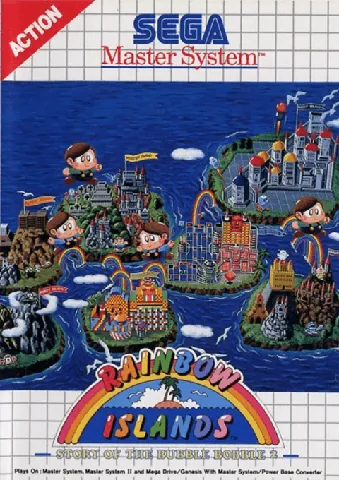
Rainbow Islands, the sequel to Bubble Bobble, differed across platforms mainly in how much colorful variety and smooth rainbow-climbing each system's hardware could handle. Taito's arcade machine remains the reference experience, with the richest color palette and smoothest movement. Amiga and Atari ST came closest to it, preserving both color and music. The 8-bit computers Commodore 64, ZX Spectrum, and Amstrad CPC had to limit on-screen colors and simplify backgrounds to keep scrolling playable, yet thanks to great music they earned their own loyal fans. The NES version was a direct rework by Taito with its own graphical style suited to the Nintendo console. SEGA Master System got a colorful conversion considered one of the nicer-looking ones among 8-bit consoles.