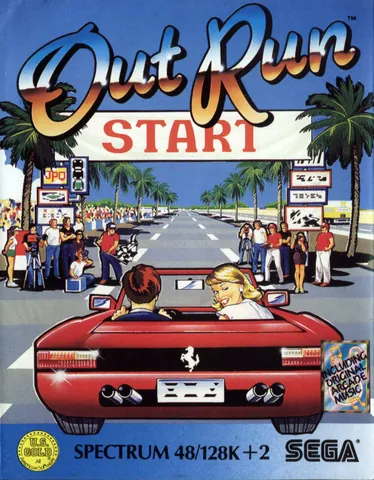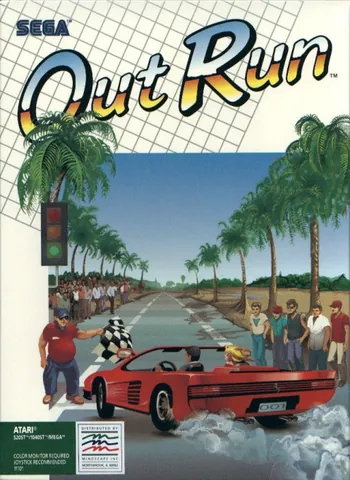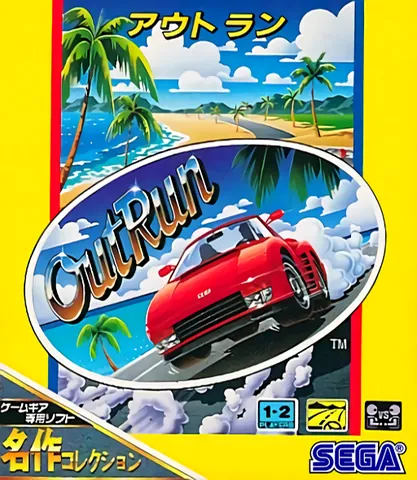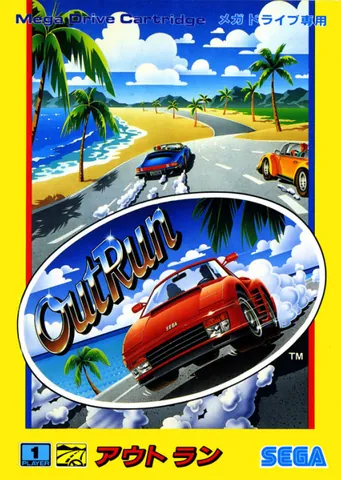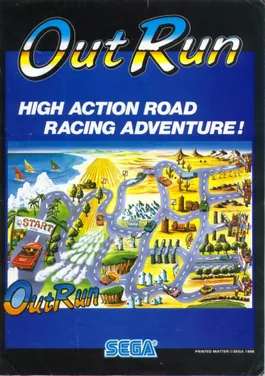
Out Run isn't a classic race but a joyride for its own sake, and that's exactly what made it one of the most beloved arcade machines of all time; the Sharp X68000 version was among the best home conversions available in Japan. The player sits behind the wheel of a red convertible, a co-pilot at their side, with an open road ahead running through coastlines, deserts, stone villages, and snowy mountain passes. The goal is to clear each section before the timer runs out, and at the end of every stage you choose whether to go left or right, so the track branches into five different endings. The handling emphasizes smooth cornering, braking technique, and overtaking slower cars that appear at inconvenient moments.
The conversion had to nail the hardest part: the illusion of speed in the pseudo-3D view behind the car, where the road rises, dips, and curves. Thanks to its power and color palette, the X68000 managed to keep up a decent pace along with detailed scenery — palm trees, rocks, and houses sweeping past — so the result felt far closer to the arcade on a home screen than competing versions on other computers. The music is legendary: before starting, the player picks from several tracks, and their sunny, tropical-flavored FM-synth melodies remain among the most cited soundtracks in gaming history.
At the time, Out Run was a symbol of carefree luxury, and its X68000 conversion helped cement the machine's reputation as the best home arcade platform. Its influence on the genre is enormous: it defined the category of arcade driving games built around the feeling of speed rather than simulation, spawned a whole line of sequels, and its legacy is still visible in modern games that embrace the sunset-and-open-road aesthetic. Today Out Run feels surprisingly fresh, because its charm was never rooted in technology but in mood. Just a few minutes in, and the urge to keep driving arrives on its own.
Game 12 of 25 for Sharp X68000
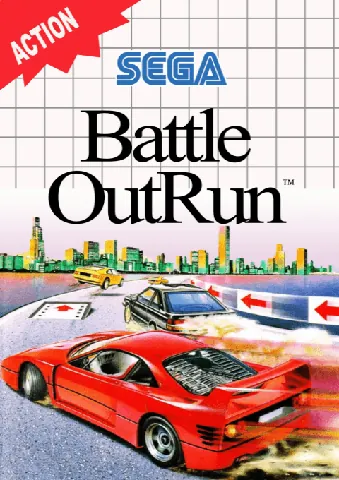
The same title elsewhere (9)
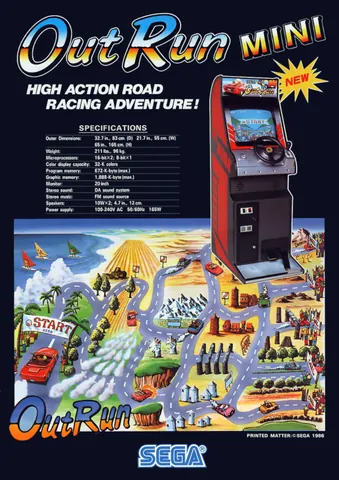
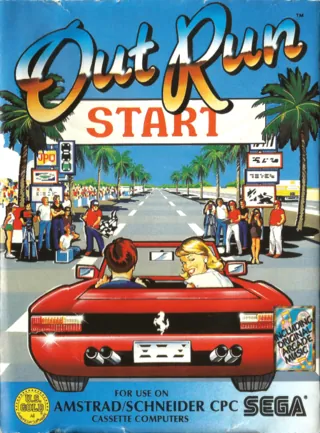
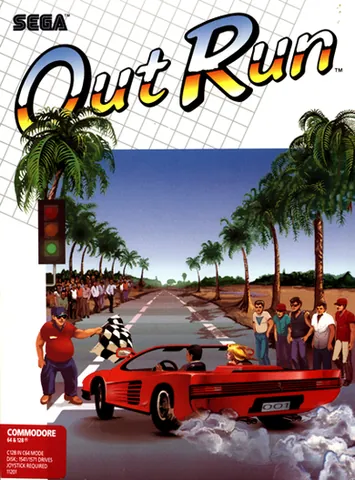
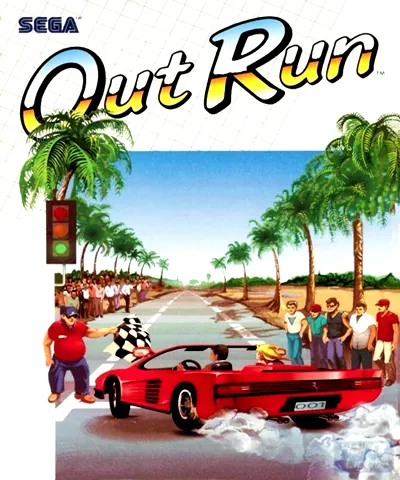
Sega's 1986 arcade original ran on special Super Scaler hardware that let the road scale smoothly into the distance, with three selectable tunes playing from the cabinet's speakers. Home computers could not fully recreate that illusion of speed: the Commodore 64, Amstrad CPC, and Atari ST versions all show noticeably choppier road scrolling and less track detail. The Amiga kept decent smoothness and nicer visuals despite the limitations, while the Master System surprised with fairly faithful graphics and music for an eight-bit console. For the real arcade feeling, the original remains unmatched.