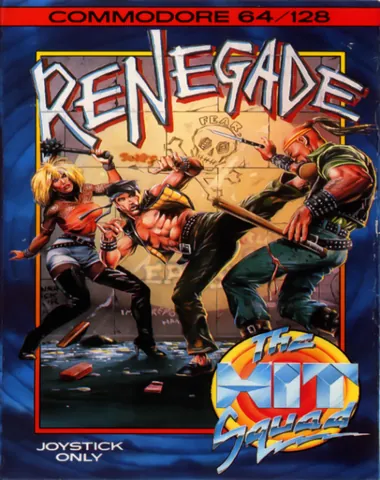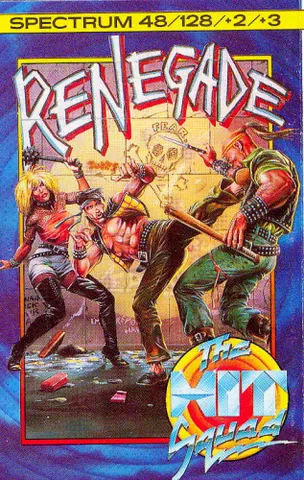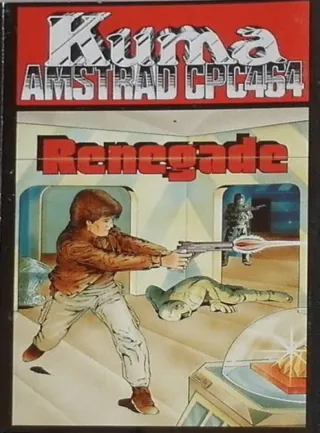
When a street full of brawlers appeared on the Amstrad CPC screen, players understood for the first time that a beat 'em up could be more than just rhythmically hammering a button. Renegade brought to eight-bit computers a phenomenon that the Technōs Japan arcade machine had unleashed in arcades, and the home adaptation by Britain's Imagine/Ocean became one of the titles that defined what an honest beat 'em up on the keyboard should look like.
Compared to later scrolling brawlers, Renegade stands slightly apart: you advance through individual scenes, each with its own boss and its own gang of fighters. Your hero doesn't just have a simple punch — he combines fist strikes, kicks, hair-grabbing throws and crushing stomps on a downed opponent. That very feeling that you could not only fend enemies off but literally take them down and finish them gave the game a raw quality unusual for its time and a tangible weight to every hit.
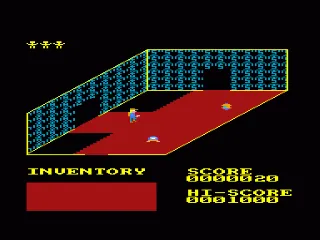
On the Amstrad CPC the conversion was logically a compromise — the colour palette and smoothness had to wrestle with hardware that wasn't built for fast arcade action. Even so, the version kept what mattered: readable controls, aggressive opponents surrounding you from both sides, and that distinctive street atmosphere of gangs on a metro platform and in dark alleys. The game belonged to the golden era when Ocean and company churned out conversions of arcade hits one after another.
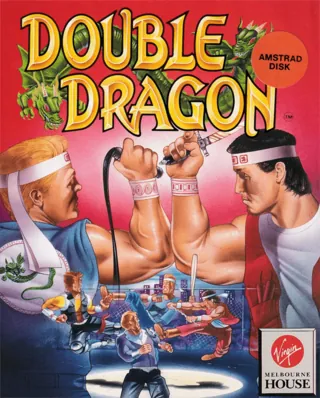
Historically, Renegade is extraordinarily important: its DNA gave rise to the Double Dragon series from the same Technōs studio, which then definitively established the scrolling brawler genre. Playing Renegade on the CPC today thus means touching the roots of the whole genre — before it became a cooperative party for two.
It's a harsh, uncompromising affair that suffers from no surplus of mercy: you die often, but every time you know it was your own mistake. And that's exactly what makes street brawling on the Amstrad an experience nostalgics gladly return to.
Why play: To experience the birth of the street brawler in its raw, pre-Double-Dragon form and feel how hard and satisfying it was to fight on an eight-bit computer.
Game 15 of 26 for Amstrad CPC