 MSX standard · 1983
Computers
MSX / MSX2
History & context
When Microsoft and the Japanese ASCII Corporation joined forces in 1983, they had in mind an idea that sounded almost heretical: to create a unified standard for a home computer that a whole range of companies could manufacture. Instead of one manufacturer, one machine and one software library, this was to give rise to an open platform — something like the later PC, only a few years earlier. Brands such as Sony, Panasonic, Philips, Sanyo, Toshiba, JVC and Canon gradually signed up under the MSX banner. Commercially, the standard succeeded mainly in Japan, the Netherlands, Spain and Brazil; on the English-speaking markets, where Commodore and Sinclair already reigned, it failed to break through.
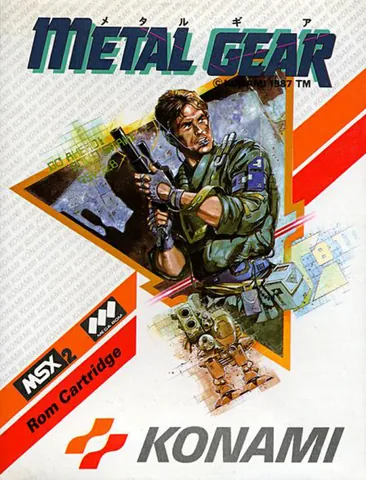
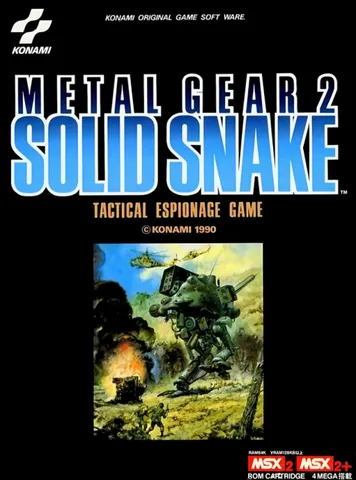
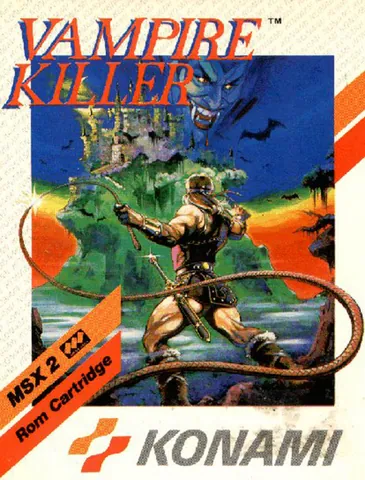
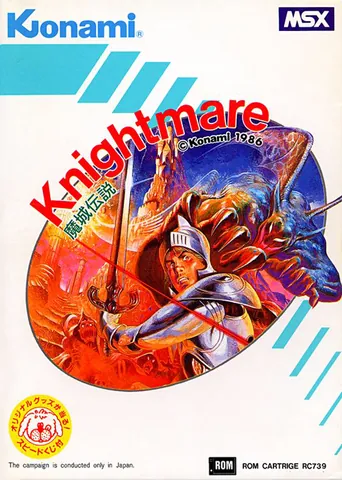
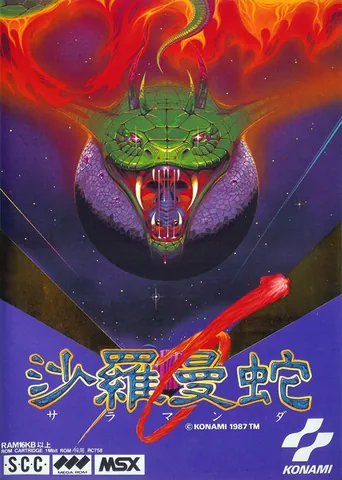
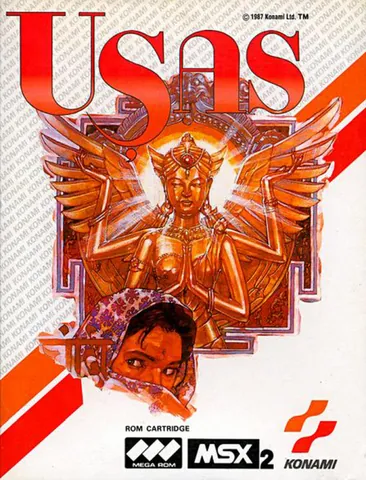
Yet for gaming history the MSX is indispensable. It was here, after all, that Hideo Kojima created the very first Metal Gear (1987) and, a year later, the more advanced Metal Gear 2: Solid Snake. Konami gave it the original Vampire Killer, that is the MSX version of Castlevania, and a whole series of superb action games and shooters. The MSX was the home of Konami in its golden era in Japan — and the platform's library remains to this day a treasure trove of titles that never reached the West.
Technology: graphics and sound
At the heart of the first MSX was the eight-bit Zilog Z80A processor clocked at 3.58 MHz. The image was handled by the Texas Instruments TMS9918 video chip (or rather its variants), that is the same family used by the ColecoVision and Sega SG-1000. It offered a resolution of 256×192 pixels, a palette of 16 colours and hardware support for 32 sprites. The weakness of this chip was the limited number of colours per line and the notoriously well-known problem of sprites disappearing when there were more than four of them on a line. Basic sound was provided by the General Instrument AY-3-8910 chip with three tone channels and a noise generator — the same principle as with the ZX Spectrum 128 or the Amstrad CPC.
A real leap came in 1985 with the MSX2. The new Yamaha V9938 video chip could handle a resolution of up to 512×212, a palette of 512 colours (with modes displaying 16 or 256 colours at once) and, above all, hardware scrolling and bitmap modes, which made the MSX2 a markedly more capable gaming machine. The later MSX2+ added smooth horizontal scrolling and further colour modes; the final MSX turbo R (1990) deployed the faster R800 processor. Many Japanese machines also contained a Yamaha sound chip, which was followed up by expansion music modules as well.
Connectivity and peripherals
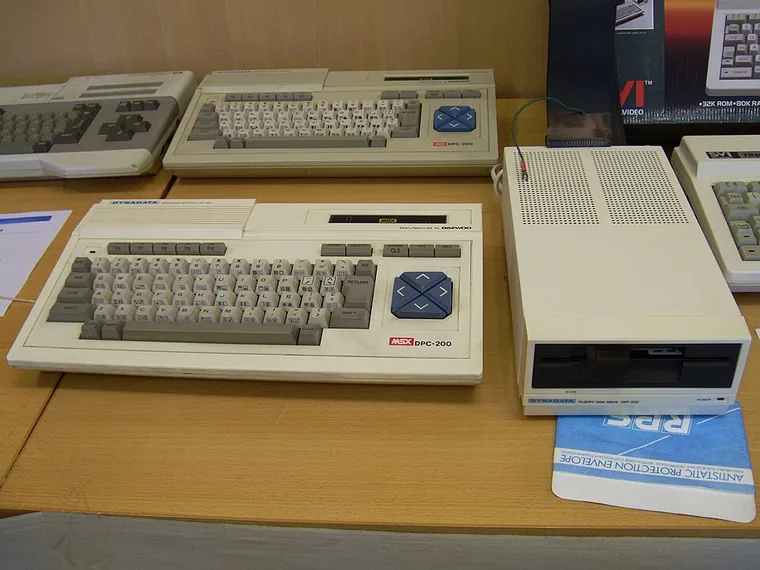
The MSX was a full-fledged computer, so it had a keyboard — some games require it, and on handhelds that tends to be the only complication of emulation. The standard provided for two joystick ports (compatible with the Atari connector), so a two-player game could be played without any problem. A key element was the cartridge slot (often two), into which game modules and expansions were plugged, and a port for a cassette tape recorder for saving programs. Later, disk drives (3.5") became widespread and became the main medium, especially in Europe.
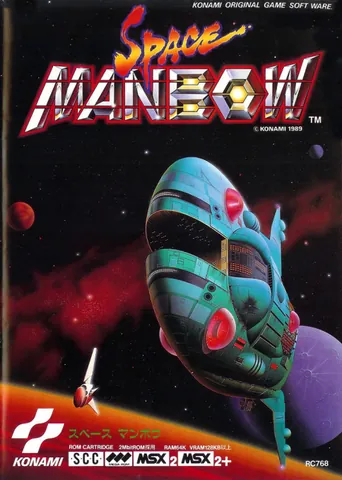
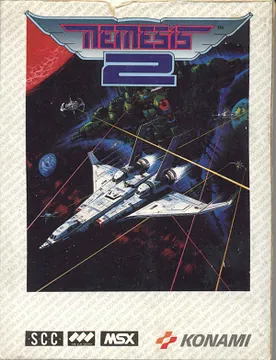
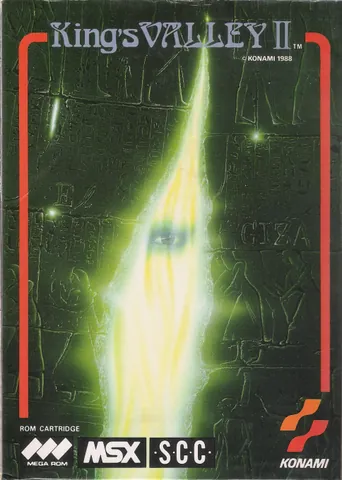
The peripherals included a mouse, a light pen, data storage and music modules. A chapter of its own is the expansion sound cartridges such as the Konami SCC, thanks to which the later Konami games (for example Space Manbow or Nemesis 2) sounded markedly richer than the standard AY chip. Some modules brought FM synthesis (Yamaha OPLL), so the MSX's audio could grow beyond its modest foundation.
Models and revisions
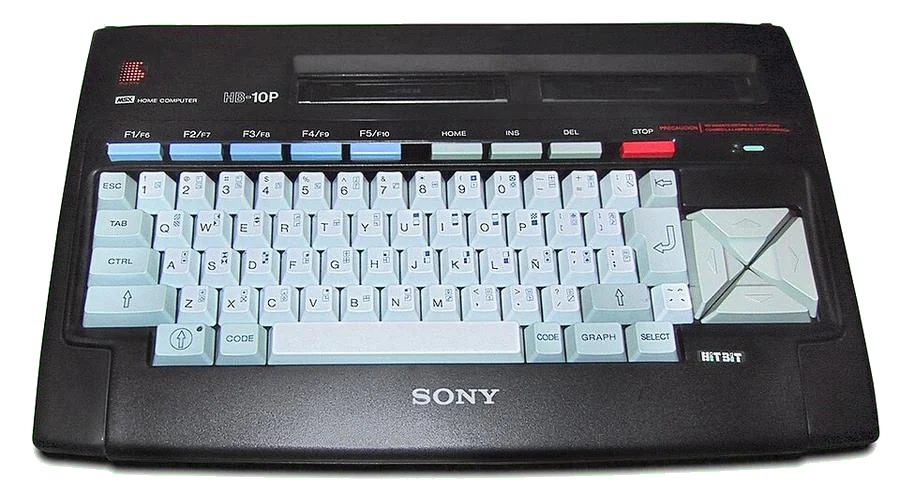
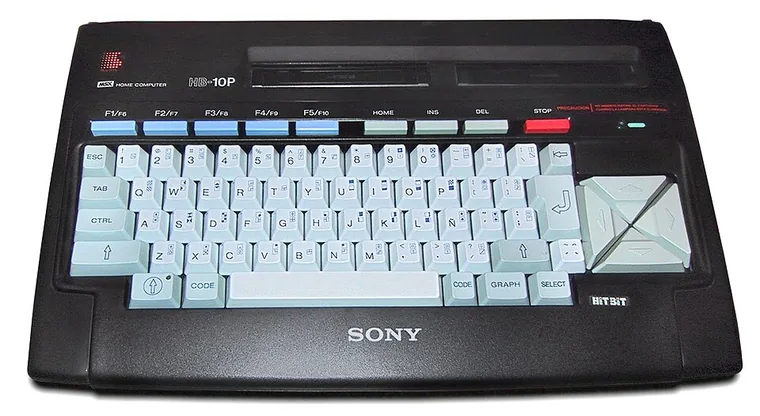
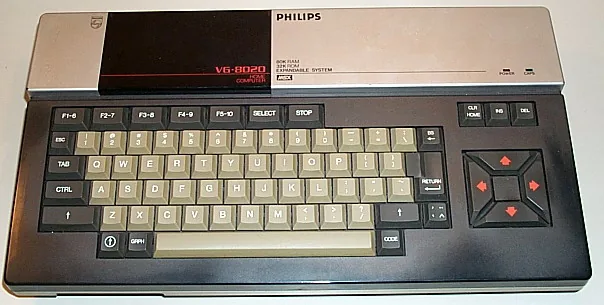
The standard developed in clearly defined generations. MSX (1983) was the base with the Z80 and the TMS9918 chip. MSX2 (1985) brought the Yamaha V9938, a larger palette and more memory. MSX2+ (1988) extended the graphics with smooth scrolling and new colour modes and remained practically exclusively a Japanese affair. The pinnacle was the MSX turbo R (1990) from Panasonic with the 16-bit-tuned R800 processor. Within each generation there then existed dozens of specific models from various manufacturers — from the compact Sony HitBit-series machines through the Philips VG-8000 to the Panasonic FS ones — which differed in memory, number of slots or built-in drives, but thanks to the standard remained mutually compatible.
Clones and variants
Because the MSX was an open standard, "clones" in the true sense of the word do not entirely make sense — there was a whole range of legal manufacturers right from the start. The Eastern trace is interesting, however. In the Soviet Union, MSX and MSX2 machines (for example the Yamaha YIS imported for schools) were used extensively in computer-science education and became the first computer for a whole generation. The MSX also caught on in South Korea and in Brazil, where local firms manufactured it under their own brands Gradiente and Sharp/Epcom. In Czechoslovakia the MSX was not widespread — the local scene was dominated rather by the ZX Spectrum and its Didaktik clones, so the MSX remained here primarily a matter for later collectors and emulation.
Today's scene
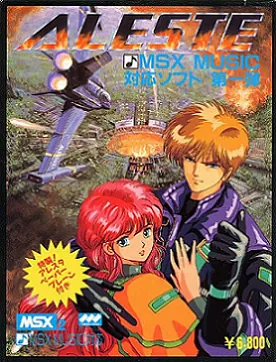
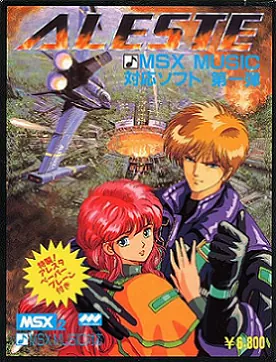
The MSX belongs among the very liveliest retro communities. Emulators such as openMSX or blueMSX handle the whole family of machines faithfully and without trouble, so getting Metal Gear or Aleste running is a matter of a moment. The scene is moreover extraordinarily prolific thanks to the annual MSXdev competition, from which dozens of new games emerge each year. Among the best modern homebrew is the precise metroidvania Pampas & Selene — proof that a forty-year-old standard still has something to offer.
Games on this platform (29)
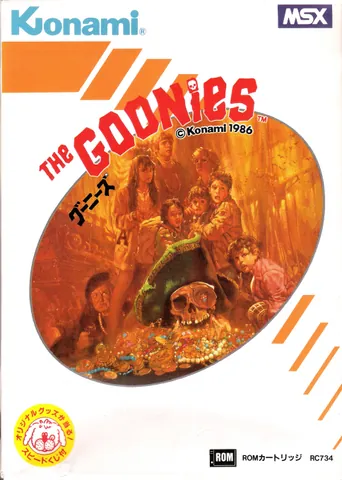
The Goonies
A platformer based on the film about a gang of kids hunting for pirate Willy's treasure.
No game in this genre.