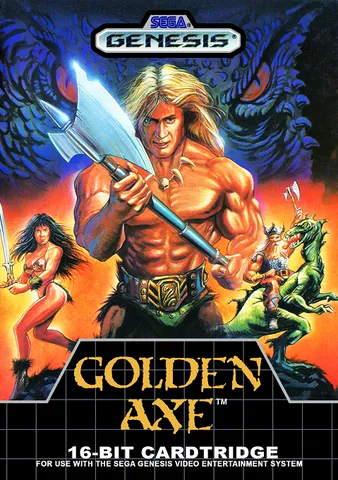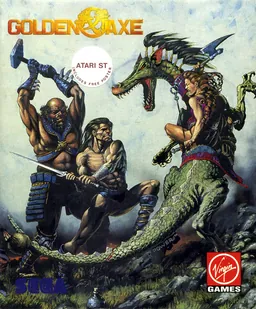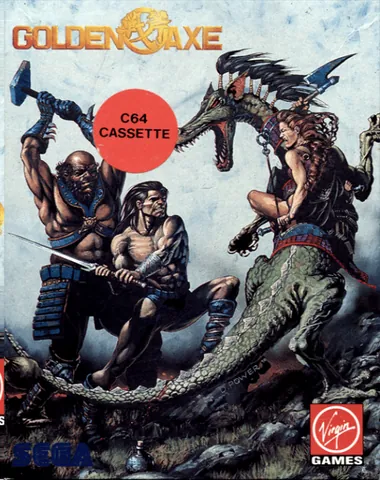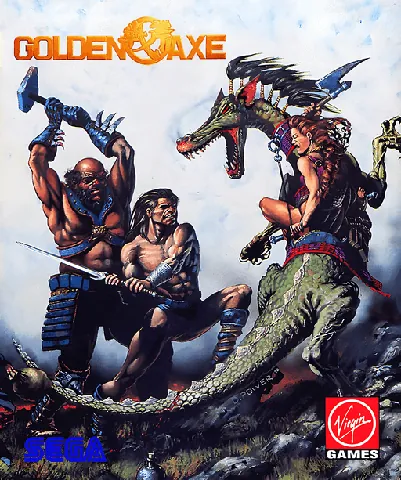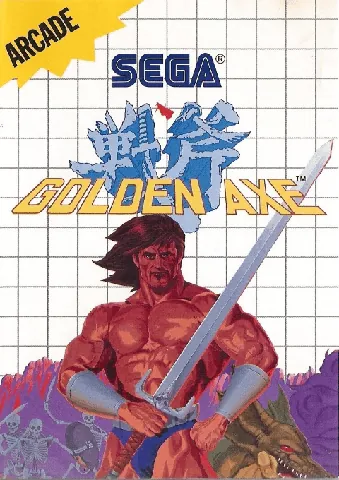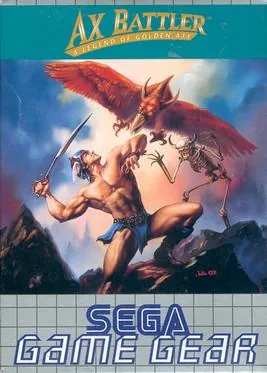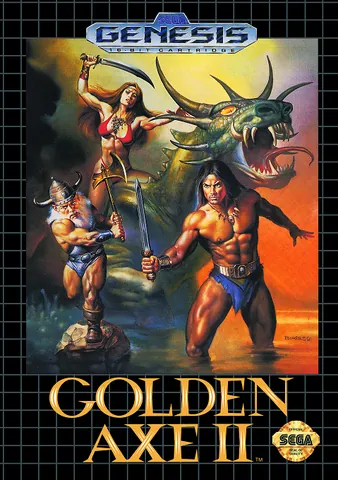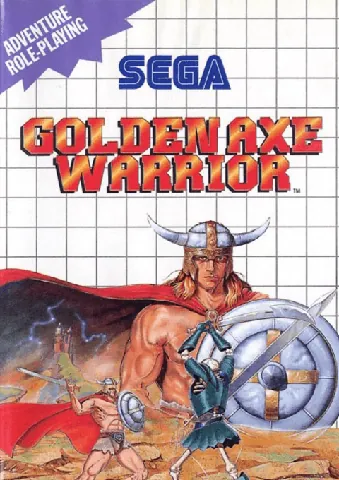
Golden Axe
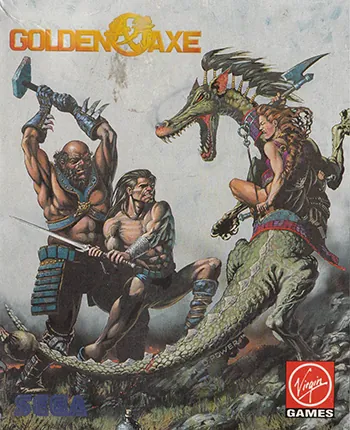
An axe flashes, a roar rings out and another horde of enemies is scattered across the screen – Golden Axe on the Amstrad CPC attempts to bring one of the arcades' most famous fantasy brawlers into the innards of the British eight-bit. In the original, Sega offered a world reminiscent of Conan the Barbarian, and it's precisely this rough atmosphere, steeped in sword and magic, that drives the conversion forward despite the technical limits of the home computer.
The game builds on the tried-and-true principle of the beat 'em up genre: the player fights through the ranks of the evil Death Adder's henchmen to avenge the fallen and free the captives. You choose one of three heroes – a barbarian, a dwarf or an amazon – and besides fists and weapons you also have magic at your disposal, whose power grows according to the collected vials of magical essence. A specialty are the ridable beasts, which you can saddle up to breathe fire or club with the tail, something that gave the original an unmistakable flair.
The development framework belongs to Japan's Sega, which released Golden Axe into arcades in 1989 on the powerful System 16 board. Home conversions then arose in Europe, and eight-bit machines like the Amstrad CPC faced a tough task: to imitate a game whose magic lay in speed, large characters and two-player battles at once. The result is therefore necessarily more modest, but the effort to preserve the spirit of the original is evident.
Culturally, Golden Axe ranked alongside Double Dragon and Final Fight among the pillars of the genre and became one of Sega's flagship brands. It received a number of sequels and ports to consoles and to this day belongs among the titles fans associate with the golden era of arcades. The cooperative carnage of two friends side by side defined the weekend afternoons of an entire generation.
On the Amstrad, Golden Axe is more a respectful tribute to the great original than an equal replacement for it. For collectors and nostalgics, though, it's a valuable testimony to how ambitious arcade titles travelled into children's bedrooms and how programmers working with a fraction of an arcade board's power managed to cope with them.
Why play: For the raw fantasy atmosphere and the chance to experience an arcade legend from the turn of the eighties and nineties on a classic British eight-bit.
Game 21 of 26 for Amstrad CPC
The same title elsewhere (6)
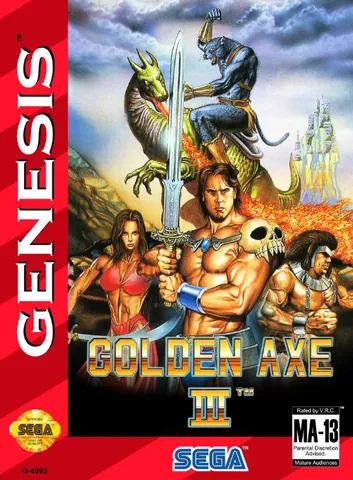
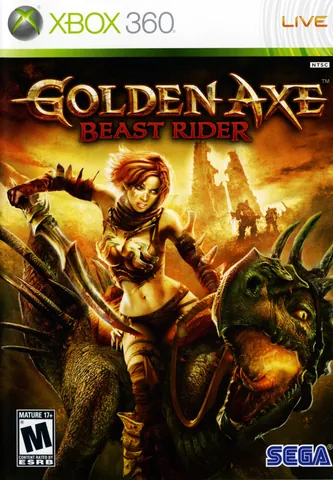
The 1989 Sega arcade original ran smoothly in bright, saturated colors and offered its full soundtrack alongside true simultaneous two-player action. The Mega Drive version came closest, keeping most of the atmosphere, music, and enemies, though some backgrounds and details had to be simplified. On the Master System, levels were shorter and the graphics plainer due to weaker hardware. Ports for eight- and sixteen-bit computers (Commodore 64, Amstrad CPC, Amiga, Atari ST) suffered from slower, choppier scrolling, a reduced color palette, and often lost simultaneous two-player co-op entirely. For the experience closest to the arcade cabinet, the Mega Drive version is the one to pick.