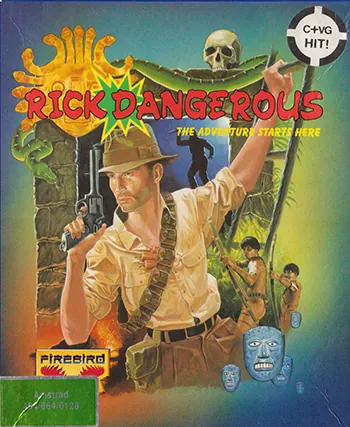
Rick Dangerous
Indiana Jones had it easy — he wasn't up against countless traps that punish every rash step with death. Rick Dangerous is a trap-after-trap adventure in which you'll memorize every spiked slab and every rolling boulder, whether you want to or not.
The game combines a platformer and adventure in trial-and-error style: you progress through levels inspired by adventure films, dodge ingenious hazards, lay dynamite and fire your pistol. The key to success is memorization — you'll rarely survive a trap the first time, so you learn the level layout literally through your own mistakes. This merciless but fair difficulty turns every step forward into a small victory.
The game was created by Core Design and released by Firebird/Ocean at the turn of 1988 and 1989. Core Design later became famous as the creators of Tomb Raider, so a love of traps, exploration and the adventurous atmosphere of archaeological films had a long tradition with them. The CPC version was among the best of the era's output.
Rick Dangerous became famous precisely for its combination of humor and cruelty — the game teases the player a little, yet never feels unfair once you grasp its logic. A second installment was made too, and the title became one of the iconic names of the 8-bit era.
For those who remember it, Rick Dangerous is synonymous with „just one more try“ — frustration and triumph alternate here in a perfectly addictive rhythm. It's a game that tests your patience, but reaching the end of a level is all the sweeter for it.
Why play it: For a classic trap-after-trap adventure from the future creators of Tomb Raider that rewards patience and memory.
Game 3 of 26 for Amstrad CPC
The same title elsewhere (4)
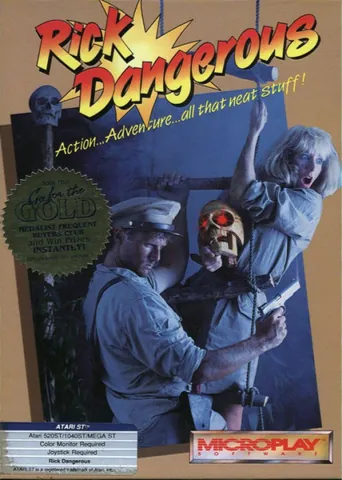
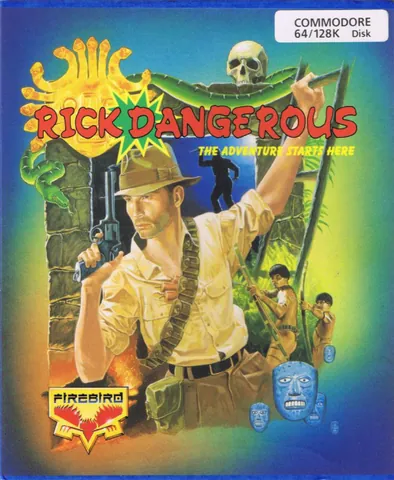
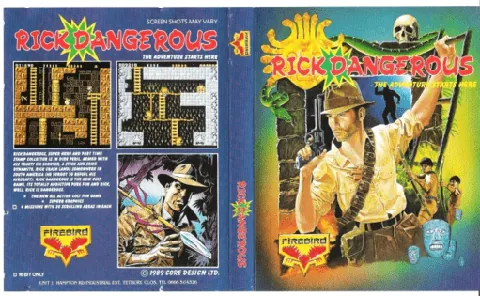
Core Design released Rick Dangerous in 1989 across several platforms at once, and the differences show mainly in sound and smoothness. The Amiga and Atari ST versions offered the most colorful graphics and the smoothest movement, the closest to the creators' original vision. The eight-bit computers had to cut back: the ZX Spectrum has the roughest graphics and sound limited to a simple piezo speaker, while the Amstrad CPC fared somewhat better thanks to its more colorful display. The Commodore 64 stood out for its music thanks to the SID chip, even though its graphics stayed simpler than the sixteen-bit machines.