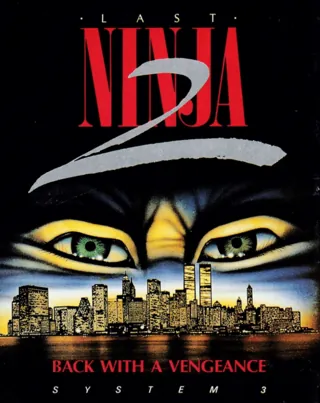
The Last Ninja 2
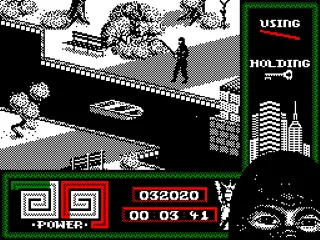
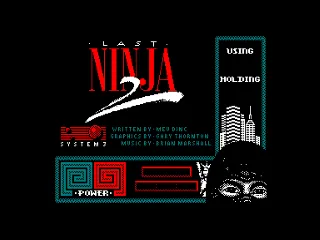
New York alleys, sewers full of rats and a ninja who has come to settle scores across the centuries — so begins the second adventure of the most famous warrior of the 8-bit era. The Last Ninja 2 moved the celebrated isometric action-adventure by studio System 3 from the mythical gardens of the original into a modern metropolis, and it was precisely this change of scenery that made the title more than just a sequel.
The version for the Amstrad CPC ranks among the remarkably accomplished ports. Where many publishers merely lazily flipped the graphics over from the ZX Spectrum, here the player got a detailed, honestly rendered environment that made use of the CPC's more colorful palette. The isometric view characteristic of the whole series placed considerable demands on the hardware, and yet the game controls briskly and reads well even amid the bustle of New York scenery.
The core of the gameplay stayed faithful to the first installment: you progress level by level, collect items, solve logic puzzles tied to specific locations, and all the while must manage a combat system combining punches, kicks and picked-up weapons. It was precisely this tension between thinking and action that made The Last Ninja something more than an ordinary beat-'em-up — it's an adventure where a wrong step into a chasm hurts just as much as a blow from a katana.
The The Last Ninja series wrote itself among the most distinctive brands of the 8-bit era, and the first installment is still remembered today as one of the commercially most successful titles for the Commodore 64. The second installment built on that reputation and expanded it with a contemporary setting, which made it feel fresh and somewhat darker. For CPC owners, its port was one of the proofs that this platform needn't be merely the poorer relative of the Spectrum.
Today we remember The Last Ninja 2 as a showcase of what the ambition of the 8-bit era looked like: a visually striking, mechanically demanding game that fused atmosphere, story and hard challenge into a single whole. It's not a title that will forgive you — but that's exactly why you'll remember mastering it.
Why play it: For an atmospheric isometric mix of action and puzzles that looks surprisingly good on the CPC and belongs among the icons of the 8-bit era.
Game 5 of 26 for Amstrad CPC