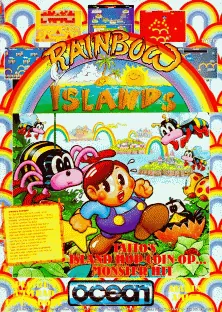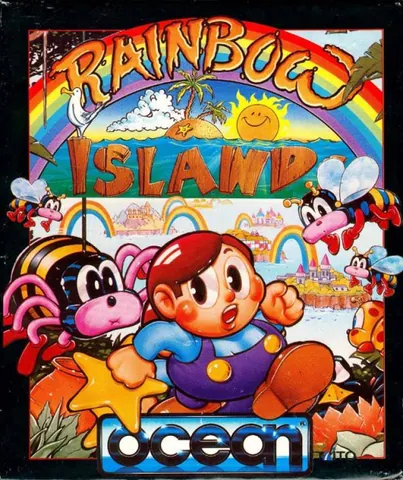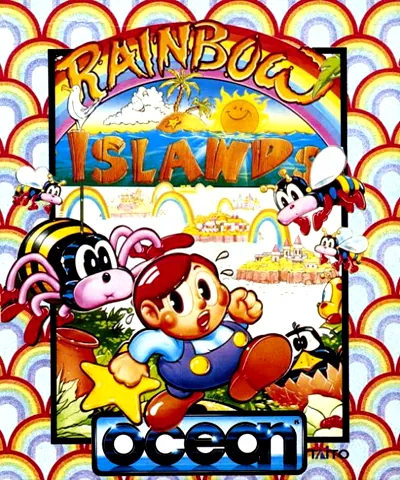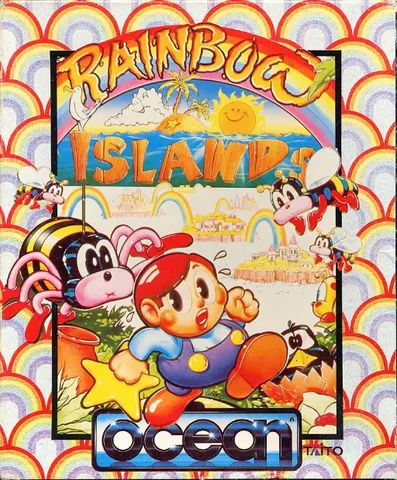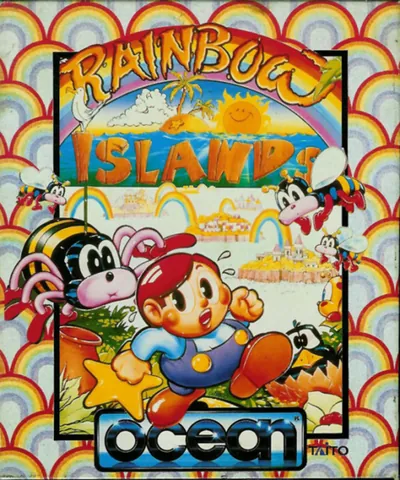
Rainbow Islands
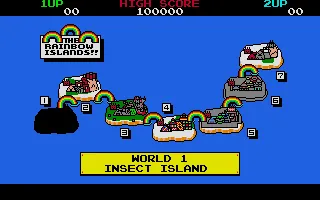
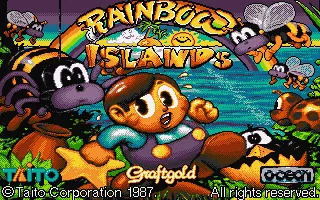
From the adorable spewing of bubbles, the heroes moved on to conjuring rainbows — and one of the loveliest and at the same time cleverest arcade platformers of the late 1980s was born. Rainbow Islands is the sequel to the cult Bubble Bobble, this time with a different, climbing mechanic based on rainbows.
Taito released the original in arcades in 1987 (with the subtitle Bubble Bobble 2) and brought an inventive gameplay principle: the hero shoots rainbows that serve as steps for climbing upward, as a weapon against enemies, and as a means of revealing hidden bonuses. The goal is to climb to the top of each level before the rising water catches up with you. Added to this was a rich system of hidden items and secret endings.
On the Atari ST, a port was created as part of the wave of home conversions of Taito hits. The 16-bit platform could convey the colorful, cheerful visuals and addictive gameplay well, although converting the precise timing from the arcade was always delicate. The port, however, retained that unmistakable, playful character of the original.
Culturally, Rainbow Islands ranks among Taito's most precious gems and is often placed among the best arcade platformers of all time. It became famous for its depth hidden beneath a cute surface, its system of secret diamonds unlocking the true ending, and its overall addictiveness. Together with Bubble Bobble it forms one of the most beloved gaming lineages.
Rainbow Islands is proof that cute graphics and serious gaming depth go hand in hand. Beneath the colorful surface hides a surprisingly thoughtful and demanding game that players return to even today.
Why play: For the inventive rainbow mechanic, the hidden secret endings, and the best combination of cuteness and gameplay depth the arcades had to offer.
Game 21 of 72 for Atari ST
The same title elsewhere (6)
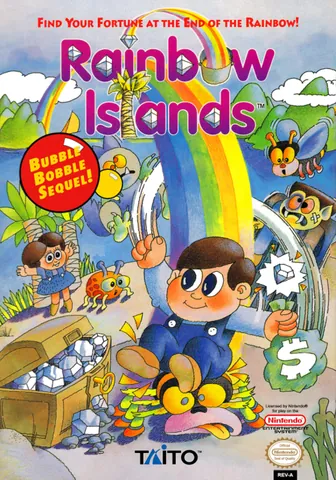
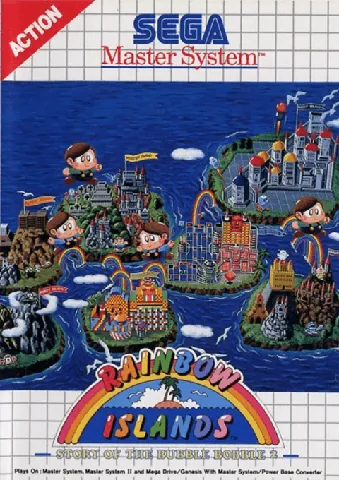
Rainbow Islands, the sequel to Bubble Bobble, differed across platforms mainly in how much colorful variety and smooth rainbow-climbing each system's hardware could handle. Taito's arcade machine remains the reference experience, with the richest color palette and smoothest movement. Amiga and Atari ST came closest to it, preserving both color and music. The 8-bit computers Commodore 64, ZX Spectrum, and Amstrad CPC had to limit on-screen colors and simplify backgrounds to keep scrolling playable, yet thanks to great music they earned their own loyal fans. The NES version was a direct rework by Taito with its own graphical style suited to the Nintendo console. SEGA Master System got a colorful conversion considered one of the nicer-looking ones among 8-bit consoles.