Gradius
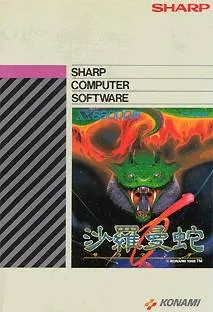
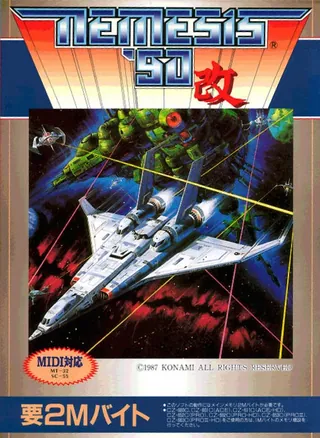
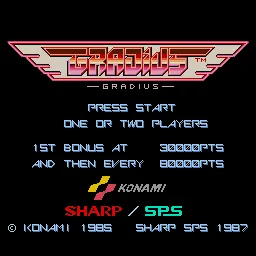
Gradius was one of the first major titles to appear on the Sharp X68000, and right from the start it set the bar for what a home conversion of an arcade game should mean. The player pilots the fighter Vic Viper against the Bacterion Empire, progressing through seven thematically distinct stages, from a volcanic planet with lava spewers, through a field of Moai statues, to the biomechanical guts of the enemy base. The key mechanic is the famous power-up gauge: shooting down red formations adds a capsule, which the player moves along the indicator and then decides for themselves whether to invest in speed, missiles, double shot, laser, Option satellites or a shield. It was precisely this freedom that set Gradius apart from the competition and turned every playthrough into a strategic decision.
On the X68000, the game showed why the computer was nicknamed the home arcade machine. Hardware sprites and several independently scrolling layers allowed smooth movement without noticeable slowdown even when the screen filled with swarms of enemies, and the color palette allowed the characteristic high-contrast backgrounds to be preserved. The sound uses FM synthesis to deliver the famous rhythmic tracks, among the most memorable melodies of the eighties, complemented by sampled explosion effects. The atmosphere is purely sci-fi, cold and stark, yet the game feels almost hypnotic thanks to the perfect rhythm in which the waves of enemies arrive.
At the time, this conversion was seen as clear proof of the quality of the new machine, and for many Japanese players it was the first game they ran on the X68000. Gradius's influence on the shooter genre is fundamental: the optional upgrade system, satellites mirroring the ship's movement, and the concept of memorizing enemy placement were all adopted by dozens of later titles, many of them made directly by Konami. Today the game is shorter and stricter than modern players are used to, but it offers clean, still-functional gameplay that rewards patience. For anyone who wants to understand the roots of Japanese shoot-'em-ups, this is where it begins.
Game 5 of 25 for Sharp X68000
The same title elsewhere (2)
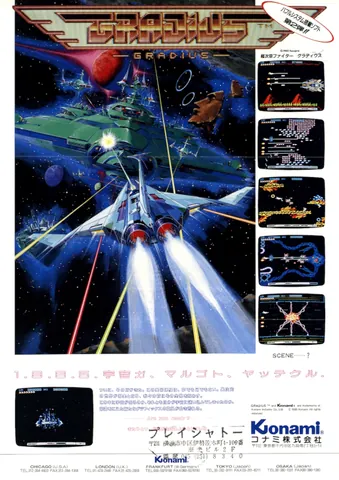
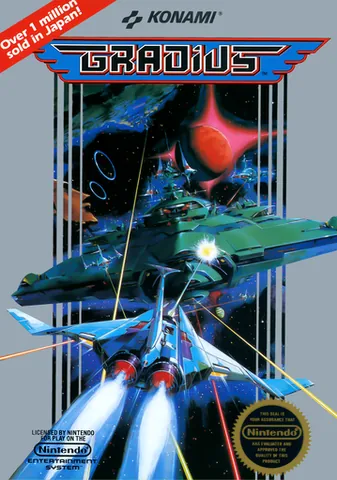
Konami's arcade original had a full colour palette, smooth scrolling with no slowdown and a rich FM sound chip that home versions struggled to match. The NES port had to make do with the console's weaker sound chip, so the music sounds thinner, sprites occasionally flicker, and slowdown appears when many enemies are on screen; the punishing difficulty here is exactly why the famous Konami Code for extra lives was born. The Sharp X68000 conversion, by contrast, ran on a computer built to approach arcade specifications, and it is still regarded as the most faithful home port of Gradius — preserving colour, music and pace almost unchanged, and ranking among the best-regarded versions of the game overall.
From the same series Gradius →
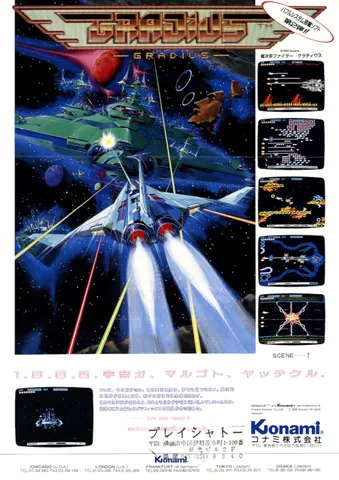 Gradius / Salamander MAME
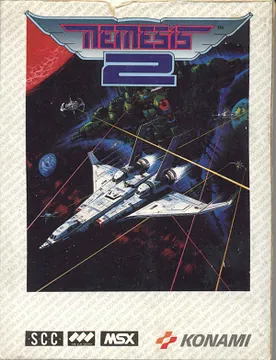 Nemesis 2 / Gradius 2 MSX · 1987+
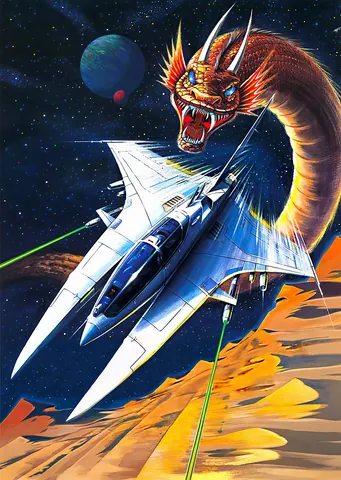 Gradius III MAME · SNES · 1989
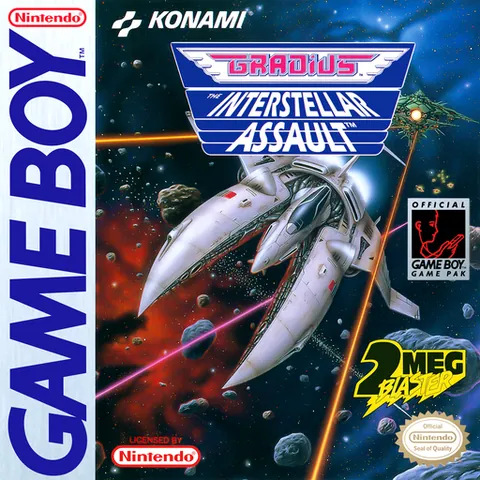 Gradius: The Interstellar Assault (Nemesis II) GB · 1992
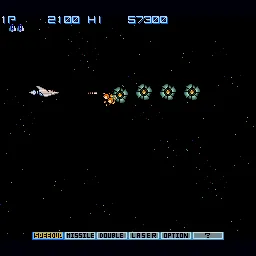 Gradius II X68k · 1992
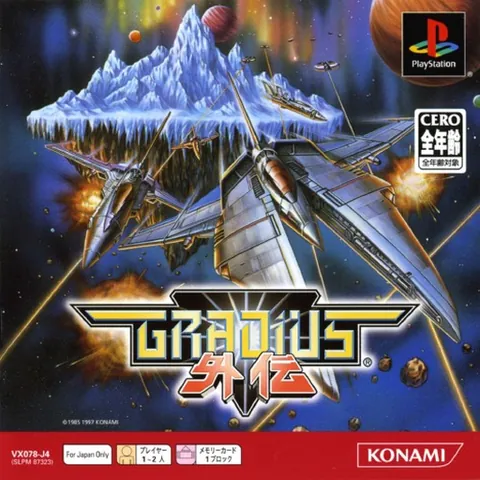 Gradius Gaiden PS1 · 1997
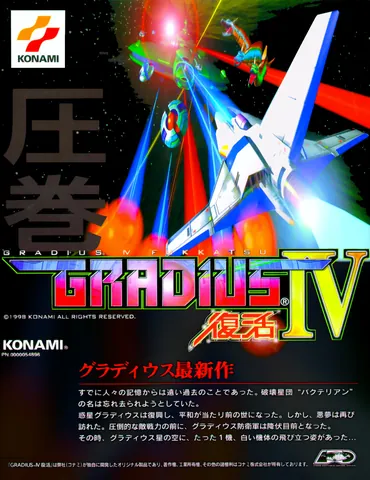 Gradius IV: Fukkatsu MAME · 1999
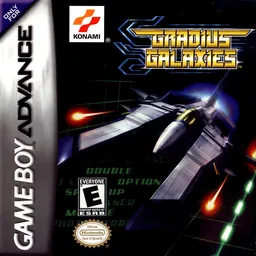 Gradius Galaxies GBA · 2001
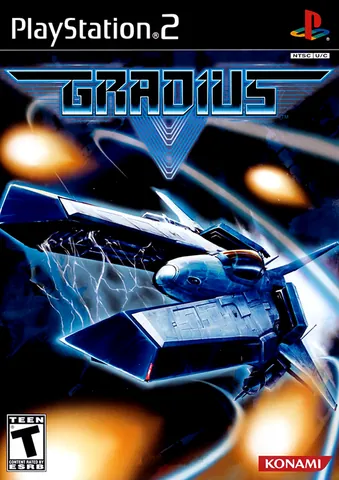 Gradius V PS2 · 2004
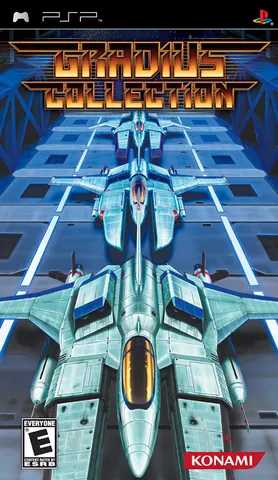 Gradius Collection PSP · 2006
 Gradius ReBirth Wii · 2008