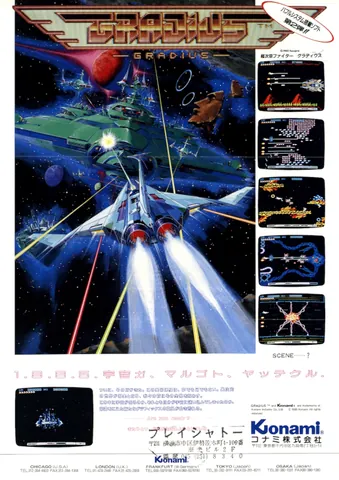
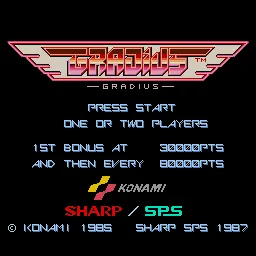
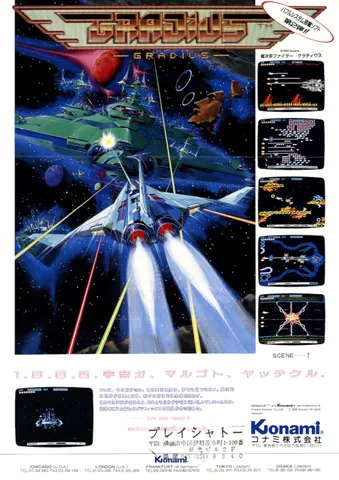
The slender spacecraft Vic Viper pushes through enemy lines, dragging behind it a row of obedient helpers that mirror its every shot. Gradius from 1985 by Japan's Konami is one of the most influential horizontal shooters of all time and defined the genre for many years to come.
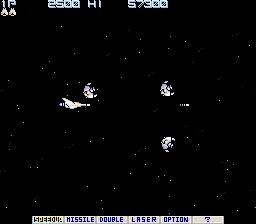
The heart of the game is its revolutionary upgrade system. By collecting capsules left behind by downed enemies, you advance a marker on the bottom bar, on which you yourself choose which upgrade to activate at any given moment. You can speed up the ship, add missiles, double fire, a protective shield, or the famous Options, small satellites that follow you and multiply your firepower. This freedom of choice made Gradius a much deeper experience than the shooters that had come before.
Gradius also became famous for its difficulty and iconic moments, such as the battles with gigantic temple bosses or threading through narrow caves full of protrusions. Related to its difficulty is the legendary Konami Code, a sequence of controller inputs that in the home versions became synonymous with obtaining a whole set of upgrades at once and gradually seeped into countless other games and into pop culture.
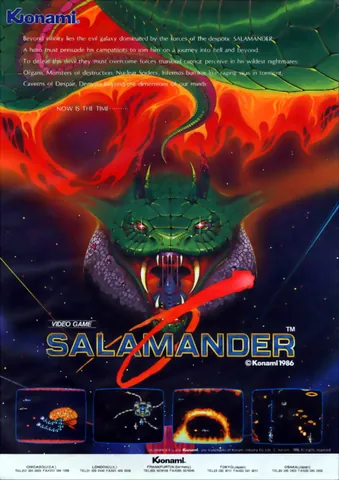
The success of Gradius launched an extensive series of sequels and spin-offs, among them Salamander, Gradius II and III, and the Parodius series. The game was ported to an inexhaustible number of systems including the MSX and NES and became one of the pillars on which Konami built its reputation.
To this day Gradius rewards players who learn its patterns and manage the upgrade system cleverly. A single death can strip you of all your power-ups and cast you back into an almost defenseless state, so every advance calls for deliberation. It's a demanding but immensely satisfying classic.
Why play: For the pioneering upgrade system that forever changed the shape of shooters, and for an encounter with a legend that gave the world the immortal Konami Code.
Game 43 of 258 for Arcade
The same title elsewhere (2)
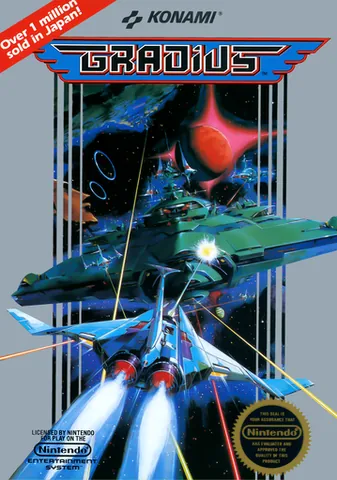
Konami's arcade original had a full colour palette, smooth scrolling with no slowdown and a rich FM sound chip that home versions struggled to match. The NES port had to make do with the console's weaker sound chip, so the music sounds thinner, sprites occasionally flicker, and slowdown appears when many enemies are on screen; the punishing difficulty here is exactly why the famous Konami Code for extra lives was born. The Sharp X68000 conversion, by contrast, ran on a computer built to approach arcade specifications, and it is still regarded as the most faithful home port of Gradius — preserving colour, music and pace almost unchanged, and ranking among the best-regarded versions of the game overall.
From the same series Gradius →
 Gradius / Salamander MAME
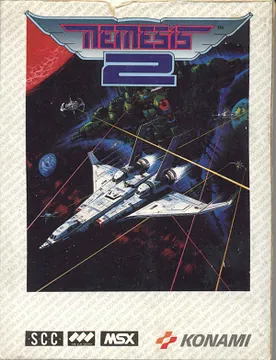 Nemesis 2 / Gradius 2 MSX · 1987+
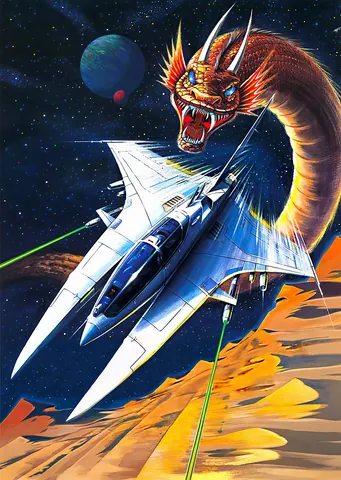 Gradius III MAME · SNES · 1989
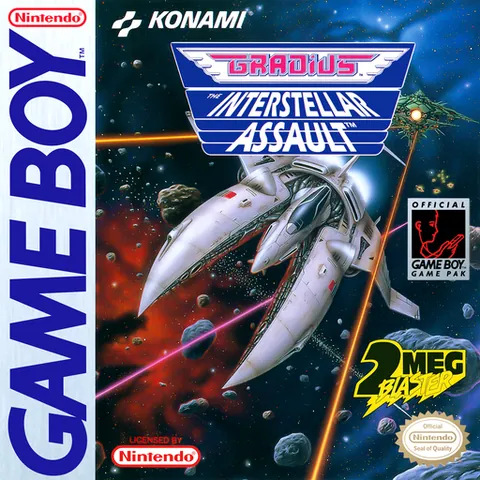 Gradius: The Interstellar Assault (Nemesis II) GB · 1992
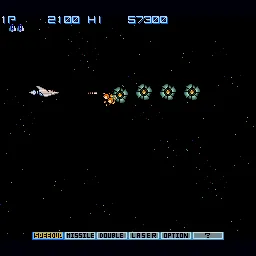 Gradius II X68k · 1992
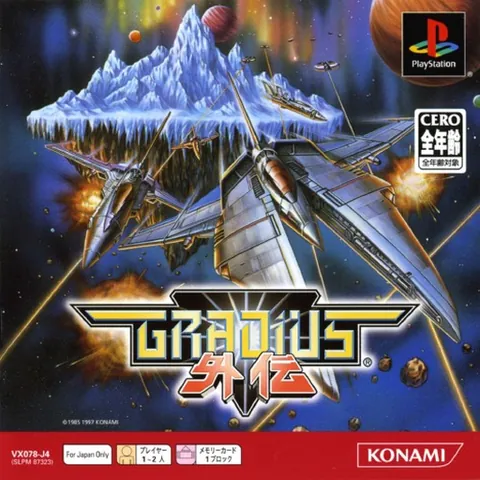 Gradius Gaiden PS1 · 1997
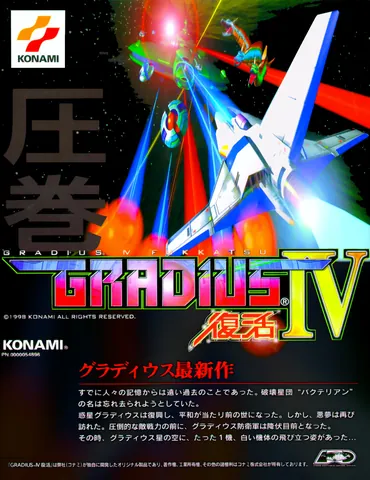 Gradius IV: Fukkatsu MAME · 1999
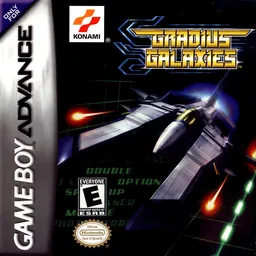 Gradius Galaxies GBA · 2001
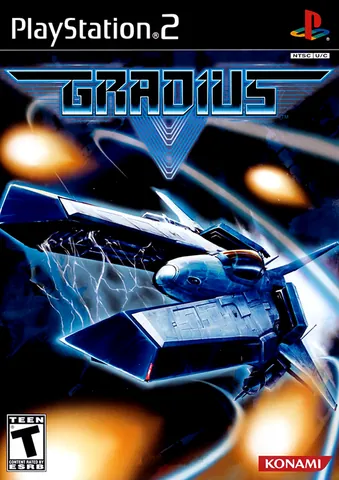 Gradius V PS2 · 2004
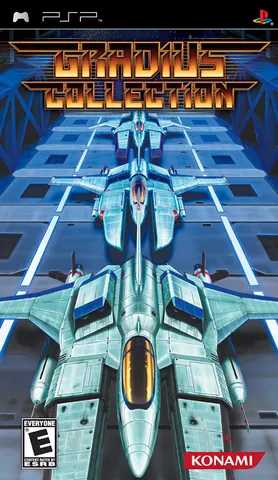 Gradius Collection PSP · 2006
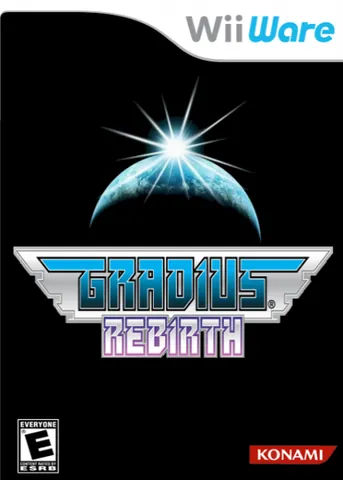 Gradius ReBirth Wii · 2008