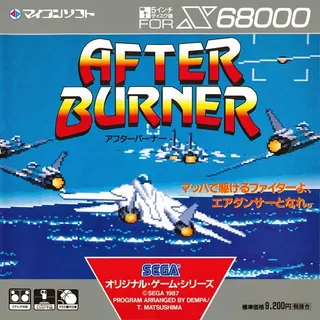
After Burner II
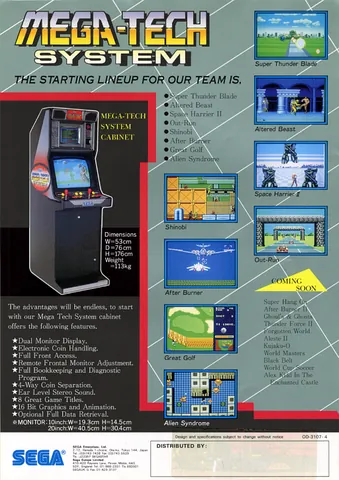
After Burner II puts the player in the cockpit of an F-14 fighter and won't let them out until they've survived dozens of waves of enemy aircraft; the Sharp X68000 conversion ranks among the most ambitious ports the platform ever received. The game is viewed from behind the aircraft, the screen tilts and rotates with every maneuver, and the player alternates between a machine gun and homing missiles carried in limited supply. The key to survival is constant movement, careful use of afterburner, and so-called manual braking, which lets you drop behind enemies and shoot them down from the rear. Between certain stages, mid-air refueling appears, acting as a brief breather before the next dose of chaos.
The original was one of Sega's famous "Super Scaler" arcade machines with a hydraulic cabinet, so the conversion's main goal was to preserve speed and the sheer number of scaled objects on screen. With its Motorola 68000 processor and strong graphics subsystem, the X68000 performed remarkably well for a home computer, even though it naturally couldn't match the arcade's full density. The sound, however, is an unambiguous triumph: the driving rock themes rendered through FM synthesis rank among the most energetic music any Yamaha sound chip ever produced, and combined with the missile-lock voice callouts they create the atmosphere of a late-1980s action blockbuster.
At the time, the game served alongside other Sega arcade conversions as proof of the X68000's exceptional standing among Japanese computers. After Burner's influence on the genre shows in how it set the pace for arcade flight action, where the point isn't simulation but adrenaline and pure reflex; its DNA is visible in dozens of later games and in modern titles that embrace retro aesthetics. Today it's a short, loud, and intensely thrilling affair that leaves your fingers aching and offers no room for thought. That's exactly why it still works.
Game 13 of 25 for Sharp X68000