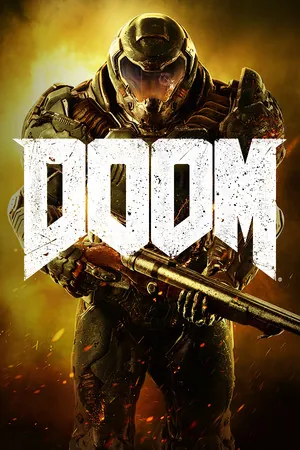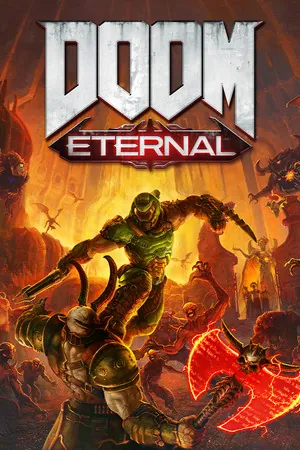
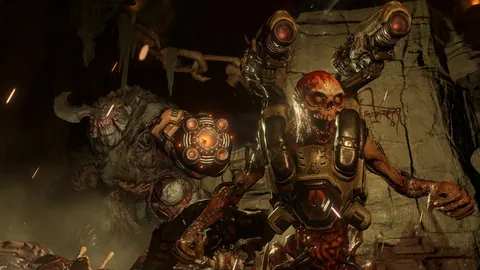
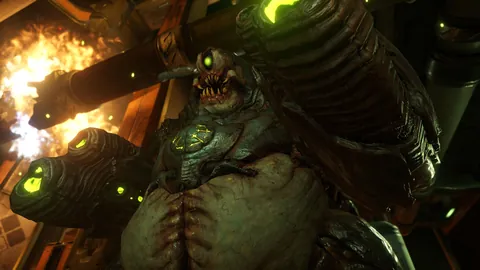
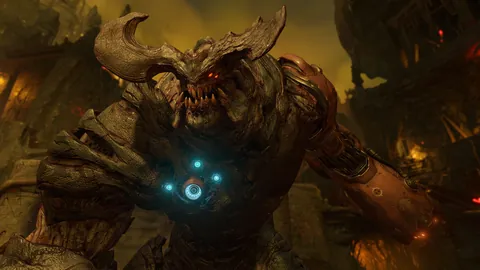
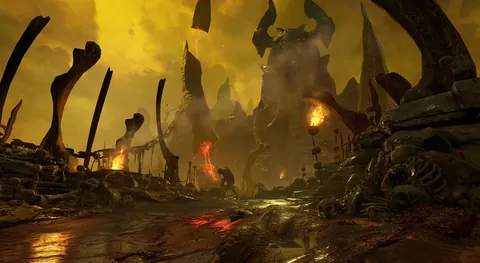
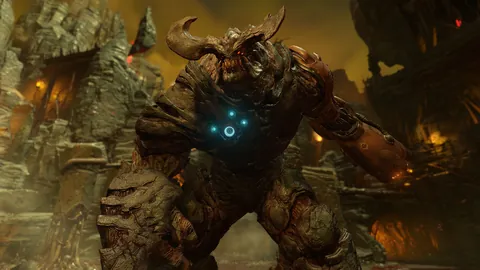
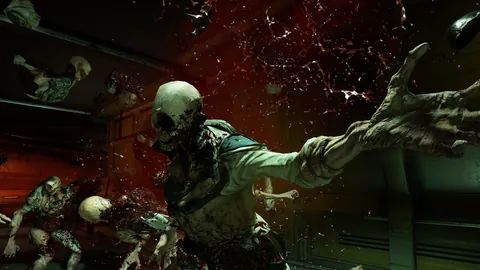
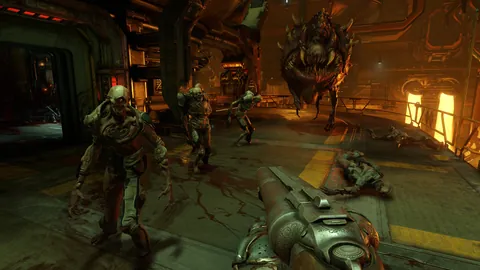
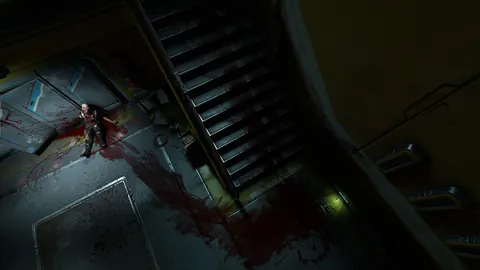
After years of experimenting with slower, cover-based shooters, id Software returned with Doom to the fast, brutal core of its original 1993 masterpiece. The Doom Marine wakes up on Mars amid a demon invasion triggered by Argent energy mining, and his only answer is unstoppable forward momentum.
The game actively penalizes passive hiding behind cover and rewards aggressive advancement through the Glory Kills mechanic, where brutal finishing blows on weakened enemies restore health and ammo - health packs are practically never picked up, they are earned through attacking, so the only way to survive is to charge into the thickest crowd. Movement speed, the double jump, and fluid switching across an arsenal ranging from the shotgun to the legendary chainsaw create a sense of unstoppable power the genre had lacked for years; the arenas are designed as open, circular spaces with elevated tiers, where enemies close in from all sides and the player circles along the edges. The levels also hide secret chambers and references to classic maps from the nineties, rewarding thorough exploration.
Mick Gordon's metal soundtrack, with its aggressive synthesizer riffs, became an inseparable part of the game's identity and reacts directly to the intensity of combat. The multiplayer and cooperative modes received a more lukewarm reception from critics than the campaign itself, but the SnapMap editor let the community create its own levels and game modes. Critics and players alike praised the return to pure, adrenaline-fueled shooting as a refreshing contrast to the slower, story-driven shooters of the time, and the game became one of the most successful brand reboots, paving the way for the even more extreme sequel Doom Eternal. With this title, the studio proved, after years of experiments like the controversial Doom 3, that it understood exactly what made the original so unforgettable.
Game 29 of 278 for Sony PlayStation 4
The same title elsewhere (3)
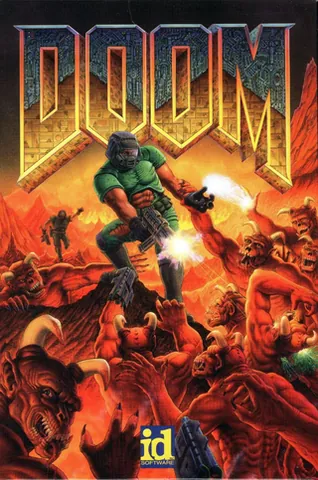
The PC/DOS version is the original and remains the definitive edition — it ran at higher resolution, supported mouse-and-keyboard controls, and had music through sound cards like the Sound Blaster or AdLib. The Atari Jaguar port became famous for a different reason: under time pressure the developers cut the music entirely, so you play through in near silence with only sound effects, even though the speed and smoothness of the action were praised at the time as remarkably good for a console. The SEGA 32X version came off worst of all — its levels had to be shortened and rearranged compared to the original, resolution and frame rate were lower, and its thin music plus sluggish pace still make it the weakest and least recommended way to play Doom.