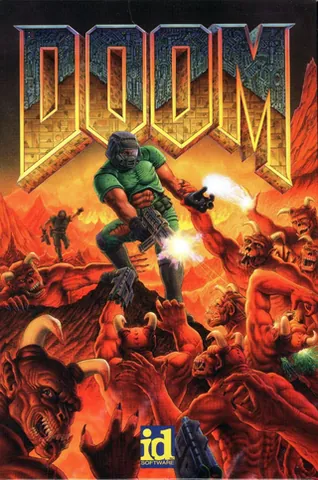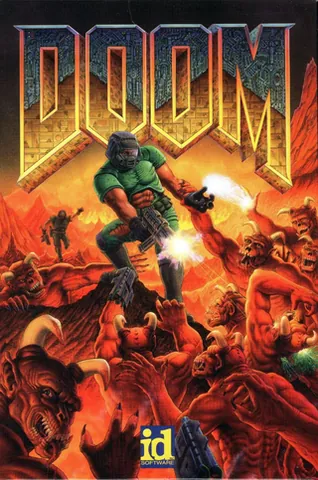
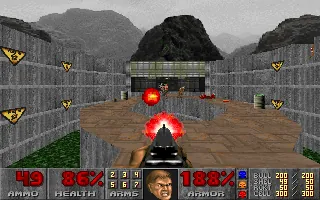
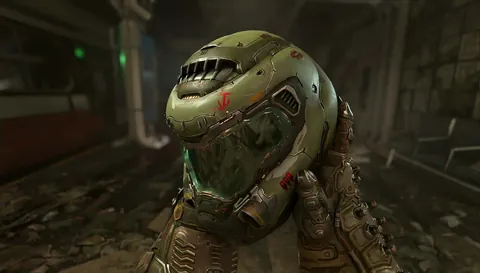
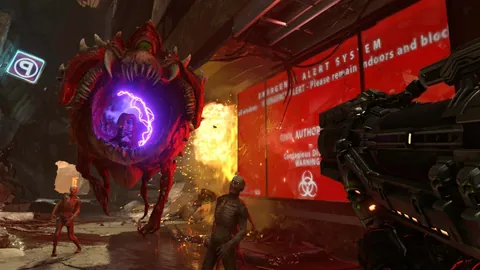
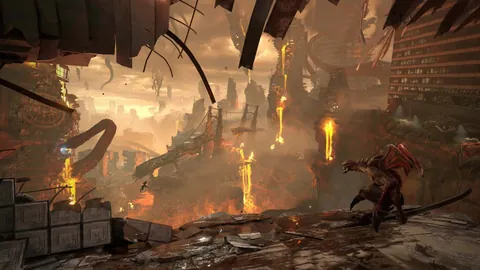
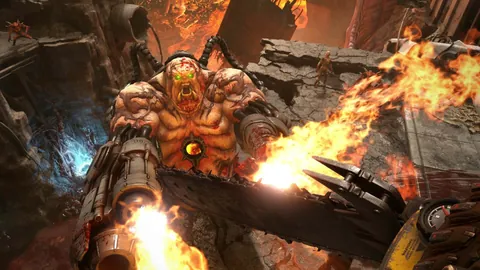
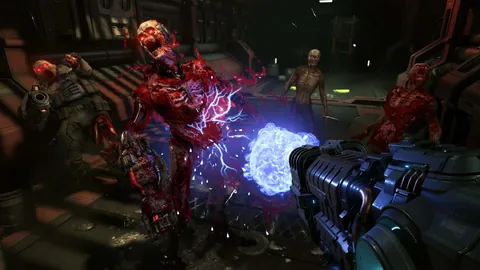
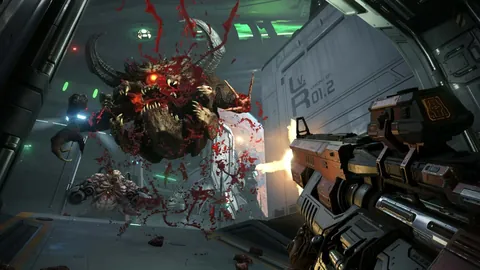
Doom arrived at the end of 1993 and pushed everything its own creators had established a year earlier. The player is a nameless space marine at the bases on Phobos and Deimos, where teleporter experiments tore open a passage to hell. The narrative unfolds across a few lines between episodes; all the attention goes to the level-by-level progression itself: hunting for colored keycards, opening elevators and platforms, dodging traps filled with toxic sludge, and above all fighting hordes of demons whose behavior and strength combine differently in every room. The arsenal, from the shotgun through the chainsaw to the plasma rifle and the BFG, remains one of the best balanced in the genre's history.
The engine represented a huge leap over its predecessor. Levels were no longer a grid of perpendicular walls; they could have varying floor and ceiling heights, slanted walls, staircases, changing lighting, and flickering lights, turning the environments into real places rather than mere corridors. The game also supported multiplayer combat over a network, and it's from here that the term deathmatch spread. Equally crucial was the openness of the data format: the community soon began creating its own levels and modifications, giving rise to a creative scene that still functions today. Oppressive sound effects, demons roaring out of the dark, and rhythmic music completed an atmosphere somewhere between an action film and a horror movie.
At the time it was an enormous phenomenon that spread through shareware channels as fast as gossip and became an argument for buying a more powerful computer and sound card. At the same time, due to its bloodiness and hellish iconography, it became a target of criticism outside gaming media. Today Doom has aged remarkably well: movement is fast, levels are clear and legible, and combat is built on movement and spatial judgment rather than cover and waiting. It's one of the few games from the early nineties recommendable even without a nostalgia surcharge. Its influence doesn't end with the genre either — thanks to countless later ports to all sorts of devices, it became something of a benchmark for what a computer can run, and it remains one of the best-documented titles in the medium's history.
Game 17 of 204 for PC / DOS (XT až 486)
The same title elsewhere (2)
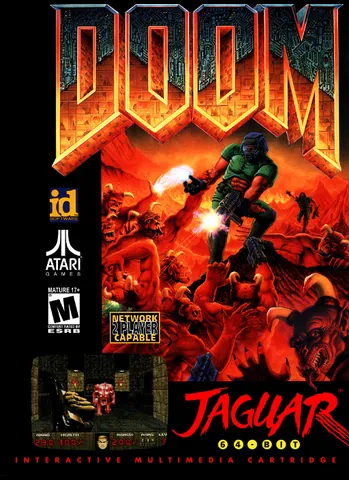
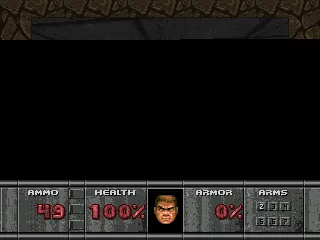
The PC/DOS version is the original and remains the definitive edition — it ran at higher resolution, supported mouse-and-keyboard controls, and had music through sound cards like the Sound Blaster or AdLib. The Atari Jaguar port became famous for a different reason: under time pressure the developers cut the music entirely, so you play through in near silence with only sound effects, even though the speed and smoothness of the action were praised at the time as remarkably good for a console. The SEGA 32X version came off worst of all — its levels had to be shortened and rearranged compared to the original, resolution and frame rate were lower, and its thin music plus sluggish pace still make it the weakest and least recommended way to play Doom.