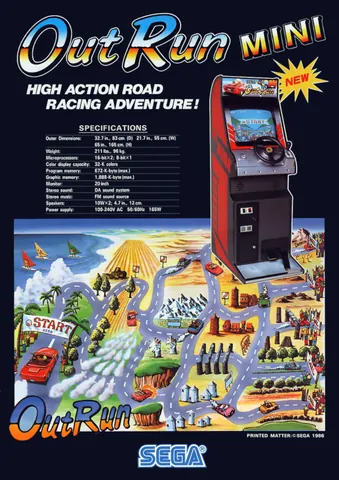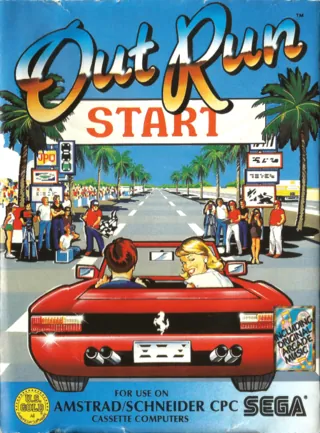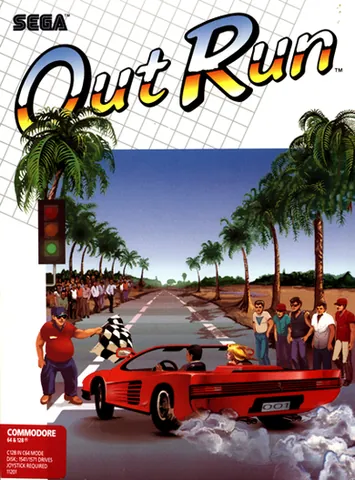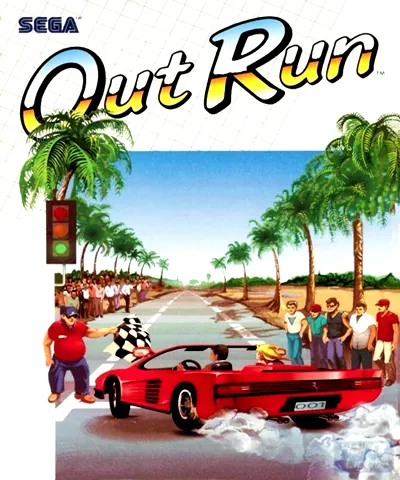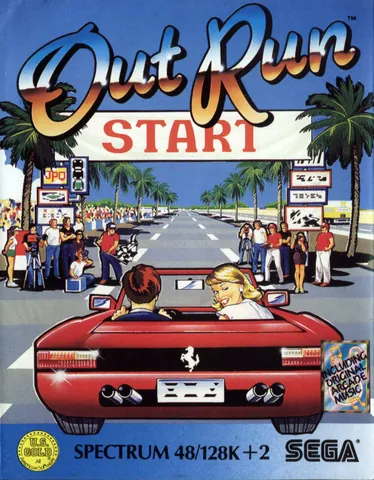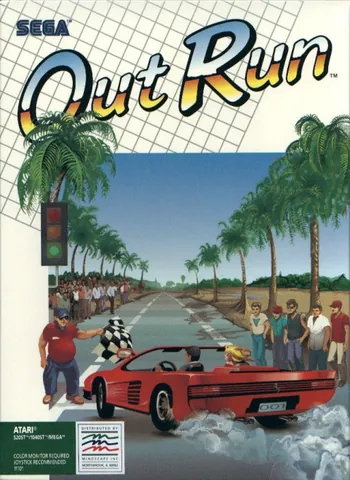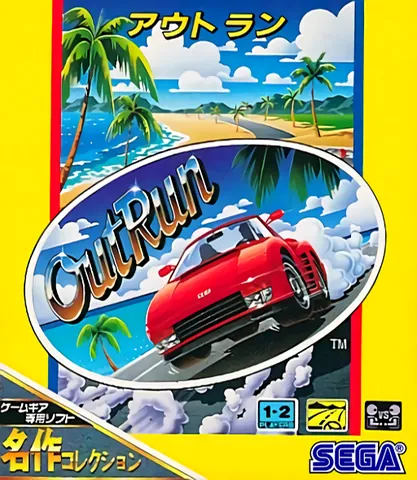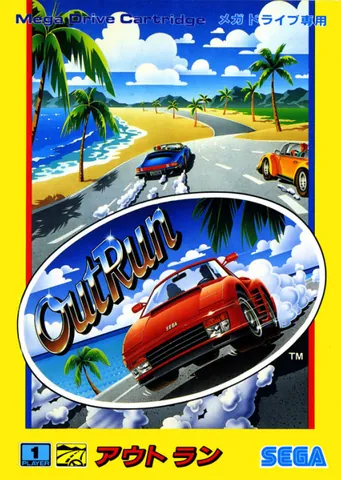
A red Ferrari, a blonde in the passenger seat and an open road vanishing over the horizon. Out Run by the legendary designer Yu Suzuki and the SEGA AM2 studio, an arcade phenomenon from 1986, wasn't just a racing game — it was the feeling of freedom made flesh in silicon.
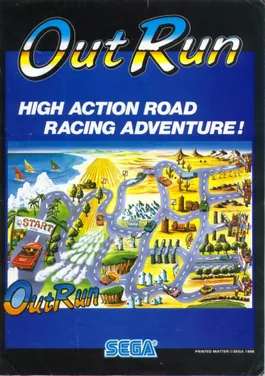
Instead of a classic race for placement, Out Run offered something different: driving for the joy of it. You tear through the countryside, weave between lanes, dodge traffic and at the end of each stage choose a fork in the road for where to head next. This non-linear track with many different destinations gave the game replayability and the feeling that the journey matters more than the destination.
The music was unforgettable too. Before setting off you'd pick a track by switching the radio, and melodies like Magical Sound Shower and Passing Breeze etched themselves into a whole generation's memory. The arcade original also dazzled with a moving cabinet that mimicked the car's tilts and pulled the player right into the action.
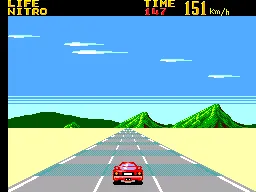
The SEGA Master System version is a home conversion that tried to bring the feeling of speed and sunny atmosphere to eight-bit hardware. For players without access to the expensive arcade machine, it was a way to experience a piece of that famous driving feeling in their own living room.
Out Run fundamentally influenced the arcade-racing genre and became one of SEGA's defining games of the eighties. Its legacy continued in series like Out Runners and the modern Out Run 2, but also in the whole aesthetic of the so-called nostalgic style that to this day evokes sunsets and open highways.
Why play it: For the pure joy of driving, iconic music and a carefree feeling of freedom behind the wheel that never gets old.
Game 27 of 67 for SEGA Master System
The same title elsewhere (9)
Sega's 1986 arcade original ran on special Super Scaler hardware that let the road scale smoothly into the distance, with three selectable tunes playing from the cabinet's speakers. Home computers could not fully recreate that illusion of speed: the Commodore 64, Amstrad CPC, and Atari ST versions all show noticeably choppier road scrolling and less track detail. The Amiga kept decent smoothness and nicer visuals despite the limitations, while the Master System surprised with fairly faithful graphics and music for an eight-bit console. For the real arcade feeling, the original remains unmatched.