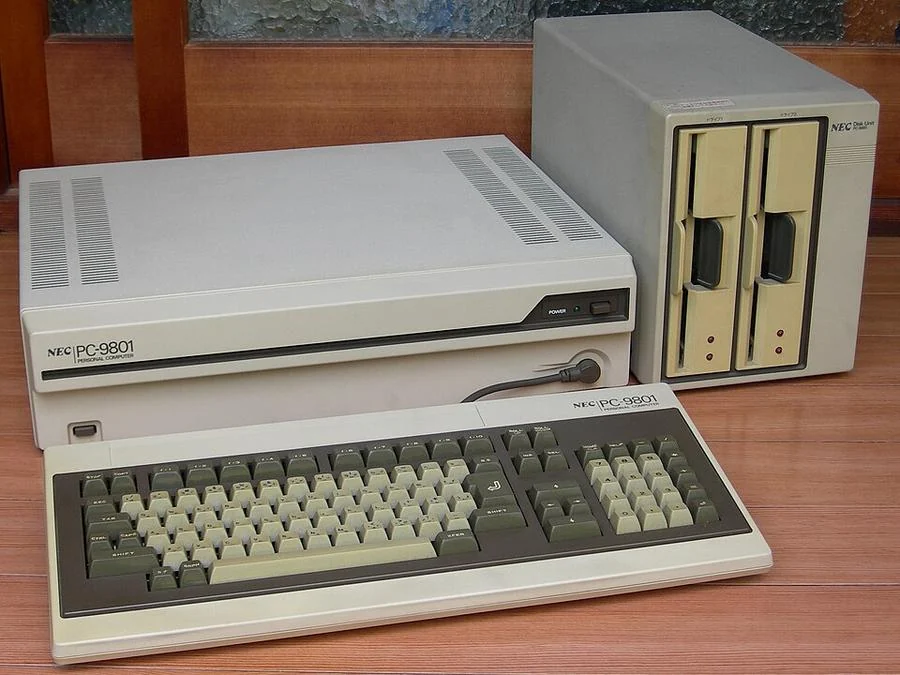
 NEC · 1982
Computers
NEC PC-98
History & context
When NEC launched the PC-9801 in October 1982, it didn't look like the start of a gaming legend. The beige office box with a sixteen-bit Intel 8086 was aimed at Japanese companies, meant to handle spreadsheets and documents. But that's exactly where its greatest strength grew from: it handled Japanese properly. The kanji character set sat directly in ROM, and text was rendered in hardware, so Japanese on screen looked crisp at a time when other computers struggled with it.
During the eighties, the PC-98 became a standard in Japan that the competition couldn't even dream of — it was in offices, in schools, and on desks at home. And wherever crowds of machines share the same architecture, games follow. Not action titles with dozens of sprites — the PC-98 wasn't built for that — but what Japanese players loved most: adventure games, visual novels, sprawling strategy games, and RPGs. The library grew into the thousands of titles, and most of it never left Japan.
The architecture, though, was paradoxical. Inside ticked an x86 processor running MS-DOS, yet the PC-98 wasn't IBM PC compatible in the slightest — a different memory map, different I/O ports, different graphics. An American DOS program wouldn't run on it, and vice versa. It was its own world, bounded by both language and technology, and that's exactly why so many one-of-a-kind things were created on it.
Hardware: graphics and sound
The graphical foundation was a 640×400 pixel mode, which held throughout the entire era of the line. For its time, that was a fine resolution — and it was no accident, since legible kanji rendering needs a fine grid. Alongside the graphics plane ran an independent text plane with its own character generator, so games could draw an image and lay sharp Japanese text over it. The original models handled 8 colors, later ones 16 colors from a palette of 4096, and drawing was accelerated by the GRCG and later EGC chips; only the PC-9821 line brought 256 colors.
The platform had neither hardware sprites nor smooth scrolling, though, and that marked the whole game catalog. Action games exist here, you just notice the processor redrawing the screen. On the other hand, hand-drawn illustrations and character portraits, on which adventure games and visual novels are built, looked great.
Sound was a chapter of its own, since out of the box it offered only a beeper. Anyone who wanted music bought a sound card: the PC-9801-26K with a Yamaha YM2203 (OPN) chip added FM synthesis, while the stronger PC-9801-86 with a YM2608 (OPNA) threw in more FM channels, rhythm samples, and ADPCM. Enthusiasts hooked up MIDI modules like the Roland MT-32 or SC-55 — so the same game could sound completely different depending on what the player had in their box.
Connectivity and peripherals
Expansion relied on its own bus called C-bus — sound cards, SCSI controllers, network cards, and memory modules all went into it. The standard was 5.25" floppy drives, later 3.5" in newer models, and a hard drive went from luxury to a given.
Monitors deserve a separate mention. The PC-98 worked at its own frequency of around 24 kHz and didn't get along with an ordinary PC monitor, which still complicates life for collectors today. System-wise it ran MS-DOS in NEC's Japanese version, later Windows 3.1 and eventually Windows 95 — and there lay the irony of the whole story: the more Windows could do, the less the kanji in ROM mattered.
Models and revisions
The line branched out incredibly richly. A milestone was the PC-9801VM from the mid-eighties — so widespread that it became an unofficial baseline that game developers targeted for a long time afterward. Dozens of variants followed with 80286, 80386, and 80486 processors, labeled with codes like VX, RA, or DA, along with portable 98NOTE units and oddities like the PC-98DO, which combined the PC-98 with the eight-bit PC-8801.
In 1992 came the PC-9821 generation, with colors, CD-ROM, and multimedia ambitions. It was, however, the last big chapter. Meanwhile, standard PC-compatible machines stopped needing special hardware thanks to a software solution for Japanese, and with the arrival of Windows 95, the Japanese market flipped over to the global standard within a few years. NEC eventually started building PC-compatible computers itself, and PC-98 production ran out around the turn of the millennium.
Clones and variants
The best-known chapter is Epson, which from the mid-eighties built legal PC-98-compatible computers in the PC-286, PC-386, and PC-486 lines. NEC fought back both in court and technically — software sometimes checked whether it was running on a genuine machine, and programs appeared that got around that check.
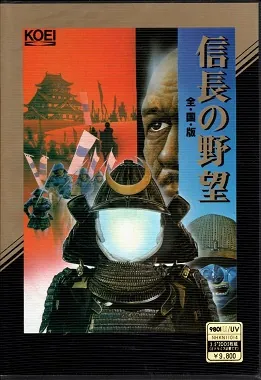
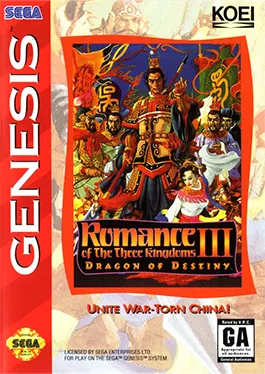
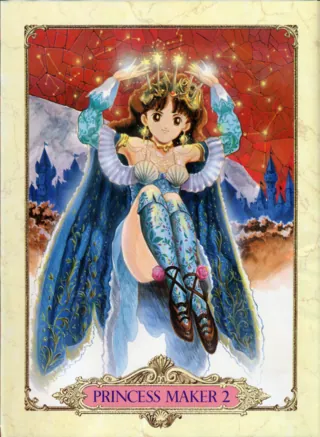
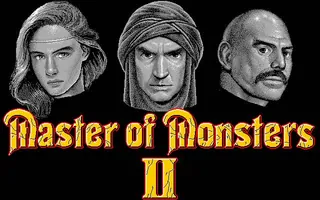
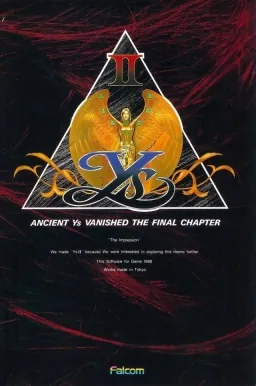
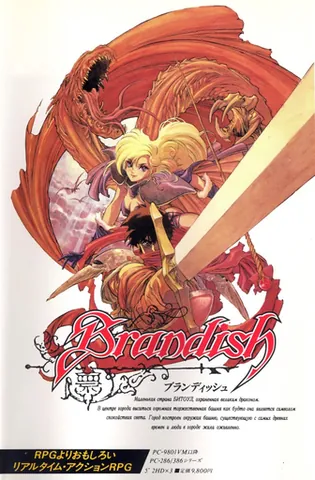
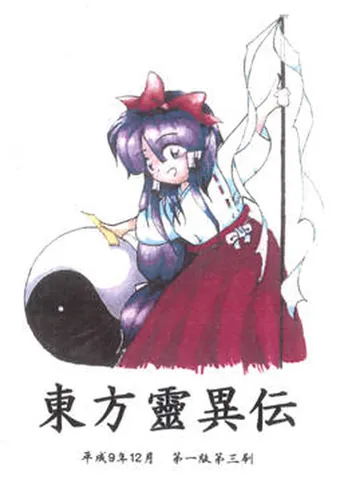
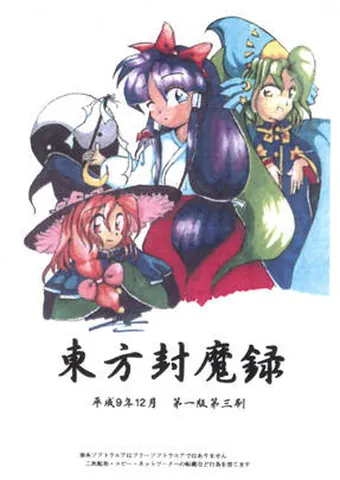
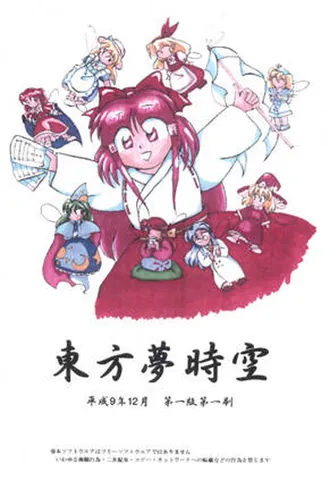
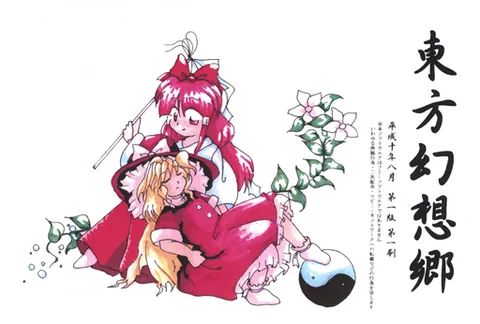
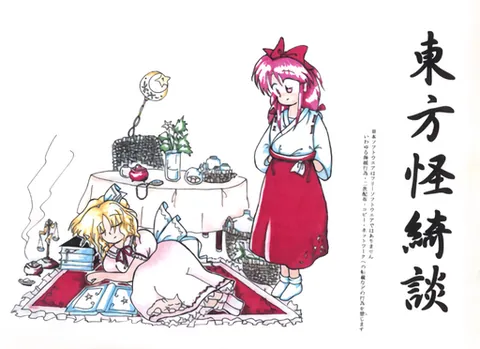
Outside Japan, the PC-98 was practically never sold and reached European players only as a curiosity. Yet a great many things were made here that later made other platforms famous: Nihon Falcom delivered entries in Ys, Sorcerian, and Brandish here; Koei launched Nobunaga's Ambition and Romance of the Three Kingdoms; Gainax introduced Princess Maker. And above all — the first five games of the Touhou Project series came out on the PC-98 in the second half of the nineties, long before it became a worldwide phenomenon.
Today's scene
Emulation is good today. The most widespread is Neko Project II and its newer variants for the PC-9821 line, also available as a RetroArch core, and therefore usable on handhelds and in Batocera; on Windows, T98-Next and Anex86 hold their ground, and DOSBox-X can handle PC-98 mode too. The emulator needs system files from the original, mainly the BIOS and the character ROM with kanji, and games are distributed as floppy disk images in formats like FDI, D88, or HDI.
The biggest obstacle remains the language. The vast majority of the catalog exists only in Japanese, so a strong community of fan translations has formed around the platform, gradually making classic adventure games and visual novels available in English. A number of titles can legally be bought through the Project EGG service, which runs old games in emulation, and some series have gotten re-releases on Steam. The physical machine is a task for the patient: it has to be sourced in Japan, and buyers have to deal with dried-out capacitors, drives, and a non-standard monitor. For most people, then, the PC-98 is a platform you enter through an emulator — and the reward is a library you won't find anywhere else.
Games on this platform (28)
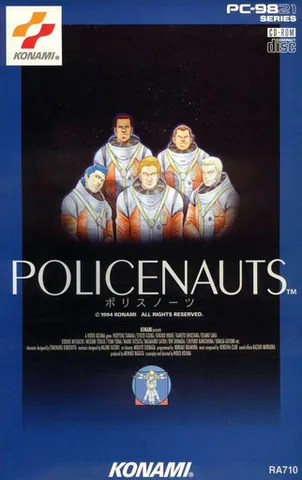
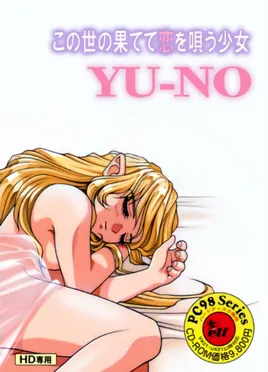
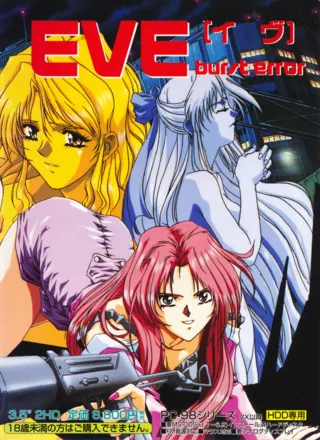

No game in this genre.