Dragon Slayer: The Legend of Heroes
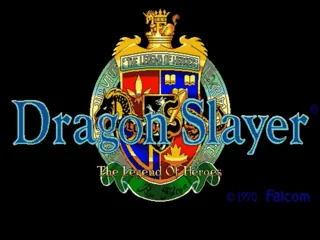
Dragon Slayer: The Legend of Heroes marks the point where Falcom stepped away from the action experiments of the Dragon Slayer series and wrote a classic turn-based JRPG with a strong focus on story. The player accompanies Prince Selios, who grows up in seclusion after his father's death and the usurpation of the throne, and gradually returns to reclaim his kingdom. The narrative is structured around the towns and kingdoms the party passes through, each bringing its own smaller subplot — creating the impression of a journey across an inhabited world rather than just a chain of dungeons.
The combat system is turn-based and semi-automatic: the player sets a general strategy and the characters carry it out, which speeds up ordinary encounters and saves time when moving across the map. Supplies, spells, and equipment are handled through clear menus, the difficulty is gentler than in the era's hardcore dungeon crawlers, and the game relies instead on drawing the player forward through the characters' fates. On the PC-98, the creators bet on richly colored towns and character portraits in dialogue; the high resolution let background details shine, and the interface remains legible even today. The music ranks among the most melodic Falcom produced at the time, and several themes return in arranged form in later games.
The significance of this game outgrew its own qualities: it founded the Eiyuu Densetsu line, which spawned a long series of sequels and eventually the Trails series, one of the most extensive narrative sagas in the genre. At the time it reached many Japanese platforms and is still remembered as the title that established Falcom's character- and world-driven approach. Today it plays comfortably and without unnecessary frustration — it's more a calm, long journey than a test of patience. One price it pays is predictability: anyone familiar with later Japanese RPGs will guess most of the twists in advance, because this very game helped invent some of them. Still, it remains honestly told, and its pacing — a few hours per kingdom, then onward — holds up well even today, even though the individual battles feel old-fashioned.
Game 19 of 28 for NEC PC-98